Why drain relining suits commercial properties
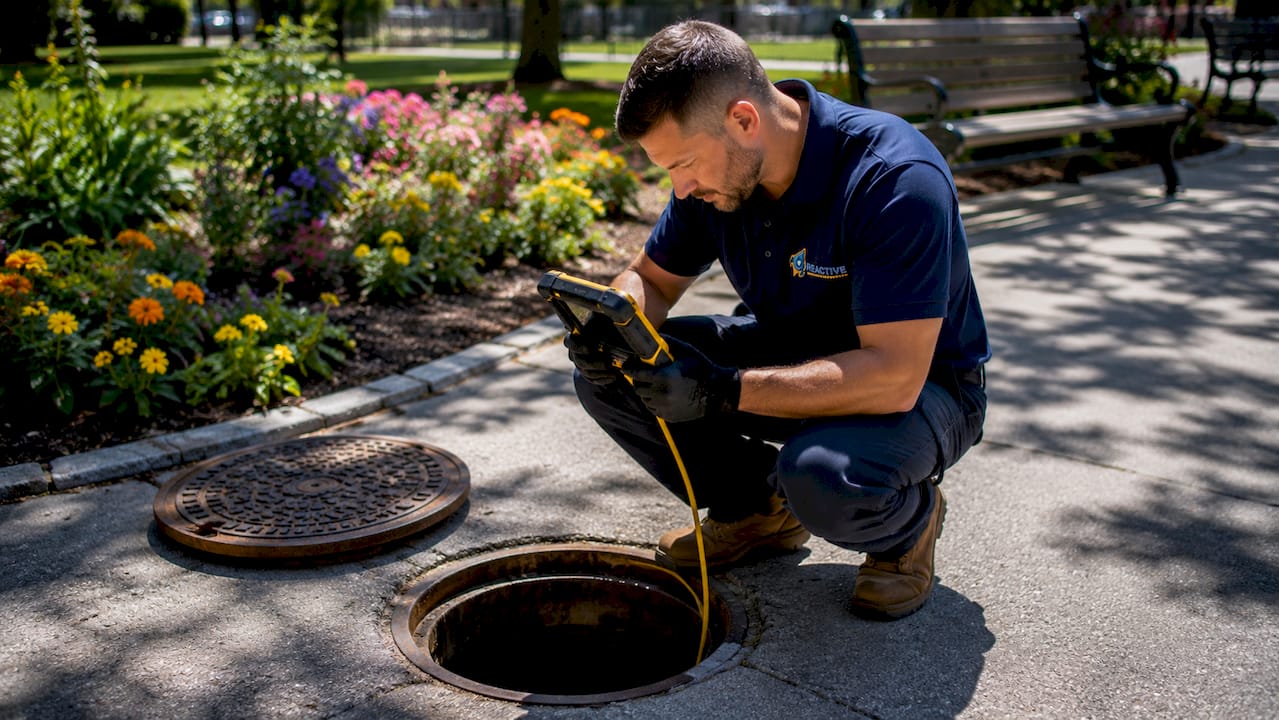
Drain relining is a trenchless pipe repair method that restores damaged drainage systems without excavation, making it the preferred commercial drain repair solution for property managers who cannot afford extended downtime. The industry standard technique, known as Cured-In-Place Pipe lining (CIPP), involves inserting an epoxy resin-coated liner into an existing pipe and curing it in place to form a new pipe within the old one. Properly installed CIPP relining delivers a service life of 50 years or more, which means a single repair protects your drainage infrastructure for decades. The true cost advantage goes beyond the installation price. The ROI of trenchless relining includes avoiding indirect costs like business downtime, landscaping restoration, and slab reconstruction that traditional excavation always incurs. For commercial property managers and business owners, understanding why drain relining suits commercial properties is the first step toward protecting both your asset and your operations.
What benefits does drain relining offer commercial property owners?
Drain relining costs 30–60% less than traditional excavation for equivalent repairs. That saving comes primarily from reduced labour and the elimination of surface restoration costs like repaving car parks, reinstating landscaping, or rebuilding concrete slabs. For a commercial property, those indirect costs can easily exceed the pipe repair itself.
Speed is the other major financial lever. Most commercial relining projects complete within 24–48 hours, compared to traditional methods that can take days or weeks. Less time on site means less disruption to tenants, customers, and daily operations.
The benefits of drain relining for commercial properties include:
- Cost savings of 30–60% compared to excavation, including avoided restoration costs for paving, gardens, and structural surfaces.
- Minimal operational disruption because business operations can continue during relining works with limited on-site disturbances.
- 50-year-plus service life from properly installed CIPP lining, making it a genuine infrastructure upgrade rather than a temporary fix.
- Improved flow performance because the smooth resin lining reduces pipe friction, preventing recurring blockages and outperforming ageing cast iron or clay pipes.
- Preservation of site assets because trenchless relining protects high-value above-ground assets by eliminating the extensive excavation typical of traditional repairs.
Pro Tip: When calculating the cost of any drainage repair, ask your contractor to itemise indirect costs separately. Repaving a commercial car park or reinstating a landscaped courtyard can add tens of thousands of dollars to a traditional excavation job that relining would have avoided entirely.
How does the drain relining process work for commercial drainage systems?
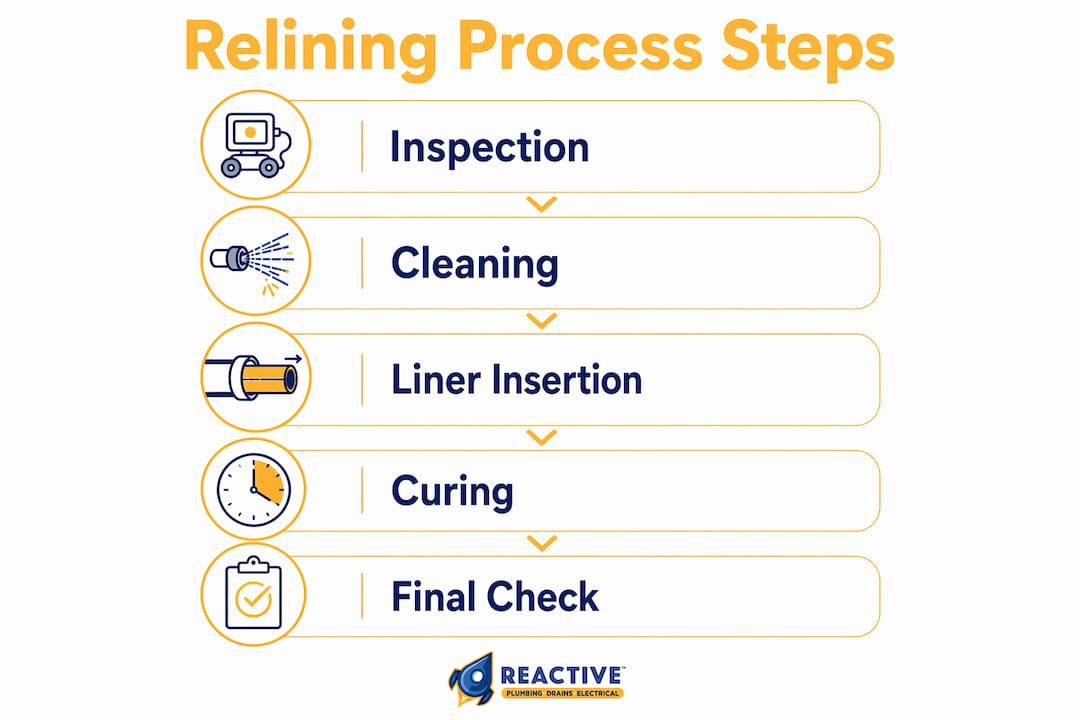
The relining process follows a clear sequence of steps. Each stage is critical to the long-term success of the repair, and skipping any one of them compromises the result. Here is how a professional commercial relining job unfolds:
CCTV inspection. A licensed plumber inserts a camera into the pipe to assess its condition. This inspection identifies cracks, root intrusion, joint failures, and any sections that are too damaged to reline. Pre-lining CCTV inspections are crucial because installing a liner in a structurally compromised pipe risks immediate failure and wasted investment.
Pipe cleaning with hydro jetting. The pipe is thoroughly cleaned using high-pressure water jetting to remove grease, tree roots, scale, and debris. Pre-lining cleaning with hydro jetting is critical to ensure proper resin adhesion. A contaminated pipe surface will prevent the liner from bonding correctly, reducing its lifespan significantly.
Liner insertion. A flexible liner, saturated with epoxy resin, is inserted into the pipe using either inversion or pull-in-place methods. The liner is positioned precisely to cover the damaged section or the full pipe run.
Curing. The resin is cured using UV light, hot water, or steam, depending on the system used. Curing hardens the resin into a rigid, jointless pipe within the original pipe. This new inner surface is smooth, corrosion-resistant, and structurally sound.
Final CCTV inspection. A second camera inspection confirms the liner has cured correctly, with no gaps, wrinkles, or uncured sections. This step gives property managers documented proof of the repair quality.
Pro Tip: Always request the pre- and post-lining CCTV footage from your contractor. This documentation is valuable for your maintenance records and can support insurance claims or due diligence reports if you sell or lease the property.
For commercial properties with trenchless sewer repair needs, this five-step process typically causes far less disruption than any excavation-based alternative.
What operational advantages does drain relining provide over time?
Minimal site impact is the primary benefit commercial property managers report after relining works. The absence of trenches, heavy machinery, and surface reconstruction means tenants experience little to no disruption during the repair period. A retail centre, office building, or industrial facility can remain fully operational throughout the process.
Beyond the immediate repair, relining delivers long-term operational advantages that compound over the life of the asset:
- Reduced emergency repair risk. Planned relining, combined with regular CCTV inspections, allows early detection of pipe deterioration before it becomes a crisis. Emergency pipe failures under active commercial operations are expensive and disruptive in ways that planned maintenance never is.
- Lower ongoing maintenance costs. The smooth resin surface resists root intrusion, grease build-up, and corrosion. Fewer blockages mean fewer call-outs, less jet blasting, and lower annual maintenance spend.
- Improved hydraulic performance. Relining improves hydraulic performance by reducing internal pipe friction. Better flow efficiency means the drainage system handles peak demand periods, such as during heavy rain or high-occupancy events, without backing up.
- Longer intervals between major works. A 50-year-plus service life means a relined pipe is unlikely to need significant attention again within the typical ownership or lease cycle of a commercial property.
Property managers who integrate scheduled plumbing maintenance into their annual building care plan get the most from relining. Proactive condition monitoring prevents the kind of sudden failures that force emergency works during business hours.
In what commercial scenarios is drain relining the most suitable solution?
Drain relining for businesses works best in specific situations. Knowing where it fits and where it does not saves you time and money during the assessment phase.
Relining is the right choice when:
- Pipes run beneath high-traffic areas like car parks, loading docks, or pedestrian plazas where excavation would cause significant disruption.
- Drainage infrastructure sits under valuable hardscaping, such as tiled courtyards, paved driveways, or landscaped gardens that would be costly to reinstate.
- The property operates in a confined urban setting where there is no practical space for excavation equipment or spoil removal.
- Pipes show cracking, joint failure, root intrusion, or corrosion but retain their basic circular shape and structural form.
Relining is not the right choice when pipes have completely collapsed or are severely deformed. The liner requires a sound pipe structure to act as a mould. Relining is unsuitable for pipes that have lost their shape, because the liner cannot form correctly and the repair will fail. In those cases, partial excavation and pipe replacement is the only reliable option.
| Scenario | Relining | Traditional excavation |
|---|---|---|
| Pipes under car parks or paving | Preferred | Disruptive and costly |
| Cracked or root-damaged pipes | Suitable | Suitable but expensive |
| Fully collapsed or deformed pipes | Not suitable | Required |
| Confined urban sites | Preferred | Often impractical |
| Ageing clay or cast iron pipes | Highly suitable | Suitable but invasive |
A professional CCTV survey is the only reliable way to determine which category your pipes fall into. Reactive Plumbing & Electrical recommends a camera inspection before any drainage repair decision is made on a commercial site. You can also review pipe relining costs to understand the financial comparison before committing to a method.
Key takeaways
Drain relining is the most cost-effective and least disruptive commercial drainage solution available, provided pipes retain their structural shape and are assessed by CCTV before work begins.
| Point | Details |
|---|---|
| Cost savings are substantial | Relining costs 30–60% less than excavation, including avoided restoration costs for paving and landscaping. |
| Downtime is minimal | Most commercial relining projects complete within 24–48 hours, keeping businesses operational. |
| Lifespan justifies the investment | Properly installed CIPP lining lasts 50 years or more, making it a long-term infrastructure upgrade. |
| Not every pipe qualifies | Fully collapsed or severely deformed pipes cannot be relined and require excavation instead. |
| Proactive maintenance extends value | Regular CCTV inspections allow planned relining that prevents costly emergency repairs. |
Why I think most commercial property managers underestimate drain relining
Having seen a lot of commercial drainage jobs across Sydney and surrounding regions, the pattern I notice most often is this: property managers call us after a crisis, not before one. A blocked drain backs up during a busy trading period, or a pipe collapses under a car park, and suddenly the cost of the repair is three times what it would have been with planned maintenance.
Drain relining changes that equation entirely. When we reline a pipe proactively, based on a CCTV inspection that shows early-stage cracking or root intrusion, the job is straightforward, fast, and far cheaper than emergency excavation. The property keeps running. Tenants barely notice. The pipe is good for another 50 years.
What I have also seen is that the financial case for relining is consistently undersold. Property managers focus on the installation quote and miss the indirect cost comparison. Excavating a pipe under a tiled commercial courtyard means reinstating that courtyard afterwards. That reinstatement cost can be significant. Relining avoids it entirely. When you factor in business continuity, tenant satisfaction, and avoided restoration costs, relining is not just cheaper. It is the smarter business decision.
My advice is to integrate a CCTV drainage inspection into your annual building maintenance schedule. If your pipes are ageing, that inspection will almost certainly reveal conditions where relining now is far less expensive than emergency repairs later. The building maintenance plumbing guide from Reactive Plumbing & Electrical is a good starting point for structuring that programme.
— Brent
Reactive Plumbing & Electrical: commercial drain relining done right
Reactive Plumbing & Electrical specialises in pipe relining for commercial properties across Sydney, Newcastle, Wollongong, Brisbane, Ipswich, and the Gold Coast. Our licensed team uses CCTV inspection, hydro jetting, and CIPP relining technology to restore drainage systems with minimal disruption to your operations.
Whether you manage a retail centre, office building, or industrial facility, we can assess your drainage condition and recommend the most cost-effective repair path. Our pipe relining services are backed by professional installation standards and transparent pricing. For properties with urgent drainage issues, our team is available around the clock. Contact Reactive Plumbing & Electrical to book a CCTV inspection and get a clear picture of your pipe condition before a small problem becomes a costly emergency.
FAQ
What is drain relining and how does it work?
Drain relining is a trenchless repair method where an epoxy resin-coated liner is inserted into a damaged pipe and cured in place to form a new pipe within the existing one. The process typically completes within 24–48 hours and requires no excavation.
How long does a relined drain last?
Properly installed CIPP relining lasts 50 years or more, making it a durable long-term solution for commercial drainage infrastructure.
Is drain relining suitable for all commercial pipes?
Relining suits pipes that are cracked, corroded, or root-damaged but still retain their basic shape. Pipes that have fully collapsed or are severely deformed cannot be relined and require excavation instead.
How much does commercial drain relining cost compared to excavation?
Drain relining costs 30–60% less than traditional excavation for equivalent repairs, primarily because it eliminates labour-intensive digging and costly surface restoration works.
How often should commercial drains be inspected?
Regular CCTV inspections, ideally as part of an annual maintenance programme, allow early detection of pipe deterioration and planned relining before emergency failures occur.
Recommended
- Benefits of Pipe Relining Over Traditional Pipe Replacement – Reactive Plumbing
- Relining sewer pipe: the homeowner’s complete guide
- Trenchless Pipe Relining: A Modern, No-Dig Solution for Sydney Homes and Businesses – Reactive Plumbing
- Pipe Relining in Sydney: The Hidden Problem in Older Homes – Reactive Plumbing