Relining sewer pipe: the homeowner’s complete guide
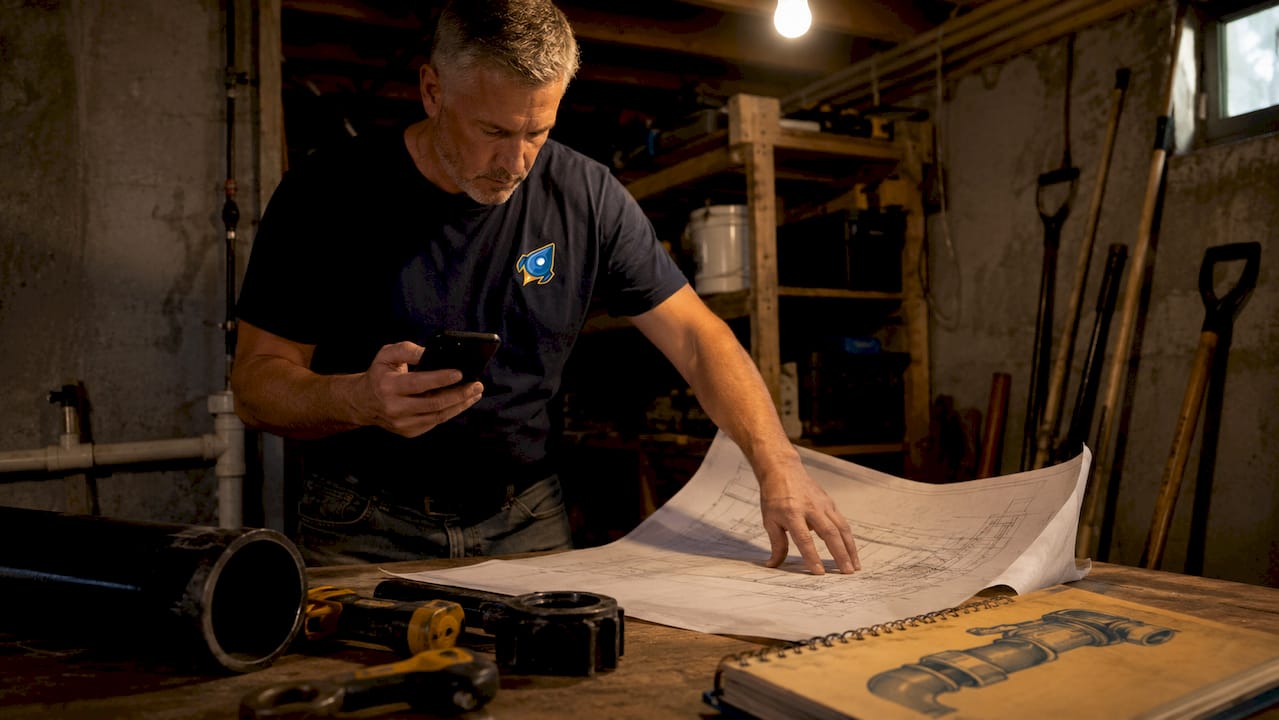
Relining a sewer pipe is a trenchless rehabilitation method that repairs damaged pipes from the inside by inserting a resin-coated liner, curing it in place, and creating a structurally sound new pipe within the old one. The industry standard term for this process is cured-in-place pipe lining, or CIPP. It requires no major excavation, no tearing through gardens or driveways, and in most cases the job is done within a single day. For homeowners across Sydney, Brisbane, and the Gold Coast dealing with cracked, leaking, or root-invaded sewer lines, relining sewer pipe is often the most practical and cost-effective solution available.
What is the sewer pipe relining process and how does it work?
Sewer pipe relining follows a clear, methodical sequence. Each step builds on the last, and skipping any one of them is how jobs go wrong.
1. Camera inspection
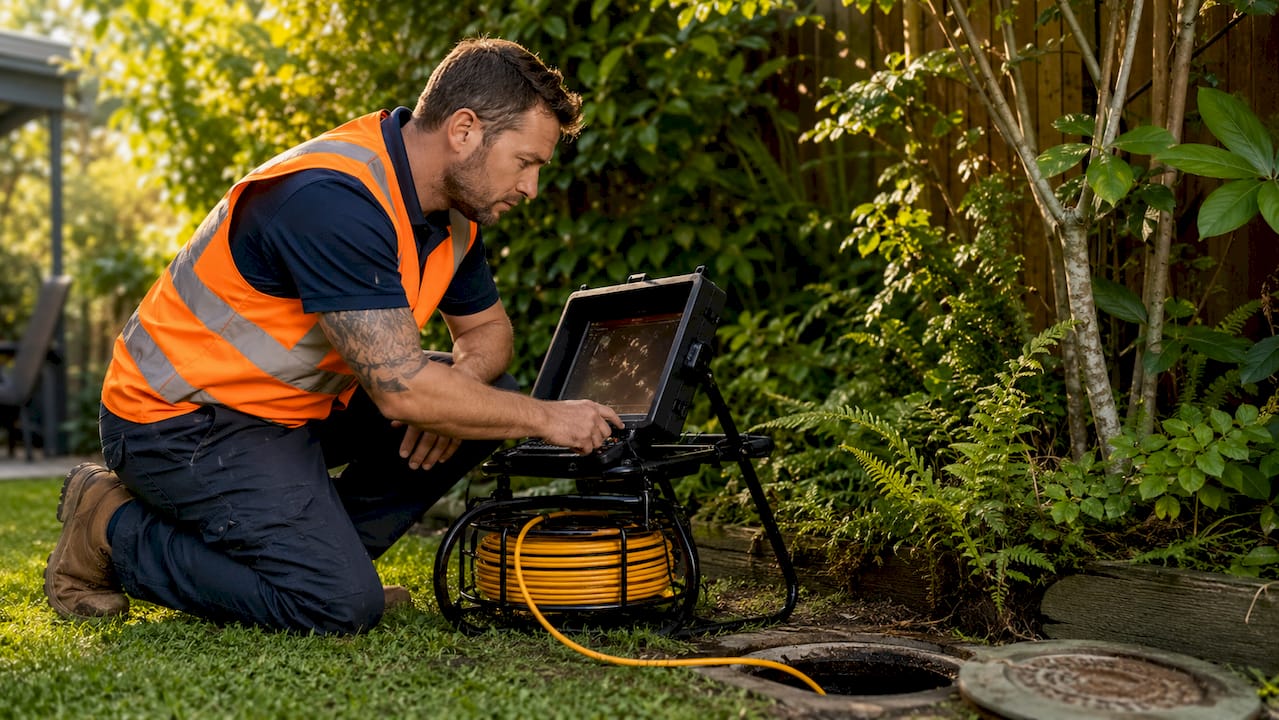
A licensed plumber feeds a CCTV camera through the pipe to assess the damage. This footage shows the exact location and severity of cracks, root intrusion, joint failures, or corrosion. Without this step, there is no reliable way to confirm whether relining is even suitable for your pipe.
2. Cleaning the pipe
The existing pipe must be thoroughly cleaned before any liner goes in. Camera inspection and hydro jetting are mandatory to prepare the pipe surface. Hydro jetting uses high-pressure water to blast away debris, grease, and tree roots. Poor preparation at this stage causes liner bonding failure and future pipe damage, which means the job has to be done again at your expense.
3. Inserting the resin-coated liner
A flexible liner, saturated with epoxy or polyester resin, is pulled or inverted into the pipe. It sits against the interior walls of the host pipe, conforming to its shape. The liner is then inflated with air or water pressure to hold it firmly in place while the resin cures.
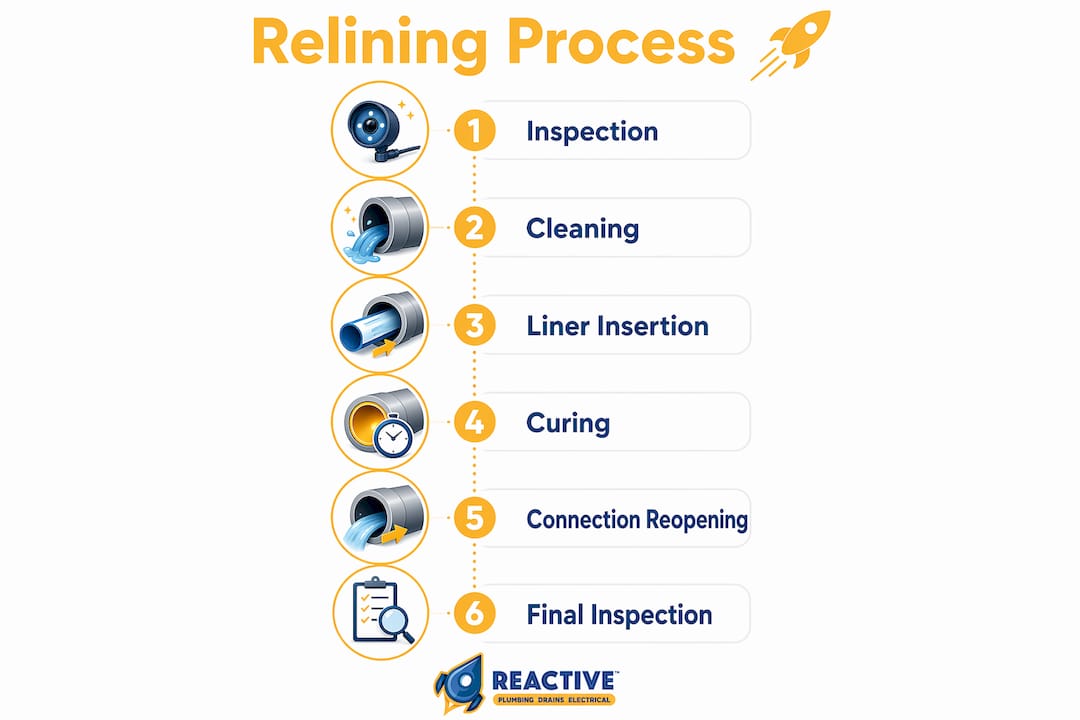
4. Curing the liner
Curing can be achieved with hot water, steam, or ultraviolet light, depending on the technology used. UV curing is faster and increasingly common. Once cured, the liner becomes a rigid, corrosion-resistant new pipe within the old one.
5. Reopening branch connections
After curing, any branch connections that were covered by the liner must be cut back open. Robotic cutting equipment is used for this step. Inexperienced contractors who rush this stage risk damaging the liner or blocking service lines, which leads to costly rework.
6. Final camera inspection
A second CCTV inspection confirms the liner has bonded correctly, all connections are clear, and the pipe is ready for normal use.
Pro Tip: Ask your contractor to provide you with a copy of both the pre-job and post-job camera footage. This protects you if any issues arise later and confirms the work was completed to standard.
Relining vs replacement: which does your pipe actually need?
Not every damaged sewer pipe is a candidate for relining. Knowing the difference saves you from paying for a solution that will not hold.
Relining works well for pipes with leaking joints, hairline cracks, minor root intrusion, and surface corrosion. These are conditions where the pipe still has structural integrity and can support a liner. Relining is suitable for leaking joints, cracks, and minor corrosion but is not effective for collapsed or back-pitched pipes. A back-pitched pipe is one where the slope has shifted so that waste flows the wrong way. Relining cannot correct the slope, so the drainage problem remains even after the liner is installed.
For collapsed pipes or severely fractured sections, pipe bursting is the preferred trenchless alternative. Pipe bursting replaces pipes fully when lining is not feasible and is the preferred trenchless replacement method when the host pipe cannot support a liner. It is more intrusive and costly than relining, but it is the right call when the pipe is beyond repair.
| Condition | Recommended method |
|---|---|
| Hairline cracks or leaking joints | CIPP relining |
| Minor root intrusion | CIPP relining |
| Surface corrosion | CIPP relining |
| Collapsed pipe sections | Pipe bursting or full replacement |
| Back-pitched or incorrectly sloped pipe | Full replacement |
| Severely fractured pipe | Pipe bursting |
Pro Tip: If a contractor recommends relining without first conducting a camera inspection, walk away. A proper diagnosis always comes before a treatment recommendation.
Older homes in particular are prone to pipe issues that look like simple cracks but are actually signs of deeper structural failure. A camera inspection is the only way to know for certain.
How much does sewer pipe relining cost?
Sewer pipe relining costs vary depending on the extent of damage, pipe length, and how accessible the pipe is.
Typical CIPP lining costs for residential sewer repairs range from $3,000 to $10,000. That range reflects the difference between a short, easily accessible pipe with minor cracking and a longer run with complex root damage and limited access points. For comparison, pipe bursting costs around $265 per foot plus insertion pit fees, which makes it significantly more expensive for longer pipe runs.
Several factors push the price up or down:
- Pipe length: Longer pipes require more liner material and more labour time.
- Damage severity: Heavily damaged pipes may need additional preparation work before the liner can be installed.
- Access complexity: Pipes under concrete slabs, deep underground, or in tight spaces cost more to reach.
- Branch connections: Each branch connection that needs to be reopened after curing adds to the total cost.
- Inspection fees: CCTV inspections are sometimes charged separately, typically $200–$400 for a standard residential line.
Use our pipe relining cost calculator to get a clearer estimate for your specific situation before calling for a quote.
Traditional excavation repairs cost more in most cases once you factor in the labour to dig, the surface reinstatement (replacing concrete, tiles, or paving), and the extended project timeline. Traditional excavation can take weeks and causes major surface disruption, while trenchless methods typically complete the same job in about one day.
What are the benefits and drawbacks of relining sewer pipes?
Sewer pipe restoration through relining offers real, measurable advantages over traditional repair methods. It also has genuine limitations that are worth understanding before you commit.
The benefits are significant:
- Minimal disruption: No excavation means your garden, driveway, and flooring stay intact.
- Fast completion: Trenchless relining typically finishes in one day, compared to weeks for traditional dig-and-replace work.
- Long service life: CIPP lining extends pipe life by 50 or more years, creating a corrosion-resistant, seamless pipe within the host pipe.
- Improved flow: The smooth interior of the cured liner actually improves water flow compared to the rough, degraded surface of an old pipe.
- Cost savings: When you factor in excavation, surface reinstatement, and disruption costs, relining is almost always cheaper than traditional replacement.
The drawbacks are real but manageable:
- Slight diameter reduction: The liner reduces the internal pipe diameter by roughly 6 millimetres. This is rarely a problem in practice because the smoother surface compensates for the reduced diameter.
- Not suitable for all conditions: Collapsed pipes, back-pitched pipes, and severely fractured sections cannot be relined. A professional inspection is the only way to confirm suitability.
- Branch cutting complexity: Reopening branch connections after curing requires robotic equipment and skilled operators. This step is where inexperienced contractors make costly mistakes.
Emerging technologies are also worth knowing about. Polyurea spray lining cures in seconds to minutes and is ideal for complex or high-traffic areas requiring minimal downtime. It offers high chemical resistance and flexibility compared to traditional CIPP liners, making it a strong option for unusual pipe geometries or tight access situations.
Pro Tip: Ask your contractor specifically whether they use UV curing or hot water curing. UV curing is faster and produces a more consistent result in Australian conditions, particularly in warmer climates.
The benefits of pipe relining over traditional replacement are well established, but the right outcome still depends on choosing a contractor who uses the correct technology for your specific pipe.
How do you choose a reliable pipe relining service?
Choosing the right contractor is as important as choosing the right repair method. The pipe relining industry has grown quickly, and not every operator has the experience or equipment to deliver a lasting result.
Here is what to check before you commit:
- Licences and insurance: Confirm the contractor holds a current plumbing licence in your state and carries public liability insurance. In New South Wales, this means a licence issued by NSW Fair Trading.
- CCTV inspection as standard: Any reputable contractor will conduct a camera inspection before quoting. If they skip this step, their quote is a guess.
- Technology and equipment: Ask whether they use robotic cutting tools for branch connections and what curing method they use. Contractors who cannot answer these questions clearly are likely subcontracting the work.
- Warranty terms: A quality relining job should come with a written warranty of at least 10 years on the liner. Get this in writing before work begins.
- References and completed jobs: Ask for examples of similar residential jobs they have completed. A contractor confident in their work will have no hesitation sharing this.
- Transparent pricing: Request a written quote that itemises inspection, cleaning, lining, branch cutting, and any reinstatement work separately. Hidden fees are a red flag.
Older homes should have sewer lines inspected every 10 years at minimum. Early detection allows cost-efficient relining and prevents emergency replacements that cost significantly more and cause far greater disruption.
Key takeaways
Relining a sewer pipe with CIPP technology is the most cost-effective and least disruptive sewer repair method available for most residential pipe conditions, provided a camera inspection confirms suitability first.
| Point | Details |
|---|---|
| CIPP is the industry standard | Cured-in-place pipe lining creates a new pipe within the old one, lasting 50 or more years. |
| Camera inspection is non-negotiable | Always confirm pipe suitability with CCTV before committing to relining or any repair method. |
| Cost range is $3,000 to $10,000 | Residential relining costs vary with pipe length, damage severity, and access complexity. |
| Not all pipes can be relined | Collapsed, back-pitched, or severely fractured pipes require pipe bursting or full replacement. |
| Contractor quality determines the outcome | Licences, robotic cutting equipment, and a written warranty separate reliable operators from risky ones. |
My honest take on relining sewer pipes
I have seen a lot of sewer pipe jobs over the years, and the pattern is almost always the same. Homeowners wait too long, the damage gets worse, and what could have been a straightforward relining job becomes a full replacement. The cost difference is significant, and the disruption is far greater.
The thing that frustrates me most is the “one size fits all” approach some contractors take. Relining is a genuinely excellent solution for the right conditions, but I have seen jobs where a contractor pushed relining on a pipe that was clearly back-pitched or partially collapsed. The liner goes in, the job looks finished, and six months later the homeowner is back to square one. A proper CCTV inspection before any work starts is not optional. It is the only honest way to give a homeowner accurate advice.
I am also genuinely excited about where the technology is heading. Polyurea spray lining and UV curing are changing what is possible, particularly for complex pipe layouts in older homes. These methods are faster, more adaptable, and increasingly accessible for residential jobs. If your contractor has not heard of them, that tells you something about how current their knowledge is.
My practical advice is this: do not wait for a blocked drain or a sewage smell to prompt action. If your home is more than 20 years old, book a camera inspection now. The cost is modest. The peace of mind is worth it. And if relining is the right call, you will be glad you caught it before it became an emergency.
— Brent
How Reactive Plumbing & Electrical can help with pipe relining
If you are dealing with a cracked, leaking, or root-invaded sewer line, Reactive Plumbing & Electrical has the equipment and expertise to diagnose and fix it properly. We use CCTV camera inspections on every job before recommending any repair method, and our licensed plumbers carry the robotic cutting tools and UV curing equipment needed to deliver a lasting result.
We service Sydney, Newcastle, Wollongong, Brisbane, Ipswich, and the Gold Coast, with a well-equipped fleet ready to respond quickly. Our trenchless pipe relining services come with transparent pricing, written warranties, and no hidden fees. We also offer flexible financing options for larger jobs. Contact Reactive Plumbing & Electrical today to book a camera inspection and get a clear, honest quote for your sewer pipe repair.
FAQ
What is sewer pipe relining?
Sewer pipe relining, also called cured-in-place pipe lining (CIPP), is a trenchless method that repairs damaged pipes by inserting and curing a resin-coated liner inside the existing pipe. It creates a new, structurally sound pipe without excavation.
How long does a relined sewer pipe last?
CIPP lining extends pipe life by 50 or more years when properly installed. The cured liner is corrosion-resistant and seamless, making it highly durable under normal residential conditions.
Can all sewer pipes be relined?
No. Relining works for cracked, leaking, or root-invaded pipes that still have structural integrity. Collapsed or back-pitched pipes cannot be relined and require pipe bursting or full replacement instead.
How much does sewer pipe relining cost in Australia?
Residential sewer pipe relining typically costs between $3,000 and $10,000, depending on pipe length, damage severity, and access complexity. Use the Reactive Plumbing & Electrical cost calculator to estimate your specific job.
How often should I have my sewer pipes inspected?
Older homes should have sewer lines inspected with a CCTV camera at least every 10 years. Early detection of cracks or root intrusion allows for cost-efficient relining before damage escalates to a full replacement.
Recommended
- Pipe Relining in Sydney: The Hidden Problem in Older Homes – Reactive Plumbing
- What is a sewer drain line: a homeowner’s guide
- Benefits of Pipe Relining Over Traditional Pipe Replacement – Reactive Plumbing
- Trenchless Pipe Relining: A Modern, No-Dig Solution for Sydney Homes and Businesses – Reactive Plumbing