Burst Pipe Repairs
A burst pipe can release 400 to 600 litres per hour through a standard residential pipe. That’s enough to soak through walls, rot flooring, and trigger mould growth well before most homeowners even realise something is wrong. So what is a burst pipe repair, exactly? In the plumbing industry, it’s formally known as pipe failure remediation, and it covers everything from shutting off the water supply and diagnosing the damage through to replacing or relining the affected pipe. This guide walks you through the causes, your real repair options, what it all costs, and how to protect your home from this happening again.
Table of Contents
- Key takeaways
- What is a burst pipe repair and why it matters
- Causes, warning signs, and risks
- Burst pipe repair options
- Cost of pipe repair: what to expect
- What to do immediately after a burst pipe
- Preventing burst pipes before they happen
- My take: what I’ve learned from real burst pipe jobs
- How Reactive Plumbing & Electrical can help
- FAQ
Key takeaways
| Point | Details |
|---|---|
| Act immediately | Shut off the main water supply the moment you suspect a burst to limit flooding and structural damage. |
| Temporary fixes have limits | Pipe clamps and repair tape slow leaks but are not permanent. A licensed plumber must assess and fix the root cause. |
| Modern repairs save money | Trenchless pipe relining can fix pipes under concrete or walls in one to two days without digging up your property. |
| Costs vary widely | Plumbing repairs alone range from $400 to over $5,000 depending on location, materials, and damage extent. |
| Prevention is cheaper | Regular inspections and pressure monitoring reduce burst pipe risk significantly and catch problems before they escalate. |
What is a burst pipe repair and why it matters
A burst pipe repair is the process of identifying, isolating, and permanently restoring a pipe that has cracked, split, or ruptured under pressure. The term covers everything from the emergency call-out through to the final fix, and in serious cases it also includes the water damage restoration that follows. Pipe failure remediation is the broader professional term used when the work extends beyond the pipe itself to include structural drying, mould treatment, and rebuilding affected areas.
Most homeowners underestimate how quickly things can escalate. A small crack in a half-inch pipe at normal household pressure can release a significant volume of water within minutes. And because many pipes run behind walls, under floors, or beneath concrete slabs, the damage is often well advanced before it becomes visible.
The most common misconception we hear is that a burst pipe is just a plumbing job. In reality, water damage restoration can add $2,500 to $8,000 or more on top of the plumbing bill. Understanding that distinction upfront helps you plan, communicate with your insurer, and make smarter decisions about who to call.
Causes, warning signs, and risks
Knowing what causes pipes to burst gives you a real advantage. Most failures don’t happen without warning. They build gradually, and catching the early signs can save you thousands.
Common causes of burst pipes include:
- Corrosion in older metal pipes, particularly galvanised steel or cast iron, which deteriorates from the inside out
- High water pressure that exceeds the rated capacity of the pipe, often above 550 kPa in residential systems
- Severe blockages that create back-pressure, which is why blocked drain clearing matters beyond just slow drainage
- Ground movement or tree root intrusion that physically shifts or cracks buried pipes
- Freezing temperatures in elevated or exposed pipes, particularly relevant in alpine and inland areas of Australia during winter
Warning signs to watch for:
- Unexpected drops in water pressure at your taps
- Water stains, bubbling paint, or soft spots on walls and ceilings
- The sound of running water when all taps are off
- A spike in your water bill with no clear explanation
- Damp or musty smells near walls, under floors, or in your roof space
The risks of leaving a burst pipe unattended go well beyond a wet carpet. Mould can begin growing within 24 to 48 hours in wet, warm, enclosed spaces. Wet insulation must be physically removed because drying alone is not enough to prevent mould colonisation. Prolonged moisture also weakens wall framing, subfloor timber, and ceiling plasterboard, turning a plumbing repair into a significant renovation.
Burst pipe repair options
When it comes to burst pipe fixing, you have a spectrum of options depending on the severity of the damage, the pipe location, and your budget. Think of it in three tiers: temporary measures, traditional professional repairs, and modern trenchless solutions.
Temporary fixes and their limits
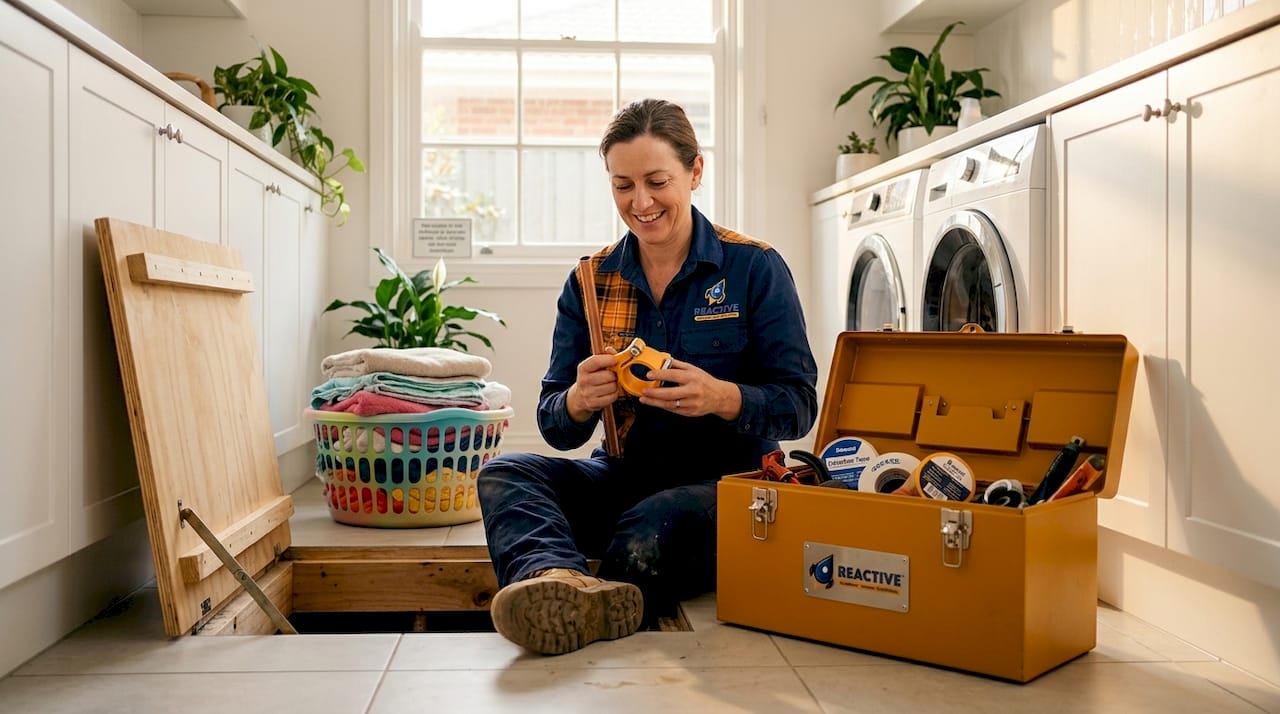
Pipe repair clamps, self-amalgamating tape, and two-part epoxy putty are all genuine temporary measures that can slow or stop a leak until a plumber arrives. They are sold at hardware stores and can be applied by most homeowners. However, temporary fixes like these are not permanent solutions. They don’t address the underlying cause, and a poorly applied clamp can mask a worsening fracture, making the eventual repair more complicated and costly.
Traditional pipe repair and replacement
A licensed plumber will assess the damage and determine whether the pipe can be repaired in place or needs to be replaced. For accessible pipes, common repair methods include:
- Pipe section replacement: Cutting out the damaged section and soldering or joining in new pipe
- Compression fittings: A no-solder option suitable for tight spaces, using mechanical fittings to join pipe sections
- Push-fit connectors: Fast and reliable for copper, PVC, and multilayer pipes
Pipe repair costs run approximately $150 to $250 per linear metre including labour and materials, with the final price heavily influenced by how accessible the pipe is.
Modern trenchless pipe relining
For pipes buried under concrete slabs, beneath landscaping, or inside walls, trenchless pipe relining (also called Cured-In-Place Pipe lining or CIPP) is a method worth understanding. A resin-saturated liner is inserted into the existing pipe, inflated, and cured in place, creating a new pipe wall inside the old one. Trenchless repairs like CIPP can fix pipes in one to two days without major excavation, which preserves your garden, driveway, and flooring.
The critical first step for any non-visible pipe is a CCTV inspection. A camera is passed through the pipe to assess whether the damage is suitable for relining or whether full excavation is needed. CCTV camera inspections are the industry standard for this decision, because complete pipe collapse or severe misalignment rules out relining entirely.
Pro Tip: Before agreeing to any repair method on a pipe you cannot see, ask your plumber for the CCTV footage. A reputable plumber will show you exactly what they found and why they’re recommending a particular fix.
You can read more about how trenchless pipe relining compares to traditional excavation for Sydney homes.
Cost of pipe repair: what to expect
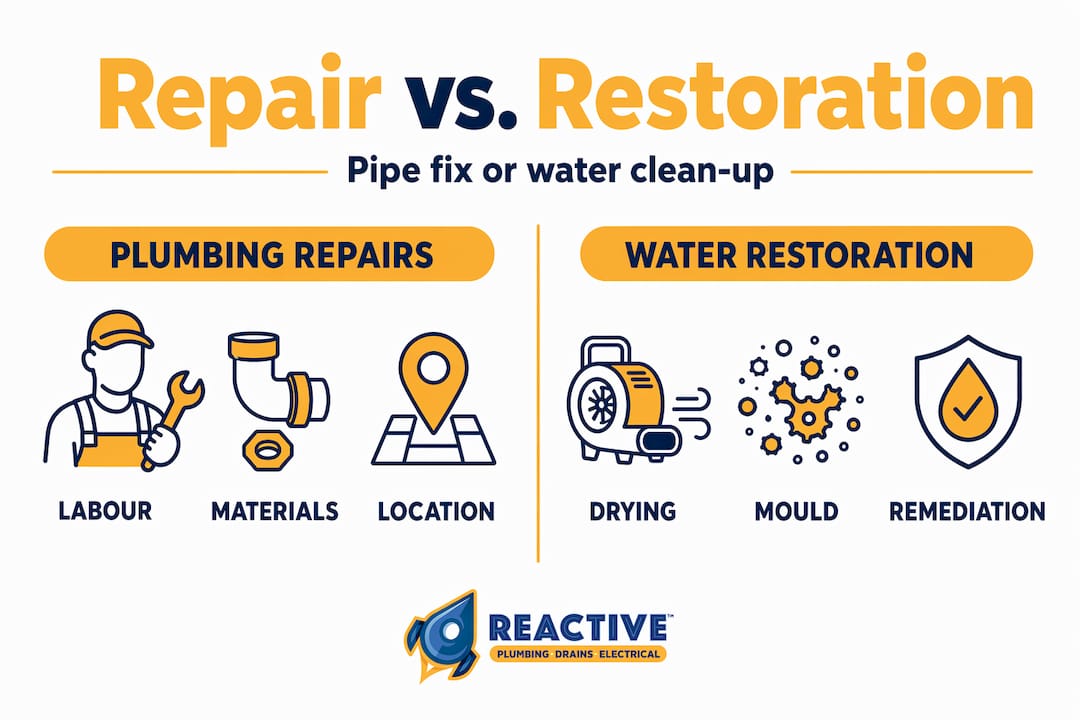
Understanding the cost of pipe repair means separating two distinct categories: the plumbing work itself, and the water damage restoration that often follows.
Plumbing repair costs
| Repair type | Typical cost range |
|---|---|
| Minor repair, accessible pipe | $400 to $800 |
| Pipe section replacement | $800 to $2,000 |
| Trenchless relining (per section) | $500 to $3,000+ |
| Complex or concealed pipe repair | $2,000 to $25,000+ |
| Emergency call-out fee | $150 to $350 additional |
Labour accounts for roughly 80% of the total plumbing bill depending on the complexity of the job, but emergency pipe repair services attract higher rates after hours, on weekends, and on public holidays.
Water damage restoration costs
This is where costs escalate quickly, and where many homeowners are caught off guard. Water damage restoration adds $2,500 to $8,000 or more on top of plumbing repairs. This work includes extraction of standing water, structural drying with industrial air movers and dehumidifiers over three to five days, flood cuts to drywall, removal and replacement of wet insulation, antimicrobial treatment, and final rebuild work.
A key detail: burst pipe invoices typically separate plumbing repairs from water damage restoration because insurers often treat them as distinct claims. Document everything with photos and video before any remediation work begins. That documentation is what protects your claim.
What to do immediately after a burst pipe
Speed matters more than almost anything else after a burst pipe. Here is the correct sequence of actions.
- Turn off the main water supply. The main shut-off valve is typically located near your water metre, under the kitchen sink, or in a utility cupboard. Turning it off stops the flow immediately.
- Switch off electricity to affected areas. Water and power are a dangerous combination. Turn off circuits near the wet area at your switchboard before entering.
- Open all taps and flush toilets. Draining residual water from the lines reduces remaining pressure and slows additional water escape from the burst point.
- Document the damage. Take photos and video of everything. Capture the visible damage, the water extent, and any affected belongings before you move or clean anything.
- Apply a temporary fix if safe to do so. A pipe clamp or repair tape over the burst point can reduce further leaking while you wait for a plumber.
- Call a licensed emergency plumber. Do not wait until business hours if water has reached walls, flooring, or your electrical system. Rapid professional response within the first hour significantly reduces total damage costs and mould risk.
Pro Tip: Save your plumber’s number in your phone before you need it. In an emergency, hunting for a trusted tradesperson costs you precious time. Reactive Plumbing & Electrical operates 24/7 across Sydney, Brisbane, and the Gold Coast.
Preventing burst pipes before they happen
Preventing burst pipes is genuinely cheaper than repairing them. Most incidents are preventable with basic maintenance and awareness.
- Schedule annual plumbing inspections. A licensed plumber can identify corrosion, high pressure, and weak joints before they become failures. This is especially valuable for homes with pipes older than 20 years.
- Check your water pressure. Household pressure should sit between 200 and 500 kPa. You can buy a pressure gauge at a hardware store and test it yourself at an outdoor tap. Consistently high pressure warrants a pressure-limiting valve.
- Insulate exposed pipes. In colder regions of Australia, pipes in roof cavities, under elevated homes, and in unheated outbuildings are vulnerable during winter. Pipe lagging foam is an inexpensive fix.
- Manage air pressure after water restoration. Pressure surges after water restoration are a common but overlooked cause of repeat burst pipe incidents. Trapped air pockets cause water hammer, a loud banging in your pipes that signals dangerous pressure spikes. Air release procedures during restoration prevent this.
- Upgrade ageing pipes proactively. If your home has original galvanised steel or old PVC pipes, talk to a plumber about a staged replacement plan. Waiting for failure costs far more.
- Clear blockages early. Partial blockages build back-pressure over time. A plumbing maintenance checklist helps you stay on top of the small issues before they cause big ones.
What I’ve learned from real burst pipe jobs
I’ve been on hundreds of burst pipe call-outs, and the pattern I see most often is this: the homeowner noticed something weeks earlier, a soft patch on the wall, a slightly higher water bill, a faint smell of damp, and they assumed it would sort itself out.
It never does. Ignoring early signs consistently leads to concealed damage that escalates into mould remediation and structural repairs. What would have been an $800 fix becomes a $12,000 job.
The other thing I want people to understand is that modern repair technology has genuinely changed what’s possible. Five years ago, a pipe under a concrete slab meant tearing up the floor. Now, in most cases, we can run a CCTV inspection, confirm the damage, and reline the pipe without touching the slab. Homeowners who ask about trenchless options upfront almost always save money and avoid weeks of disruption.
My advice? Don’t wait, don’t DIY the permanent fix, and always ask your plumber to show you the evidence before you commit to a repair method.
How Reactive Plumbing & Electrical can help
When a pipe fails, every minute of delay costs more. Whether you need emergency burst pipe repair right now or want to get ahead of a problem before it worsens, Reactive Plumbing & Electrical is ready to help.

Our licensed team provides 24/7 emergency pipe repair services across Sydney, Brisbane, Newcastle, Wollongong, Ipswich, and the Gold Coast. We carry out CCTV pipe inspections to find the exact problem, then recommend the right fix, whether that’s pipe replacement, compression fitting, or trenchless relining. For homeowners and property managers across the Brisbane region, our Kalinga plumbing team is available around the clock. If you’re in Sydney’s Hills District, our Pennant Hills burst pipe specialists are equally on call. Contact Reactive Plumbing & Electrical today for fast, honest, and qualified burst pipe repairs.
FAQ
What causes a residential pipe to burst?
The most common causes are corrosion in ageing pipes, excessively high water pressure, severe blockages creating back-pressure, and tree root intrusion in underground lines. In cooler parts of Australia, exposed pipes can also crack during cold winters.
How much does burst pipe repair cost in Australia?
Plumbing repairs typically range from $400 to over $5,000 depending on pipe location, materials, and complexity. Water damage restoration adds a further $2,500 to $8,000 or more on top of that figure.
Can I fix a burst pipe myself?
Temporary measures like pipe clamps and repair tape can slow a leak, but they are not permanent repairs. DIY permanent fixes risk concealed damage and hidden leaks. A licensed plumber is required for any lasting repair to comply with Australian plumbing standards.
What is trenchless pipe relining?
Trenchless pipe relining, or CIPP lining, inserts a resin-saturated liner into a damaged pipe and cures it in place to form a new pipe wall. It repairs pipes under concrete or inside walls in one to two days without excavation.
How quickly should I call a plumber after a burst pipe?
You should call immediately. Rapid professional response within the first hour significantly reduces total damage costs and lowers the risk of mould, which can begin growing within 24 to 48 hours of water exposure.