
Emergency plumbing cost factors
A burst pipe at 2am or a blocked drain on Christmas morning is already stressful enough without the shock of an eye-watering bill. Understanding the key emergency plumbing cost factors before you pick up the phone puts you in a much better position to make clear, fast decisions when it counts. Plumbers use the term “emergency service pricing” to describe the layered structure of rates, surcharges, and premiums that apply to urgent callouts. Knowing what drives that range is half the battle.
Table of Contents
- Key takeaways
- 1. When you call: timing and its impact on emergency plumbing cost factors
- 2. Job complexity and how access difficulty raises the bill
- 3. Parts, materials, and the cost of urgency
- 4. Location and local market conditions
- 5. Minimum charge policies and how they affect your bill
- 6. Risk premiums for hazardous emergencies
- 7. The cost of delay: why acting fast can save money overall
- My take on understanding emergency plumbing costs
- Reactive Plumbing & Electrical: clear pricing for when it matters most
- FAQ
Key takeaways
| Point | Details |
|---|---|
| Timing is the biggest cost lever | After-hours, weekend, and public holiday callouts can multiply your labour rate by up to three times. |
| Complexity drives unpredictability | Jobs requiring access through slabs or walls can add $500–$2,000 to the final cost. |
| Parts carry emergency markups | Urgent part sourcing and same-night delivery can push materials costs well above retail. |
| Location affects your base rate | Urban areas typically see 20–30% higher emergency plumbing costs than regional areas. |
| Asking questions upfront saves money | Homeowners who ask about fee structure pay measurably less on after-hours callouts. |
1. When you call: timing and its impact on emergency plumbing cost factors
Timing is the single most controllable variable in plumbing emergency pricing, and the difference between calling at 4pm on a Tuesday versus 11pm on a Saturday is significant.
Most licensed plumbers charge standard hourly rates during business hours, typically Monday to Friday, 7am to 5pm. Outside those hours, you move into emergency territory. After-hours labour rates can run at 1.5x to 2x standard pricing on weeknights, 2x on weekends, and up to 3x on public holidays. On top of that, many plumbers charge a separate callout or service fee ranging from $150 to $250, regardless of how quickly the job is resolved.
Here is how the timing breaks down practically:
- Standard business hours: Base hourly rate, no surcharges, lowest callout fee
- Weeknight after-hours (5pm–midnight): While some plumbers charge a similar amount for after hours calls, they will probably expect a higher callout fee
- Weekend callouts: 2x standard labour rate, often with a higher callout fee
- Public holidays: Up to 3x the standard rate, highest callout and surcharge tiers
If you have a slow drip rather than an active flood, it may be worth waiting until morning to book a standard appointment. That one decision can save you hundreds. Of course, active flooding, sewage backups, and gas leaks are never situations to wait on.
Pro Tip: Keep a list of trusted local plumbers and their after-hours rates saved in your phone before an emergency strikes. Knowing what to expect when you call means you can ask the right questions immediately and avoid fee surprises.
2. Job complexity and how access difficulty raises the bill
Not all plumbing problems are equal, and the physical difficulty of reaching a fault is one of the biggest factors affecting plumbing costs in practice. A tap replacement in an accessible spot takes an hour. A leaking pipe buried under a concrete slab is a completely different situation.
Slab access work alone can add $500 to $2,000 to the final invoice once cutting, temporary waterproofing, and concrete patching are factored in. Work inside wall cavities adds similar complexity, because the plumber must cut and later repair the wall surface. These jobs require more labour hours and sometimes involve trades like tiling or rendering to restore finishes afterward.
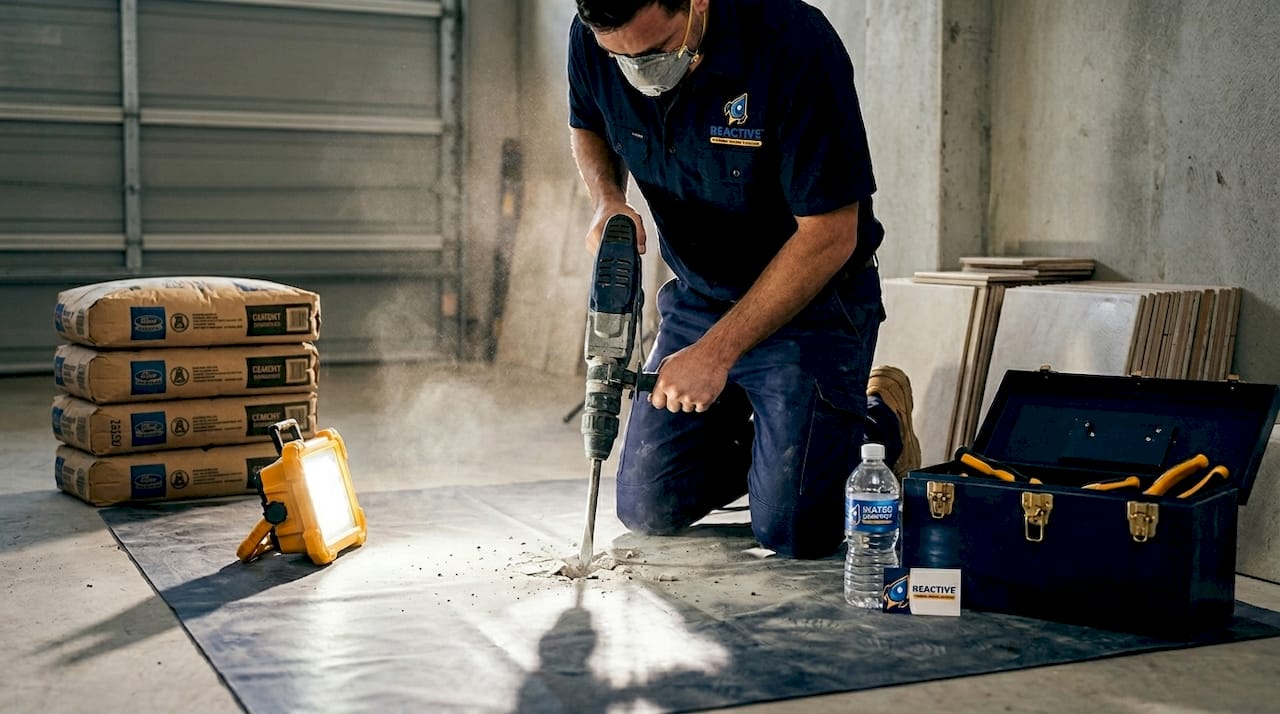
The more significant challenge is scope creep. Complex jobs can expand once access is opened up. A plumber may quote based on what they can see externally, then discover corroded pipes, old-style joints, or multiple fault points once they get inside. This is not a trick. It is a genuine reality of older homes, and it is worth knowing about before the job starts.
A few things worth keeping in mind:
- Ask your plumber directly whether the quote covers access and reinstatement, or just the plumbing repair itself
- Request a scope-change clause in writing so you are notified before any extra work proceeds
- Be wary of very low initial quotes on jobs that clearly involve complex access
Pro Tip: If your home was built before 1980 or has had previous unrecorded renovations, budget a buffer of 20–30% above the initial quote for complex plumbing work. Discovering unexpected pipe configurations is common in older Australian homes.
3. Parts, materials, and the cost of urgency
When a plumber needs a part at 10pm on a Sunday, their options are limited. This is where the cost breakdown for plumbing can become unpredictable and frustrating for homeowners who are not prepared for it.
Parts sourced during emergencies are often priced above standard retail. Plumbers carry a selection of common components on their truck, but specialist or less common parts may require an urgent supply run or after-hours delivery from a trade supplier. These logistics carry real costs, and they are passed on to the customer.
Here is what typically influences the parts portion of your bill:
- Standard stock items: Kept on the truck, billed at trade price plus a reasonable markup
- Non-standard or specialist parts: May require ordering or sourcing from a second supplier, adding both time and cost
- Same-night delivery: Some suppliers offer emergency delivery, but at a significant premium
- Older or discontinued parts: Homes with dated plumbing may need custom-machined or specially sourced components
The best thing you can do is ask for an itemised quote before authorising work. Ask upfront about pricing structure and request that materials and labour are listed separately on any written estimate. This protects you from bill padding and makes it easy to compare if you have time to get a second opinion.
4. Location and local market conditions
Where you live plays a bigger role in urgent plumbing service prices than most homeowners realise. It is not just about distance. It is about the economic conditions of your area, the density of available plumbers, and the practical realities of getting someone to your door quickly.
Urban areas typically see 20 to 30% higher emergency plumbing costs compared to rural regions. Higher cost of living, greater overhead for businesses operating in metro areas, and stronger demand all contribute to that premium. In cities like Sydney or Brisbane, the sheer volume of after-hours callouts keeps rates competitive among providers, but it also sustains a higher baseline.
| Location type | Typical cost influence | Notes |
|---|---|---|
| Metro CBD (e.g. Sydney, Brisbane) | 20–30% above national average | High demand, high overhead, travel surcharges within dense areas |
| Inner suburbs | Close to metro rates | Good plumber availability, moderate travel costs |
| Outer suburbs / growth corridors | Slightly lower, but travel fees apply | Fewer providers, longer response times possible |
| Regional towns | Lower base rates | Limited after-hours availability can create its own premium |
| Rural areas | Variable | Travel distance can add significant flat-rate fees |
Travel distance and fuel surcharges are real line items in many emergency plumber fees. A plumber servicing the Northern Beaches or outer suburbs may add a travel fee that reflects genuine time and fuel costs. This is worth asking about upfront, especially if you live in a less central area.
5. Minimum charge policies and how they affect your bill
Many homeowners are caught off guard by minimum billing policies. Even if your plumber fixes a loose fitting in 20 minutes, you will almost certainly be charged for a minimum block of time.
Minimum billed time for emergency callouts is typically one to two hours at the applicable emergency rate. At a holiday rate of 3x, a one-hour minimum charge can mean paying for three hours worth of standard labour before a single additional tool is picked up. This is not deceptive practice. It reflects the real cost of mobilising a tradesperson outside business hours, driving to your property, and being available at short notice.
What you should do is ask specifically about the minimum charge before the plumber arrives. Some providers bundle the callout fee into the minimum billed time; others charge both separately. Knowing the difference helps you understand your floor cost before work begins.
6. Risk premiums for hazardous emergencies
Not all plumbing emergencies carry the same risk, and your bill will often reflect the danger involved. True emergencies such as gas leaks, active flooding, or sewage backups involve additional risk to the plumber and the property, and that risk is priced in.
- Gas leaks require immediate shut-off procedures, safety checks, and often involve additional licensed gas-fitting work. These jobs carry liability implications that add to the base cost.
- Active flooding means the plumber is working in wet, potentially hazardous conditions with urgency. Extended time on site and the risk of electrical proximity both factor into pricing.
- Sewage backups involve health and safety protocols, protective equipment, and more thorough clean-up requirements.
- High-rise or commercial properties add complexity through access requirements, body corporate protocols, and the scale of potential damage.
For these situations, paying the emergency premium is justified when you consider what unchecked water or gas damage can cost. Flood damage to flooring, cabinetry, and structural elements runs to tens of thousands of dollars. The callout fee looks very different when weighed against that.
7. The cost of delay: why acting fast can save money overall
Delaying a call can feel like the frugal choice, but in plumbing emergencies, waiting often turns a $400 repair into a $4,000 restoration. Emergency calls that prevent ongoing water damage consistently save far more in secondary repairs than the premium paid for after-hours service.
Water moves fast through a home. It soaks into subfloors, wicks up wall framing, and creates ideal conditions for mould within 24 to 48 hours. A leaking pipe behind a vanity unit may seem minor, but left overnight it can damage cabinetry, floor tiles, and the ceiling of the room below.
The practical takeaway is simple. For true emergencies, call immediately. For non-urgent issues, book the first available appointment rather than waiting and hoping. A plumbing emergency preparedness checklist can help you know exactly which situations need immediate action and which can wait for business hours.
My take on understanding emergency plumbing costs
In my experience, the homeowners who feel most blindsided by emergency plumbing bills are the ones who never asked about pricing before the work started. It is understandable. When water is pouring through your ceiling, pricing feels like a secondary concern. But those first 60 seconds of conversation with your plumber are the most valuable.
I have seen jobs quoted at $500 land at $2,200 once access through a tiled wall was factored in. Not because anyone was dishonest, but because scope changes are genuinely hard to predict in old homes. The plumbers who build trust are the ones who call you before proceeding, explain what they found, and give you options.
Homeowners who ask two or more questions about fee structure pay around 18% less on after-hours costs on average. That statistic has always stuck with me. It shows that being informed and asking direct questions is not just reassuring. It materially changes the outcome.
Build a shortlist of licensed local plumbers you trust before you need one. A 24-hour rapid response plumber you have vetted in advance is worth far more than a random search at midnight.
Reactive Plumbing & Electrical: clear pricing for when it matters most
When an emergency hits, you should not have to guess what the bill might look like. At Reactive Plumbing & Electrical, we give you transparent, itemised pricing before work begins, so there are no surprises on the invoice. Our licensed plumbers are available 24/7 across Sydney, Brisbane, Newcastle, Wollongong, Ipswich, and the Gold Coast, with well-equipped vehicles ready to respond fast.
Whether you need drain clearing in Sydney or a local plumber across Brisbane, our team is ready to respond. We also offer plumbing services in Kalinga and surrounding suburbs for residents who need fast, trustworthy help. Call us any time, and we will walk you through the costs before we start.
FAQ
What are the main factors that affect emergency plumbing costs?
The main factors are timing (after-hours versus business hours), job complexity, parts availability, and your location. Public holiday callouts can cost up to three times the standard rate, while complex access work can add $500 to $2,000.
How much does an emergency plumber typically cost in Australia?
Most residential emergency plumbing repairs cost between $300 and $1,500, though severe or complex jobs can exceed this. The final amount depends on when you call, what needs fixing, and where you live.
Why do emergency plumbers charge a callout fee?
Callout fees reflect the real cost of mobilising a tradesperson at short notice, including travel time and the guarantee of availability. These fees typically range from $150 to $250 and may be separate from or included in the minimum billed time.
Can I reduce emergency plumbing costs by waiting until morning?
For non-urgent issues like a slow drip or minor leak, waiting until business hours can save you significantly on after-hours surcharges. For active flooding, sewage backups, or gas leaks, call immediately as delays increase total damage costs.
Should I ask for an itemised quote before work starts?
Yes. Always ask for a line-item breakdown of labour, parts, callout fees, and any access or reinstatement costs. Getting an itemised estimate before authorising work protects you from unexpected charges and makes it easier to understand exactly what you are paying for.