What is leak detection and why does it matter?
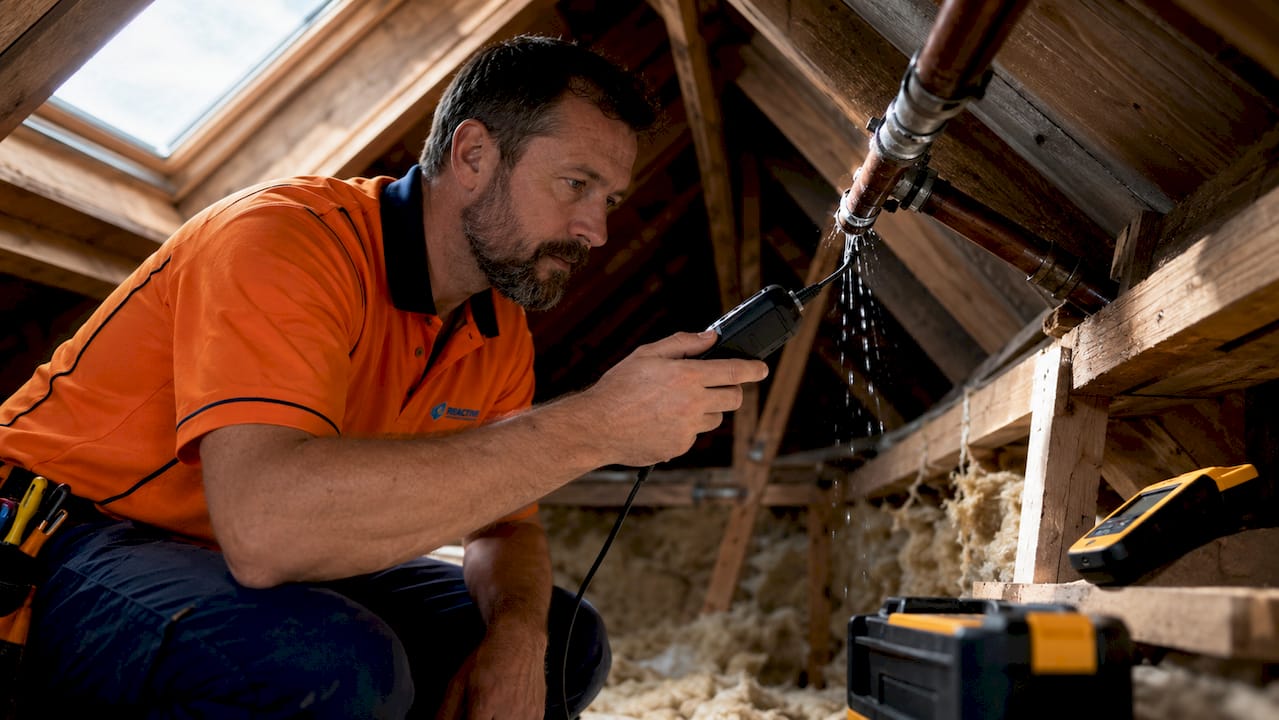
Leak detection is the systematic process of identifying and locating hidden water leaks in a property before they cause significant damage or inflate your water bills. Most leaks are invisible. They hide behind walls, under slabs, and beneath floors for months before any obvious sign appears. Undetected leaks in an average home can waste over 10,000 gallons of water annually. The financial stakes are just as serious. The average cost to repair a burst pipe reached approximately £17,000 in 2023. Understanding what leak detection involves, and acting on it early, is the most cost-effective decision a homeowner or property manager can make.
What leak detection methods are used in residential properties?
Leak detection methods range from simple checks you can do yourself to advanced professional techniques that locate leaks without breaking a single tile. Knowing which approach suits your situation saves both time and money.
Simple checks you can do yourself
The water meter test is the most reliable DIY method. Turn off every tap and water-using appliance in the house, then check whether your water meter is still moving. Any movement confirms water is escaping somewhere in the system. Visual inspection also helps. Look for damp patches on ceilings, discolouration on walls, or soft spots in flooring. Listening for the sound of running water when all taps are off is another useful first step.
These checks are a good starting point, but they cannot tell you where the leak is. That is where professional methods become necessary.
Professional non-invasive detection techniques
Non-invasive detection methods include acoustic listening, thermal imaging, moisture mapping, and line tracing. Acoustic listening uses sensitive microphones pressed against pipes or surfaces to pick up the sound frequency of escaping water. Thermal imaging cameras detect temperature differences caused by moisture, making wet areas visible even behind walls. Moisture mapping involves scanning surfaces with a moisture metre to build a picture of where water has spread. Line tracing sends a signal through a pipe to track its exact path underground or through a slab.
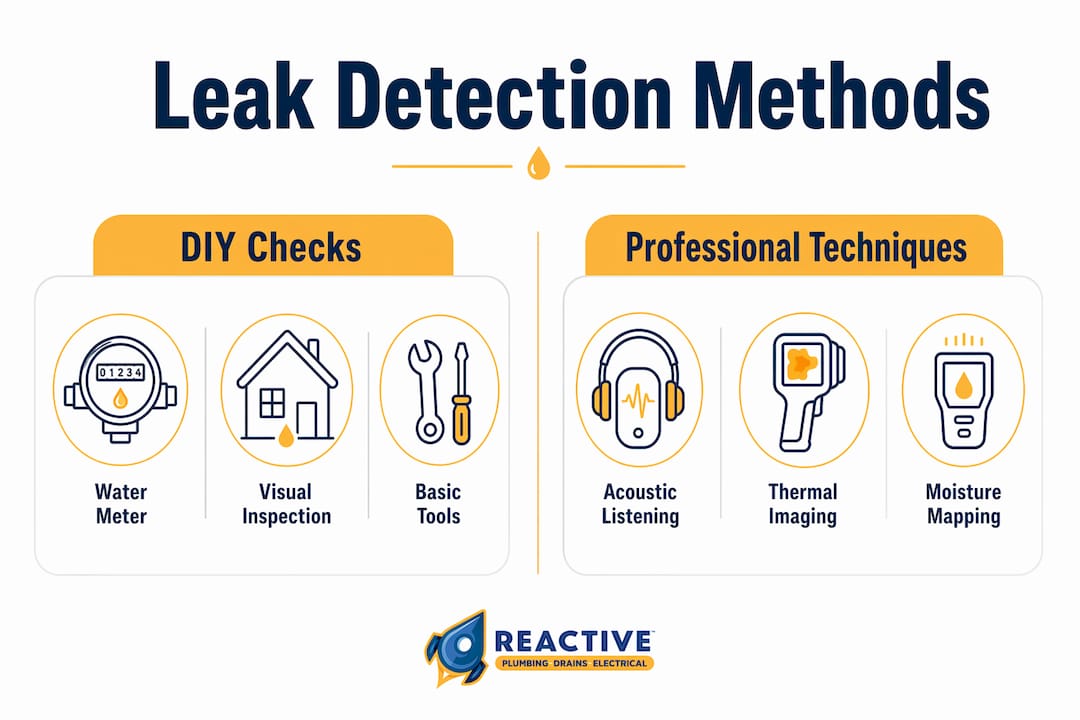
Each method has its strengths. Acoustic listening works well on pressurised pipes. Thermal imaging excels at finding leaks behind finished surfaces. Moisture mapping is best for understanding how far damage has already spread.
Pro Tip: If your water bill has risen unexpectedly but you cannot see any visible signs of a leak, call a licensed plumber for acoustic or thermal detection before assuming the meter is faulty.
What are the key benefits of professional leak detection services?
Professional leak detection delivers far more value than simply finding a drip. The real benefit is certainty. Professional detection avoids costly guesswork and the damaging trial-and-error demolition that comes with random searching. A plumber who knows exactly where a leak sits can make one targeted repair instead of cutting through multiple walls or lifting large sections of flooring.
The benefits for homeowners and property managers include:
- Preventing secondary damage. Water that travels undetected through a structure causes rot, corrosion, and concrete deterioration. Finding it early stops that chain reaction.
- Reducing water bills. Fixing a hidden leak immediately cuts ongoing waste and brings quarterly bills back to normal.
- Protecting health. Moisture behind walls creates the conditions for mould growth within 24–48 hours. Early detection removes that risk before it becomes a health issue.
- Preserving property value. A home with a documented history of professional leak repairs is easier to sell and simpler to insure.
- Peace of mind. Knowing a thorough inspection has been completed removes the anxiety of wondering whether something is wrong inside your walls.
“The true value of leak detection lies not just in finding leaks, but in providing certainty that enables targeted, efficient repairs and minimises property damage.”
The detection fee is almost always a fraction of the repair bill that follows undetected damage. Paying for a professional inspection upfront is a sound investment, not an optional extra.
How do modern leak detection technologies work?
Modern leak detection technology has moved well beyond a plumber pressing an ear to a wall. The most advanced systems use vibration-acoustic sensors that capture the sound signature of escaping water and analyse it across multiple frequency ranges. This approach filters out background noise and isolates the specific pattern of a leak, even in noisy urban environments.
At the leading edge of the field, multimodal two-stream feature-fusion neural networks achieve 98.37% accuracy in identifying leaks in complex water supply pipelines. That level of accuracy means fewer false positives and far less unnecessary excavation. This technology is currently applied in large-scale infrastructure, but the underlying acoustic and frequency analysis principles are already present in the professional-grade equipment used by licensed plumbers.
For residential and commercial properties, flow monitoring and moisture detection devices provide real-time alerts when water consumption spikes or unexpected dampness appears. The EPA WaterSense programme recommends combining both flow sensors and moisture detectors for the most complete protection. Flow sensors track how much water moves through a pipe at any given moment. Moisture detectors respond to the presence of water at a specific location. Together, they catch both active leaks and slow seepage.
Pro Tip: For commercial properties or large residential buildings, ask your plumber about installing permanent flow monitoring at the water main. It pays for itself quickly by catching leaks before they escalate.
Technology does have limits. It cannot reliably detect very slow seepage through porous materials, and no sensor replaces the judgement of an experienced plumber who understands how a specific property is built.
When should you call a professional leak detection service?
Some situations call for professional help immediately. Waiting for obvious damage to appear is one of the most costly mistakes a homeowner can make. By the time water stains appear on a ceiling or a floor feels soft underfoot, the leak has often been active for weeks.
Call a professional leak detection service when you notice any of the following:
- Your water meter moves when every tap and appliance is switched off.
- Your water bill rises sharply without any change in household usage.
- You hear running water inside walls or under floors when nothing is turned on.
- You notice a musty smell in a room with no obvious source.
- You are buying or selling a property and want a clear picture of the plumbing condition.
Slab leaks, leaks behind tiled walls, and intermittent leaks that appear and disappear are particularly difficult to locate without professional equipment. These situations are high risk because the damage accumulates silently. Mould can establish itself, structural elements can weaken, and repair costs grow with every week of delay.
A professional plumber will assess the property, use the appropriate detection method, and provide a written report of findings. That report is useful documentation for insurance claims and property transactions. Keeping records of all detection and repair work adds measurable value to your property over time.
Pro Tip: Schedule a professional leak inspection every two years for properties older than 20 years, or after any significant ground movement such as drought, heavy rain, or nearby construction.
Practical steps to prevent leaks and catch them early
Prevention and early detection work together. A few consistent habits significantly reduce the risk of a hidden leak causing serious damage to your home.
- Check your water metre monthly. Note the reading, wait two hours without using any water, and check again. Any change points to a leak somewhere in the system.
- Inspect visible pipes and fittings twice a year. Look under sinks, around the base of toilets, and near the hot water system for signs of moisture or corrosion.
- Install moisture sensors in high-risk areas. Under the kitchen sink, behind the washing machine, and near the hot water system are the three most common leak locations in Australian homes.
- Follow a home plumbing maintenance checklist. Routine checks catch small problems before they become expensive ones.
- Keep records of all plumbing work. Date, scope, and the name of the licensed plumber who completed the job. This documentation supports insurance claims and helps future plumbers understand the history of your system.
- Schedule professional inspections proactively. Do not wait for a problem to appear. A planned inspection costs far less than an emergency plumbing call-out.
Combining these habits with a dual sensor approach, flow monitoring at the main and moisture sensors at key locations, gives you the most complete early warning system available for a residential property.
Key takeaways
Professional leak detection is the most cost-effective way to protect your property, reduce water waste, and avoid the structural damage that hidden leaks cause over time.
| Point | Details |
|---|---|
| Early detection saves money | Undetected leaks waste over 10,000 gallons annually and can lead to repair bills exceeding £17,000. |
| Non-invasive methods are available | Acoustic listening, thermal imaging, and moisture mapping locate leaks without demolition. |
| Modern technology is highly accurate | Neural network-based detection achieves 98.37% accuracy, reducing unnecessary excavation. |
| Documentation adds property value | Records of professional detection and repair support insurance claims and property resale. |
| Dual sensors offer the best protection | Combining flow monitors with moisture detectors catches both active leaks and slow seepage. |
What I’ve learned after years of watching leaks get worse
I have seen the same pattern repeat itself more times than I can count. A homeowner notices something slightly off, a higher bill, a faint smell, a small damp patch, and decides to wait and see. Six weeks later, we are pulling up flooring, cutting into walls, and dealing with mould that has spread further than anyone expected.
The “wait and see” approach costs more than the inspection would have. Every time. The misconception I hear most often is that leak detection is only worth calling for when you can already see water. That is backwards. The whole point of professional detection is to find what you cannot see.
There is also a tendency to underestimate older properties. Homes built before the 1980s often have copper or galvanised steel pipes that have been corroding quietly for decades. These properties benefit most from regular professional inspections, not because something is necessarily wrong, but because the risk profile is higher and the cost of catching a problem early is so much lower than the cost of fixing it late.
My honest advice: treat leak detection the same way you treat a dental check-up. You do not wait until you are in pain. You go regularly, catch problems early, and avoid the expensive procedure that follows neglect.
— Brent
Reactive Plumbing & Electrical: expert leak detection for your home
Reactive Plumbing & Electrical uses professional-grade acoustic, thermal, and moisture detection equipment to locate leaks accurately without unnecessary damage to your property. Our licensed plumbers serve homeowners across Sydney, Newcastle, Wollongong, Brisbane, Ipswich, and the Gold Coast, with fast response times and clear written reports after every inspection.

Once a leak is confirmed, we offer no-dig pipe relining as a repair option that avoids excavation and restores your pipes from the inside. For properties with older sewer or stormwater lines, trenchless pipe relining is often the most practical and cost-effective solution available. Contact Reactive Plumbing & Electrical to book a leak detection inspection or speak with one of our team about the right approach for your property.
FAQ
What is leak detection in simple terms?
Leak detection is the process of finding hidden water leaks in a property using visual checks, listening equipment, or specialist technology before they cause visible damage.
How does professional leak detection work?
A licensed plumber uses tools such as acoustic sensors, thermal imaging cameras, and moisture metres to locate the exact source of a leak without opening up walls or floors unnecessarily.
How much water does an undetected leak waste?
Undetected household leaks can waste over 10,000 gallons of water per year, significantly increasing water bills and the risk of structural damage.
Can I detect a water leak myself?
You can perform a basic water metre test and visual inspection, but locating the source of a hidden leak reliably requires professional equipment and a licensed plumber.
Why is early leak detection important for property managers?
Early detection prevents costly secondary damage, supports insurance claims, and protects resale value by maintaining a documented record of professional plumbing maintenance.