Temporary fixes for burst pipes: stop the damage fast
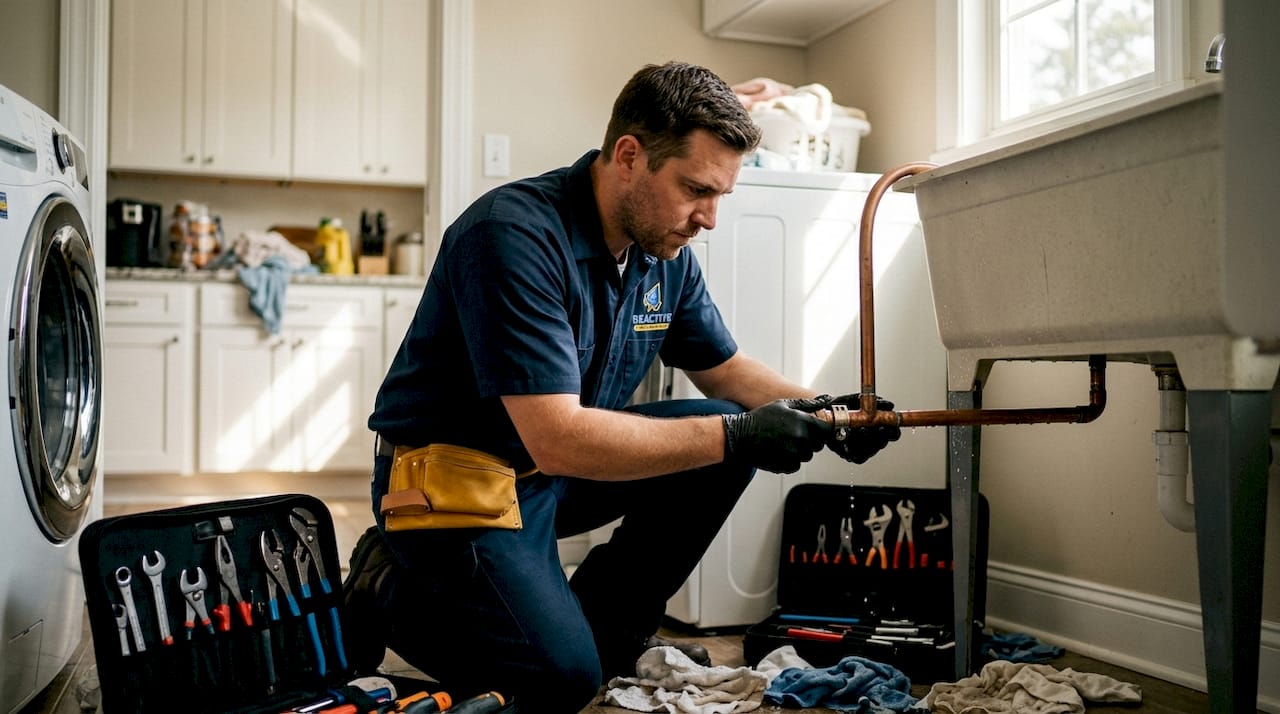
A burst pipe is defined as a sudden fracture or split in a water line that releases pressurised water into your home or business. Temporary fixes for burst pipes are emergency actions taken to control leaks swiftly and prevent water damage before a licensed plumber arrives. A half-inch pipe burst at standard pressure can discharge over 50 gallons per hour, creating more than 3 inches of standing water on a 10×10 foot floor within 60 minutes. That figure tells you one thing clearly: every second you wait costs you more. The steps you take in the first few minutes determine how much damage you are left to deal with.
1. Why shutting off the water supply comes first
The single most effective action you can take is shutting off the main water supply valve immediately. Every other temporary repair method depends on this step being done first. You cannot patch a pipe that is still under pressure.
Find your main shut-off valve before an emergency happens. In most Australian homes, it sits near the water metre at the front of the property or under the kitchen sink. Businesses typically have a dedicated isolation valve in the plant room or near the metre box.
Once the main valve is closed, the leak does not stop immediately. 5 to 15 gallons can continue leaking from residual pressure trapped in the lines. Open the lowest tap in the building to drain that residual water and equalise pressure throughout the system.
Electrical safety is equally critical. If the burst pipe is near power points, light fittings, or any electrical circuit, switch off the power at the main breaker before touching anything. Water and electricity together create a life-threatening hazard.
Pro Tip: Take a photo of your main shut-off valve location and save it in your phone. In a panic, you will not have to search for it.
- Locate and close the main water supply valve
- Open the lowest tap to drain residual water from the lines
- Work from the highest tap down to the lowest to equalise pressure
- Switch off power at the main breaker if water is near any electrical fitting
- Call a licensed plumber immediately after completing these steps
2. Pipe repair clamps for a fast physical seal
A pipe repair clamp is the most reliable quick pipe repair solution for accessible pipes. It consists of a rubber gasket and a metal sleeve that wraps around the damaged section and is tightened with bolts. Clamps work on copper, PVC, and steel pipes and can hold a leak for days when fitted correctly.
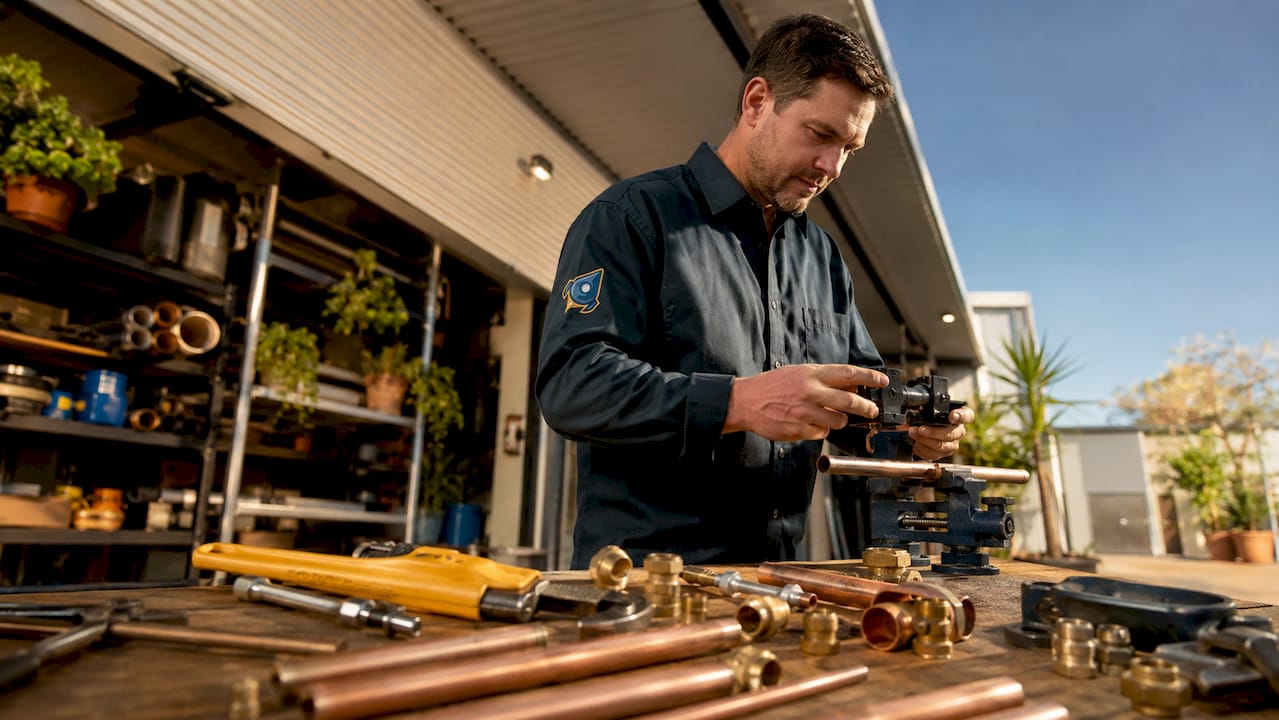
You can find repair clamps at most hardware stores across Australia. Choose a clamp sized to match your pipe diameter exactly. A clamp that is too wide will not seal properly and may slip under residual pressure.
Temporary fixes like clamps are designed only for short-term stabilisation and are not code-compliant replacements for permanent repairs. A clamp buys you time. It does not fix the underlying problem.
3. Epoxy putty for pinhole leaks and small cracks
Epoxy putty is a two-part compound you knead together by hand until it forms a uniform colour, then press firmly over the leak. It bonds to wet surfaces and hardens to a waterproof seal within minutes, making it one of the most practical DIY pipe leak solutions for small damage.
The putty works best on pinhole leaks, hairline cracks, and small splits on copper or PVC pipes. It is not suitable for large fractures or pipes under high pressure. Always read the product instructions for cure time before restoring water flow.
Surface preparation is critical for epoxy to adhere properly. Dry the pipe surface, sand away any rust or paint, and degrease the area before applying the putty. Skipping this step is the most common reason epoxy repairs fail within hours.
Pro Tip: Wear disposable gloves when kneading epoxy putty. The compound generates heat as it cures and can irritate skin with prolonged contact.
4. Water-activated fibreglass tape for a stronger wrap
Water-activated fibreglass repair tape is a step up from standard pipe tape. You soak it in water, then wrap it tightly around the damaged section in overlapping layers. Specialised pipe repair kits using this method cure in 30–60 minutes and can hold pressures up to 400 psi. That pressure rating is well above typical residential water supply pressure in Australia, which sits around 500 kPa (roughly 72 psi).
Fibreglass tape works best when combined with epoxy putty. Apply the putty first to fill the crack, then wrap the tape over the top for added strength. This layered approach is one of the most effective interim pipe sealant methods available to homeowners without specialist tools.
5. Rubber patch and jubilee clip method
A rubber patch cut from a bicycle inner tube or a sheet of rubber, held in place with jubilee clips (also called hose clamps), is a classic emergency plumbing fix that has saved many homeowners from serious water damage. It costs almost nothing and uses materials you may already have in the garage.
Cut the rubber patch large enough to extend at least 5 centimetres beyond the crack on each side. Press it firmly against the pipe, then tighten the jubilee clips over the top to hold it in place. The compression creates a temporary seal that can hold for several hours.
This method works best on straight pipe sections with visible, accessible damage. It is not suitable for joints, elbows, or corroded pipe surfaces where the rubber cannot form a flat seal.
6. Push-fit couplings for accessible pipe sections
A push-fit coupling (sometimes called a slip coupling) is the closest a DIY repair gets to a professional fix. You cut out the damaged section of pipe and push the coupling onto both ends. No glue, no solder, no special tools required.
Push-fit couplings provide code-compliant, durable temporary fixes on suitable pipe sections. They work on copper and PVC pipes and are available in standard sizes at plumbing supply stores. If you install one correctly on an accessible pipe, it can hold reliably until your plumber arrives.
The limitation is access. If the burst pipe is inside a wall cavity, under a slab, or in a ceiling space, a push-fit coupling is not a realistic option without cutting into the structure. In those situations, call a licensed plumber immediately rather than attempting further DIY.
7. Repairing pipes with tape as a last resort
Standard plumber’s tape (PTFE tape) is not designed to seal burst pipes. It is a thread sealant used on fittings, not a patch material. Using it on a crack will not hold under pressure and may give you false confidence while water continues to damage your home.
Self-amalgamating silicone tape is a different product and a better option. It stretches and fuses to itself without adhesive, creating a waterproof wrap around the pipe. It works on small leaks and pinhole damage on pipes that have been dried and isolated from pressure.
Repairing pipes with tape of any kind is a last resort when no other materials are available. Treat it as a 30-minute measure while you source a proper repair clamp or epoxy kit.
8. How to choose the right fix for your pipe type and damage
Not every temporary repair works on every pipe. Matching the method to the material and damage type is what separates a fix that holds from one that fails within minutes.
| Pipe type | Best temporary fix | Avoid |
|---|---|---|
| Copper | Push-fit coupling, epoxy putty, clamp | Tape alone |
| PVC | Push-fit coupling, fibreglass tape, clamp | Epoxy on large cracks |
| Steel (galvanised) | Repair clamp | Epoxy or tape on corroded sections |
| Polyethylene | Rubber patch, clamp | Push-fit couplings (check compatibility) |
Corroded pipes with rust or significant degradation usually need replacement rather than patching. Applying tape or putty to a corroded surface risks failure and can worsen the water damage. If the pipe looks heavily rusted or pitted, skip the DIY fix and call a plumber.
For situations where you are unsure whether to attempt a repair yourself, Reactive Plumbing & Electrical has a practical guide on when to call a licensed plumber versus handling it yourself.
9. Controlling water damage while you wait for the plumber
Getting the leak under control is only half the job. The water already on the floor or inside your walls starts causing structural damage and mould growth within 24 to 48 hours. Acting quickly on damage control reduces your repair costs, which can range from $150 to $5,000 depending on severity and location.
- Move furniture, rugs, and valuables out of the wet area immediately
- Place towels and buckets to capture ongoing drips
- Open windows and doors to ventilate the space and slow mould growth
- Use a fan or dehumidifier if you have one available
- Do not use a vacuum cleaner or electrical appliance in a wet area
- Photograph all damage for your insurance claim before cleaning up
Mould and structural damage after a plumbing failure can significantly increase restoration costs. Ventilating the affected area and removing wet materials quickly is the most effective way to limit that risk.
Keep the power off in any area where water has reached the floor or walls near electrical fittings. Do not restore power until a licensed electrician has confirmed the circuits are safe.
Key takeaways
Shutting off the main water supply immediately is the single most important step in any burst pipe emergency, and every temporary repair method depends on it being done first.
| Point | Details |
|---|---|
| Shut off water first | Close the main supply valve before attempting any temporary repair. |
| Drain residual pressure | Open the lowest tap to stop ongoing leaks after the valve is closed. |
| Match fix to pipe type | Push-fit couplings suit copper and PVC; clamps work across most materials. |
| Prep the surface | Dry, sand, and degrease the pipe before applying epoxy or fibreglass tape. |
| Treat all fixes as temporary | Call a licensed plumber to complete a permanent, code-compliant repair. |
What I have learned from years of burst pipe callouts
The homeowners who limit their damage are almost never the ones with the fanciest repair kit. They are the ones who knew where their main shut-off valve was and turned it off within two minutes of the pipe bursting.
The most common mistake I see is people spending 20 minutes searching for the valve while water pours across the floor. By the time the leak stops, the damage is already done. Knowing your valve location is more valuable than any tape or clamp you could buy.
The second mistake is trusting a temporary fix too long. I have attended jobs where a homeowner applied epoxy putty three weeks earlier and assumed the problem was solved. The putty had held, but the pipe behind it had continued to corrode. When it finally let go, the damage was far worse than the original burst. Temporary repairs are safety measures, not solutions.
My honest advice is this: apply the best fix you can with what you have, limit the water damage, and get a licensed plumber on site the same day. An emergency plumbing kit with a repair clamp, epoxy putty, and fibreglass tape costs less than $50 and takes up almost no space. Every home should have one. The time to buy it is before you need it.
— Brent
When a temporary fix reveals a bigger pipe problem
A burst pipe is often a symptom of a pipe system that has been deteriorating for years. Older clay, cast iron, or PVC pipes can crack repeatedly, and patching each break individually becomes a losing battle. If your home or business has experienced more than one burst or leak in a short period, the underlying pipe may need more than a repair.
Reactive Plumbing & Electrical specialises in pipe relining over traditional replacement, a process that installs a new pipe lining inside the existing one without digging up your garden or floors. It addresses the root cause of repeated bursts and delivers a long-term fix that a clamp or epoxy simply cannot. If you are in Sydney, Newcastle, Wollongong, Brisbane, Ipswich, or the Gold Coast, our licensed team can assess your pipes and give you a clear picture of what is actually going on.
FAQ
How do I fix a burst pipe temporarily?
Shut off the main water supply valve first, then apply a pipe repair clamp, epoxy putty, or water-activated fibreglass tape to the damaged section after drying and cleaning the surface. These methods stabilise the leak until a licensed plumber can complete a permanent repair.
Can I use tape to fix a burst pipe?
Self-amalgamating silicone tape can slow a small leak on a dry, isolated pipe, but standard PTFE tape will not hold under water pressure. Tape is a last resort and should be replaced with a proper repair clamp or epoxy as soon as possible.
How long can a temporary pipe repair last?
A well-applied pipe repair clamp or push-fit coupling can hold for several days. Epoxy putty and fibreglass tape typically last 24–72 hours under normal residential pressure. All temporary fixes require follow-up by a licensed plumber for a permanent, code-compliant solution.
When should I call a plumber instead of attempting a DIY fix?
Call a plumber immediately if the burst pipe is inside a wall, under a slab, near electrical wiring, or on a heavily corroded pipe. Attempting a repair in these situations risks making the damage worse and creates serious safety hazards.
What should I do about water damage after a burst pipe?
Remove furniture and valuables from the wet area, ventilate the space to slow mould growth, and photograph all damage for your insurance claim. Mould can begin developing within 24 to 48 hours, so acting quickly on drying and ventilation significantly reduces restoration costs.