How emergency leak detection works: a homeowner’s guide
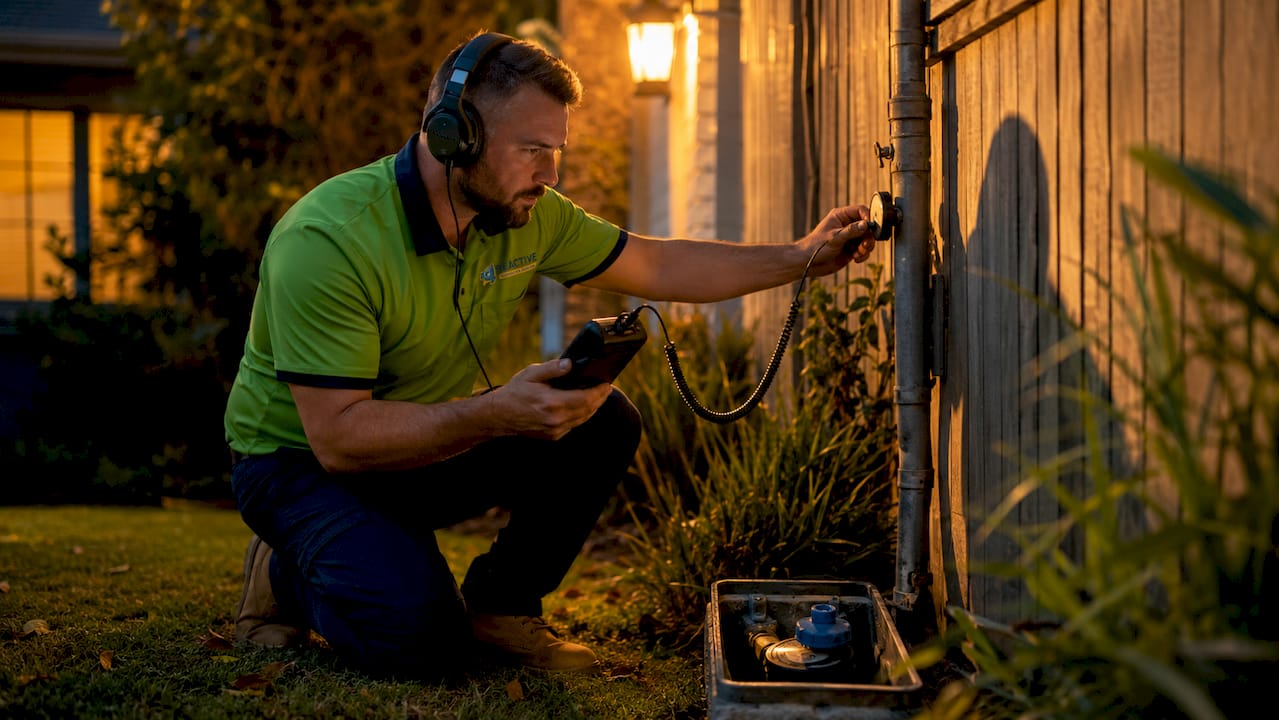
Emergency leak detection is the process of rapidly locating hidden water or gas leaks using specialised, non-invasive technology before visible damage takes hold. Professionals use tools like acoustic listening devices, thermal imaging cameras, and tracer gas injection to pinpoint leaks behind walls, under floors, and beneath concrete slabs. Understanding how emergency leak detection works gives you a clear picture of what to expect when you call a licensed plumber, and why acting fast is far cheaper than waiting. Reactive Plumbing & Electrical responds to these situations across Sydney, Newcastle, Brisbane, and the Gold Coast, 24 hours a day, seven days a week.
What technologies are used in emergency leak detection?
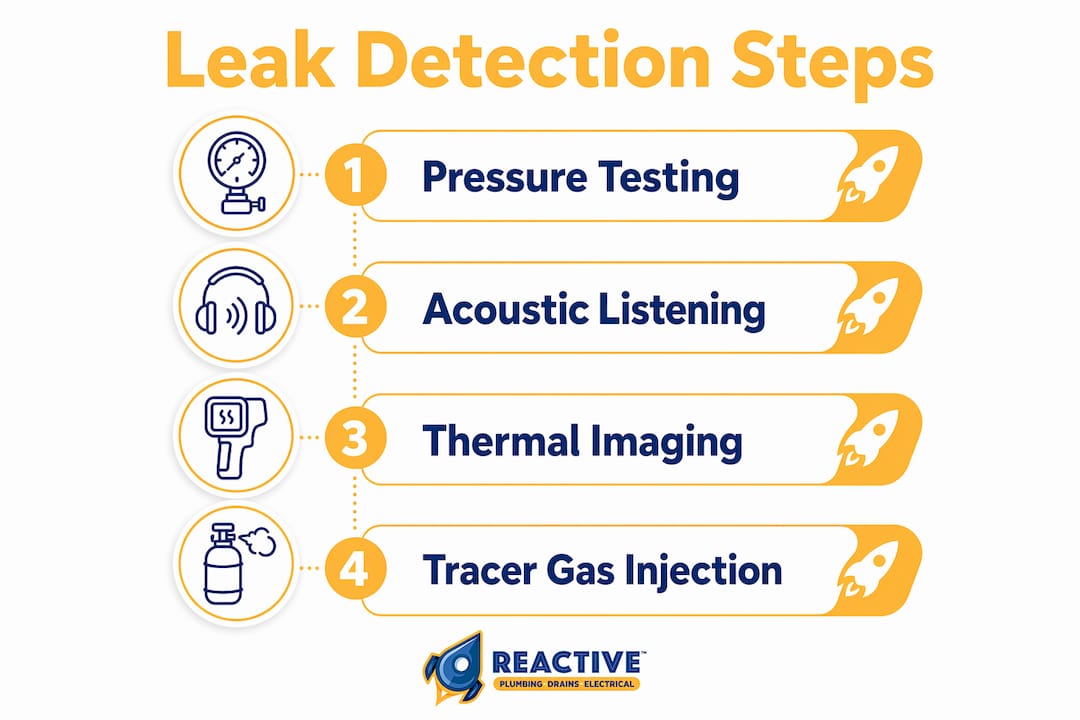
Professional leak detection combines pressure testing, acoustic listening, tracer gas, and thermal imaging to locate leaks with minimal disruption. Each method targets a different type of leak scenario, so technicians typically use two or more together for the most reliable result.
Acoustic listening devices
Acoustic devices detect vibration and sound changes within pressurised pipes to locate hidden leaks behind walls or beneath floors. A technician places the sensor against the pipe or surface and listens for the distinctive hiss or frequency shift that escaping water creates. This method is non-invasive, meaning no cutting or drilling is needed to get a result.
Thermal imaging
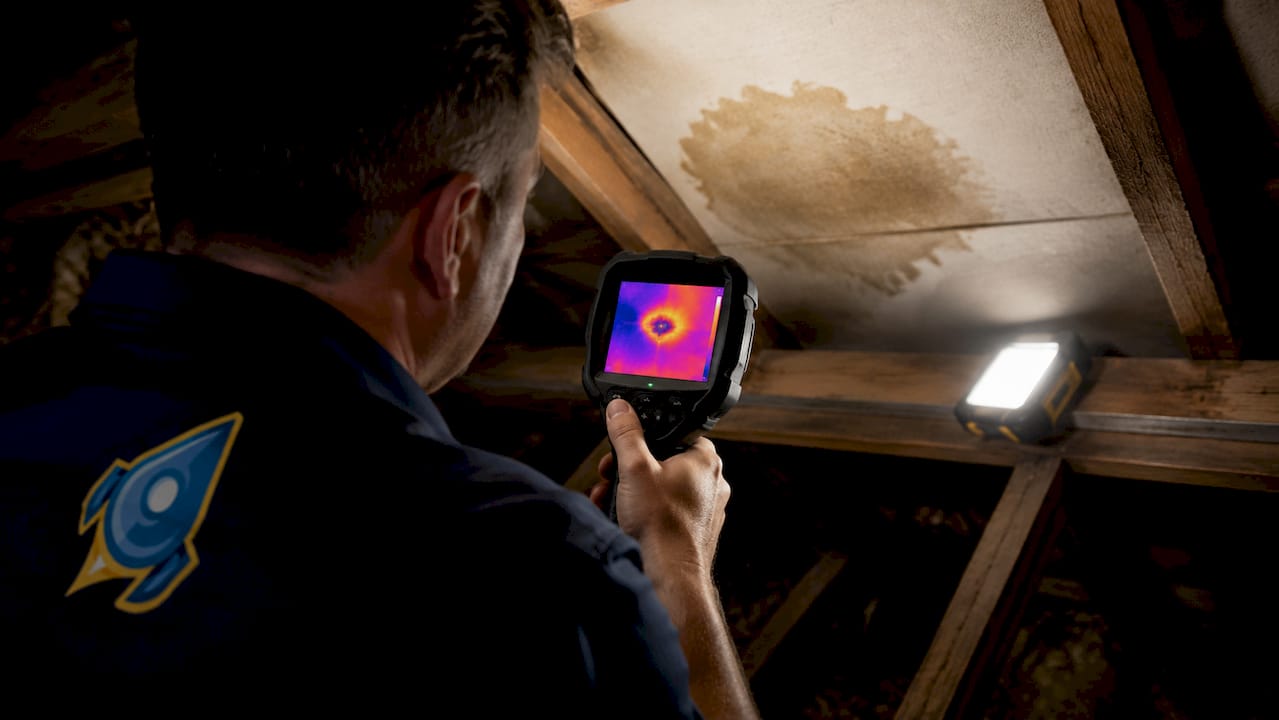
Thermal imaging reveals temperature anomalies, such as cold spots caused by moisture, helping technicians map affected areas without opening walls. Used alongside moisture metres, it estimates how far saturation has spread and helps prioritise which areas need repair first. This is particularly useful in bathrooms, kitchens, and laundries where pipes run inside tiled walls.
Pressure testing
Pressure testing confirms whether a leak exists and gives a measure of its severity. A technician isolates a section of pipe, pressurises it with air or water, and monitors whether pressure holds steady. A pressure drop confirms a breach somewhere in that section.
Tracer gas
Tracer gas injection uses a mixture of nitrogen and hydrogen, which is non-toxic and non-flammable, to find underground or deeply concealed leaks. The gas escapes through the leak point and rises to the surface, where a sensitive detector picks it up. This method excels at finding leaks under concrete slabs or in buried pipework where other tools cannot reach.
| Method | Best use | Key benefit |
|---|---|---|
| Acoustic listening | Pipes inside walls or floors | No demolition required |
| Thermal imaging | Moisture mapping in tiled areas | Shows saturation extent |
| Pressure testing | Confirming and sizing a leak | Quick and definitive |
| Tracer gas | Underground or slab leaks | Pinpoints exact location |
Pro Tip: Combining acoustic listening with thermal imaging gives the most accurate result for in-wall leaks. Use tracer gas when the leak is under a concrete slab and acoustic signals are too faint to trace.
How do modern leak detectors identify water without measuring flow?
Moisture, conductivity, and temperature sensors detect leaks by responding to changes in environmental conditions rather than measuring water flow rates. This multi-sensor approach identifies slow, silent leaks that flow measurement devices simply cannot catch.
The core principle behind conductivity sensors is straightforward. Two metal probes sit close together. When water bridges the gap between them, it completes an electrical circuit and triggers an alert. Consumer-grade sensors trigger alerts when as little as 1/32 inch of water bridges the probes. That is a tiny amount of water, which means the alarm sounds long before pooling or visible damage occurs.
Modern smart water leak sensors add several layers of protection beyond basic moisture detection:
- Moisture probes detect the presence of water at floor level, ideal under sinks, near hot water systems, and behind washing machines.
- Temperature sensors flag sudden drops that suggest a burst pipe or a failing hot water system.
- Battery and connectivity monitoring alert you when the sensor itself needs attention, so you are never left with a dead device.
- Smartphone notifications send real-time alerts to your phone, even when you are away from the property.
- Automated shutoff integration connects to a mains water valve that closes automatically when a leak is detected.
The advantage of moisture detection over flow monitoring is significant. Flow monitors only flag leaks when water loss is large enough to register as unusual consumption. A slow drip behind a wall can run for weeks without triggering a flow alert. A conductivity probe placed nearby would catch it within seconds of water reaching the floor.
Pro Tip: Place a smart moisture sensor behind your washing machine, under the kitchen sink, and near the hot water system. These three locations account for the majority of household leak events.
Why is emergency leak detection important for damage prevention?
Early leak detection reduces repair scope and expense by catching problems before they cause structural rot, mould growth, or insurance complications. Delayed detection is where the real cost lies, not the leak itself.
Around 50% of water leak events occur after hours or on weekends, when no one is present to notice warning signs. That statistic explains why automated detection systems and 24/7 emergency plumbing services are not optional extras. They are the difference between a contained repair and a gutted bathroom.
Persistent dampness does serious damage quickly. Mould growth and timber decay begin within 24 to 48 hours of sustained moisture exposure. Once mould takes hold in a wall cavity, remediation costs can exceed the original plumbing repair by a wide margin. Structural timber that has been wet for several weeks may need full replacement rather than drying.
The financial case for early detection is clear. A professional detection service avoids costly “guess and cut” demolition by locating the leak precisely, allowing one targeted repair rather than multiple exploratory ones. It also strengthens insurance claims by providing documented diagnostic proof of a hidden leak, which insurers often require before approving coverage.
Pro Tip: If you are going away for more than a few days, consider installing an automated shutoff valve on your mains water supply. Automated shutoff systems stop water flow immediately, reducing damage compared to any manual response.
Signs that should prompt an immediate call to a licensed plumber include:
- Unexplained increases in your water bill
- Damp patches on walls, ceilings, or floors with no obvious cause
- The sound of running water when all taps are closed
- Soft or discoloured patches on timber flooring
- A musty smell in rooms with no visible moisture source
What happens during a professional emergency leak detection service?
A professional emergency leak detection service follows a clear sequence of steps. Knowing what to expect helps you prepare and speeds up the process.
- Symptom assessment. The technician asks about visible signs, when you first noticed them, and whether your water bill has changed. This narrows the search area before any equipment is deployed.
- Pressure test. The plumber isolates sections of your pipework and applies pressure to confirm a leak exists and identify which section is affected.
- Non-invasive scanning. Acoustic listening devices and thermal imaging cameras are used to trace the leak to a specific location. No walls are opened at this stage.
- Tracer gas injection (if needed). For slab or underground leaks, tracer gas is introduced into the pipe and detected at the surface to pinpoint the exact exit point.
- Mark-out and reporting. The technician marks the leak location on the surface and provides a written report documenting findings, affected areas, and recommended repairs.
- Repair planning. With the leak located precisely, the repair scope is defined. This avoids unnecessary demolition and keeps costs predictable.
The written report serves two purposes. It gives your tradesperson a clear repair brief, and it provides the diagnostic documentation that insurers require to process a claim. Insurance claim processes often require this proof of a hidden leak before approving coverage, so having it ready speeds up the entire process.
Knowing when to call a licensed plumber rather than attempting a DIY fix is critical. If you cannot see the leak, cannot isolate it, or suspect it is inside a wall or under a slab, professional detection is the only reliable path forward. Guessing and cutting into the wrong wall wastes time, money, and creates additional repair work.
Key takeaways
Emergency leak detection works by combining acoustic, thermal, pressure, and tracer gas methods to locate hidden leaks precisely, preventing costly structural damage and supporting faster insurance claims.
| Point | Details |
|---|---|
| Multiple methods work together | Acoustic, thermal, pressure, and tracer gas tools are combined for the most accurate result. |
| Sensors detect without flow measurement | Conductivity and moisture probes catch slow leaks that flow monitors miss entirely. |
| After-hours risk is high | Around 50% of leak events occur after hours, making automated detection and 24/7 response critical. |
| Early detection saves money | Precise location avoids demolition and reduces repair scope, keeping costs predictable. |
| Documentation supports insurance | A professional detection report provides the diagnostic proof insurers need to approve claims. |
What I’ve learned from years of emergency leak calls
The homeowners who call us after the smallest sign of a problem almost always have a better outcome than those who wait. That sounds obvious, but the number of jobs we attend where a damp patch has been “keeping an eye on” for three months is striking. By that point, the mould is in the wall cavity, the timber is soft, and what could have been a straightforward pipe repair has become a full bathroom renovation.
The other thing I have noticed is that most people assume a leak must be dramatic to be serious. A dripping tap is annoying. A burst pipe is a crisis. But the leaks that cause the most damage are the quiet ones. A pinhole in a copper pipe behind a tiled wall, weeping slowly for weeks, does more structural harm than a burst that gets noticed and fixed the same day.
Smart sensing technology is changing this. The integration of moisture sensors with smartphone alerts and automated shutoff valves means that a leak at 2am on a Sunday no longer has to become a Monday morning disaster. We are seeing more homeowners install these systems proactively, and the difference in outcomes is real. If you have an older home, particularly one built before the 1990s with original copper or galvanised steel pipework, I would treat a smart sensor system as a basic investment, not a luxury.
The last thing worth saying is this: professional detection is not an expense on top of a repair. It replaces the guesswork that makes repairs more expensive. One precise location mark is worth far more than three exploratory cuts in the wrong spots.
— Brent
Reactive Plumbing & Electrical: fast, precise leak detection across Australia
When you suspect a leak, the worst thing you can do is wait. Reactive Plumbing & Electrical provides emergency leak detection services across Sydney, Newcastle, Wollongong, Brisbane, Ipswich, and the Gold Coast, with licensed technicians available around the clock.

We use acoustic listening devices, thermal imaging, pressure testing, and tracer gas to locate leaks without unnecessary demolition. Every job includes a written report for insurance and repair planning. If detection confirms pipe damage, our team can discuss pipe relining options that repair the pipe from the inside without digging up your yard or tearing out your tiles. Call us any time, and we will have a licensed plumber on the way.
FAQ
What is emergency leak detection?
Emergency leak detection is the rapid identification and location of hidden water or gas leaks using non-invasive tools such as acoustic sensors, thermal imaging, and tracer gas. The goal is to find the exact leak point without demolition, enabling a targeted repair.
How do water leak detectors work without measuring flow?
Water leak detectors use conductivity probes that trigger an alert when water bridges two metal contacts, detecting leaks with as little as 1/32 inch of water present. This catches slow leaks that flow monitors would miss entirely.
How quickly can a professional locate a hidden leak?
Most hidden leaks are located within a single service visit using a combination of pressure testing and acoustic or thermal scanning. Complex slab leaks may require tracer gas, which adds time but still avoids any demolition.
Why is professional leak detection better than DIY investigation?
Professional detection pinpoints the exact leak location, avoiding the “guess and cut” demolition that DIY attempts often create. It also produces a written report that supports insurance claims, which a DIY investigation cannot provide.
What signs mean I need emergency leak detection right now?
Call a licensed plumber immediately if you notice unexplained rises in your water bill, damp patches with no visible cause, the sound of running water with all taps off, or a musty smell in a room. These signs point to a plumbing emergency that worsens with every hour of delay.