What is hydro jet drain cleaning? A homeowner’s guide
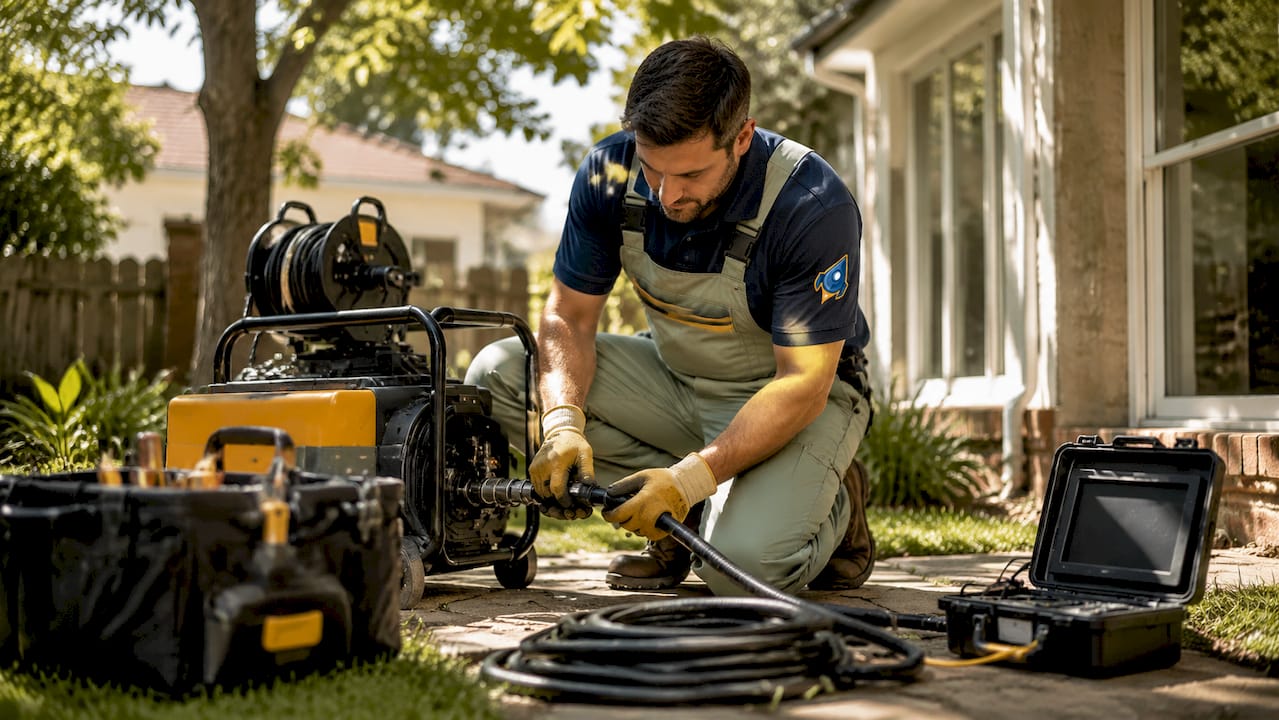
Hydro jet drain cleaning is a professional plumbing technique that uses highly pressurised water, typically between 2,000 and 4,000 PSI for residential pipes, to scour the interior walls of drains and remove blockages completely. Known in the industry as hydro jetting or jet blasting, this method goes well beyond what a plumber’s snake can achieve. Rather than simply poking a hole through a clog, it strips away grease, scale, tree root intrusions, and debris from the full circumference of the pipe. For homeowners and property managers dealing with recurring blocked drains, it is one of the most thorough and long-lasting solutions available.
How does hydro jet drain cleaning work?
The hydro jet drain cleaning process begins before any water is applied. A licensed plumber feeds a small CCTV camera through the drain to assess the pipe’s condition, checking for cracks, corrosion, or structural weakness. This step is not optional. Pre-service camera inspections are critical to confirm the pipe can tolerate high pressure without failing.
Once the pipe is cleared for jetting, the plumber inserts a flexible hose fitted with a specialised nozzle into the drain opening. The nozzle is designed to spray water in two directions simultaneously: forward jets break through the blockage, while rear-facing jets propel the hose deeper into the pipe and flush dislodged material back toward the access point. This dual-action spray is what gives hydro jetting its 360-degree cleaning capability.
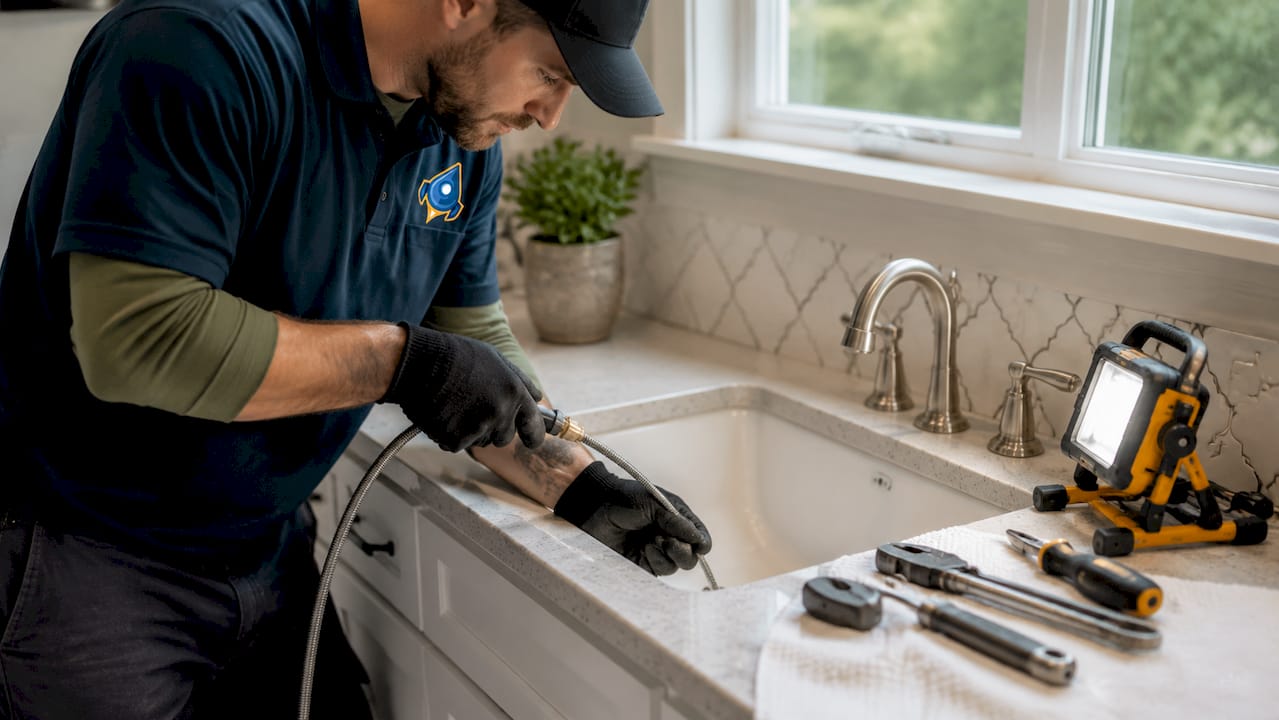
Pressure levels are calibrated to suit the pipe material and the nature of the blockage. Residential pipes typically receive between 2,000 and 4,000 PSI, while industrial applications can reach up to 35,000 PSI. A trained technician adjusts both pressure and nozzle type to match the job, which is why the equipment in skilled hands achieves deep cleaning without causing damage.
After jetting, a second camera inspection confirms the pipe is clear and undamaged. This post-service check gives you a visual record of the result, which is particularly useful for property managers maintaining multiple dwellings.
Pro Tip: Ask your plumber to provide before-and-after CCTV footage. This gives you documented proof of the clean and a baseline for future inspections.
Key steps in the hydro jet drain cleaning process:
- CCTV inspection to assess pipe condition before any pressure is applied
- Flexible hose with specialised nozzle inserted into the drain
- Forward jets break blockages; rear jets flush debris out and propel the hose
- Pressure calibrated to pipe material, typically 2,000 to 4,000 PSI for homes
- Post-service camera check to confirm results and pipe integrity
Hydro jetting vs snaking: which method is better?
The honest answer is that both methods have their place, but they are not equal in what they achieve. A plumber’s snake (also called an electric eel) is a rotating metal cable that drills through a clog. It creates a passage for water to flow again, but it leaves residue on the pipe walls. Grease, soap scum, and mineral scale cling to the interior and quickly attract new debris. The blockage returns, often within months.
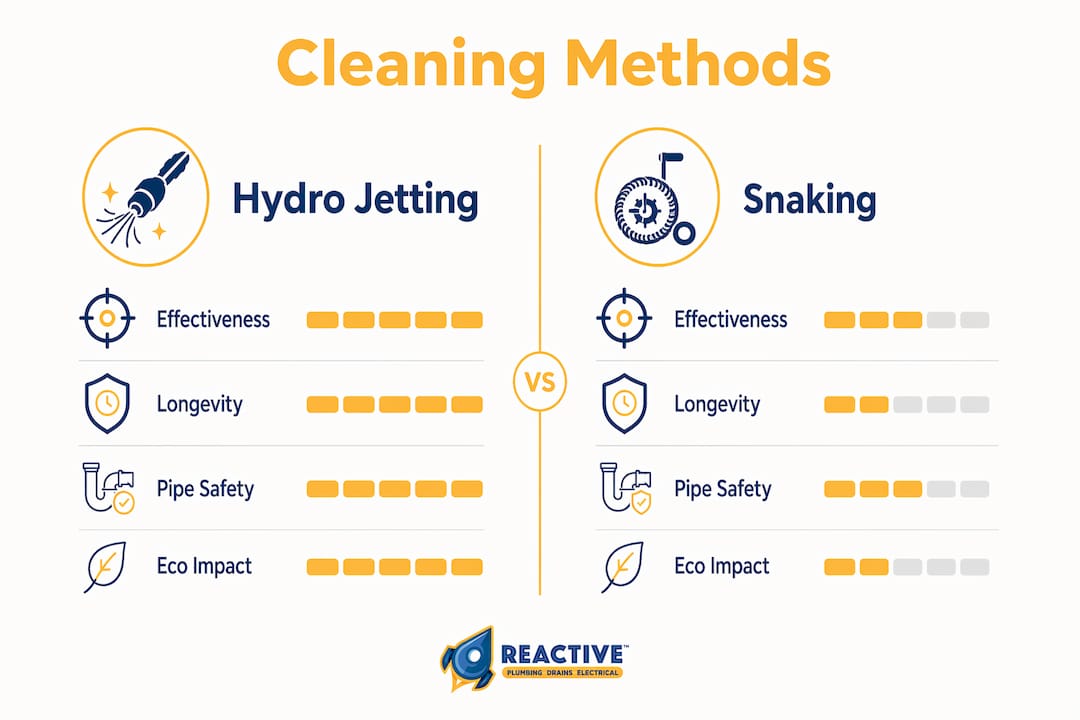
Hydro jetting thoroughly scrubs pipe walls, removing the sticky residues that cause repeat blockages and restoring pipes close to their original condition. The difference in longevity is significant. Hydro jetting provides results lasting 1 to 3 years, compared to 3 to 12 months for snaking. For a rental property or a home with a history of recurring drain problems, that difference translates directly into fewer call-outs and lower maintenance costs over time.
Chemical drain cleaners sit at the other end of the spectrum. They are cheap and convenient, but they work by dissolving organic matter using caustic compounds. Over time, those same compounds degrade pipe joints and seals. Hydro jetting uses only water, making it safe for your plumbing system and the local water table.
| Method | Effectiveness | Longevity | Pipe safety | Environmental impact |
|---|---|---|---|---|
| Hydro jetting | Removes all residue, 360-degree clean | 1 to 3 years | Safe when inspected first | Water only, no chemicals |
| Snaking | Clears passage, leaves residue | 3 to 12 months | Generally safe | Minimal |
| Chemical cleaners | Dissolves organic matter only | Weeks to months | Degrades seals over time | Harmful to waterways |
The average cost of hydro jetting ranges from $350 to $900 for residential drains and $600 to $1,800 for main sewer laterals, with most services completed in 30 to 90 minutes. When you factor in the longer interval between services, the cost per year is often comparable to or less than repeated snaking visits.
What are the risks and limitations of hydro jetting?
Hydro jetting is not the right solution for every drain or every situation. The most significant risk is applying high pressure to pipes that are already compromised. Cracked clay or brittle cast-iron pipes can fail catastrophically under 4,000 PSI of water pressure. This is precisely why a camera inspection before jetting is non-negotiable, not just a recommended extra.
Older homes in Sydney, Newcastle, and Brisbane often have clay or cast-iron drainage pipes that have been in the ground for decades. These materials become fragile over time, particularly at joints. A plumber who jets without inspecting first is taking a serious risk with your property.
There are also limitations to what jetting can achieve with tree roots. It can cut through light root intrusions at the pipe wall, but it does not remove the root mass in the surrounding soil. Roots will regrow and re-enter the pipe. In these cases, hydro jetting is best used as part of a broader treatment plan that may include pipe relining to seal the entry points permanently.
Pro Tip: Watch for these signs before booking a hydro jet service. They indicate your pipes need a camera inspection first: slow drainage across multiple fixtures, gurgling sounds from floor drains, recurring blockages in the same location, or visible rust staining around drain covers.
Snaking remains the more appropriate first response for minor, isolated clogs in otherwise healthy pipes. It is faster, less expensive, and carries no pressure-related risk. Hydro jetting is the right call when blockages are stubborn, recurring, or caused by heavy grease buildup that a snake simply cannot shift.
Is hydro jetting right for your home or property?
Deciding whether to book a hydro jetting service comes down to a few practical questions about your pipes, your history of blockages, and the age of your property. Work through these steps before making the call.
Review your blockage history. If you have had a plumber clear the same drain more than once in two years, hydro jetting is worth considering. Recurring blockages almost always indicate residue buildup on pipe walls, not just isolated debris.
Know your pipe material. PVC and modern copper pipes handle jetting well. Older clay, earthenware, or cast-iron pipes need a camera inspection first to confirm they are structurally sound. If you are unsure what your pipes are made of, a plumber can identify this during a CCTV inspection.
Look for the warning signs. Slow drains, foul odours from drains, and gurgling sounds after flushing are all indicators of partial blockages or significant buildup. These symptoms suggest the pipe walls need more than a snake can provide. You can read more about dealing with a blocked sewer line to understand when the problem goes deeper.
Book a camera inspection first. This is the single most important step. A CCTV inspection tells you the condition of your pipes, the nature of the blockage, and whether jetting is safe to proceed. It also rules out structural issues that need repair before any cleaning is attempted.
Plan for maintenance after jetting. Once your pipes are clean, keep them that way. Avoid pouring cooking fat down the kitchen drain, use a drain strainer to catch food scraps, and schedule a professional inspection every two to three years. For properties with mature trees near drainage lines, annual inspections are a sensible precaution.
Hydro jetting is particularly well suited to kitchen drains with heavy grease accumulation, main sewer lines serving multiple bathrooms, stormwater drains blocked by silt and leaf matter, and commercial kitchens or rental properties with high usage. Understanding the full range of drain cleaning methods for homes helps you choose the right approach for each situation.
Key takeaways
Hydro jetting is the most thorough drain cleaning method available, delivering results that last one to three years when applied correctly to structurally sound pipes.
| Point | Details |
|---|---|
| Definition and pressure | Hydro jetting uses 2,000 to 4,000 PSI pressurised water to scour 360-degree pipe interiors. |
| Longevity advantage | Results last 1 to 3 years, significantly longer than snaking at 3 to 12 months. |
| Camera inspection is mandatory | A CCTV check before jetting confirms pipe integrity and prevents catastrophic damage. |
| Not suitable for all pipes | Cracked, brittle, or aged clay and cast-iron pipes require assessment before high-pressure jetting. |
| Cost versus value | Residential jetting costs $350 to $900 but reduces the frequency of repeat service calls. |
Why I think hydro jetting is underused in Australian homes
From my experience working with homeowners across Sydney, Brisbane, and the Gold Coast, the same pattern comes up repeatedly. A homeowner calls a plumber, gets a snake through the drain, and considers the problem solved. Six months later, the blockage is back. They call again. The cycle continues for years, and nobody stops to ask why the drain keeps blocking.
The honest answer is usually grease and scale on the pipe walls. A snake does not touch that. It punches a hole and moves on. Hydro jetting is the method that actually resets the pipe, and yet many homeowners only discover it exists after years of repeat call-outs.
The misconception I hear most often is that jetting is only for serious commercial blockages or main sewer emergencies. That is not accurate. A kitchen drain that blocks every four months is a perfect candidate. So is a stormwater drain that fills with silt every wet season.
The other thing worth saying plainly: jetting done without a camera inspection first is poor practice. I have seen pipes that looked fine from the outside but were cracked or root-damaged internally. Applying 3,000 PSI to a pipe in that condition causes real damage. The inspection is not an upsell. It is the step that makes everything else safe and effective.
If your drains are giving you trouble and the snake is not holding, jetting is almost certainly the better answer. The cost is higher upfront, but the interval between services makes it worthwhile.
— Brent
Clear your drains with Reactive Plumbing & Electrical
If recurring blockages are wearing you down, Reactive Plumbing & Electrical provides professional hydro jetting services for homeowners and property managers across Sydney, Newcastle, Wollongong, Brisbane, Ipswich, and the Gold Coast. Every service begins with a CCTV camera inspection so you know exactly what you are dealing with before any pressure is applied.
Our licensed plumbers carry the equipment and experience to handle everything from grease-blocked kitchen drains to root-affected sewer lines. We also offer drain clearing in Sydney and can advise on whether pipe relining is the right next step to protect your pipes long-term. Contact us today for an assessment and quote.
FAQ
What is hydro jet drain cleaning used for?
Hydro jet drain cleaning is used to remove stubborn blockages, grease buildup, mineral scale, tree root intrusions, and silt from residential and commercial drain pipes. It is the preferred method when traditional snaking has failed or when recurring blockages indicate heavy residue on pipe walls.
How long does a hydro jetting service take?
Most residential hydro jetting services are completed in 30 to 90 minutes, depending on pipe length and the severity of the blockage. The CCTV inspection before and after the service adds time but is included as standard practice by reputable plumbers.
Is hydro jetting safe for older pipes?
Hydro jetting is not automatically safe for older pipes. Aged clay, earthenware, or cast-iron pipes can crack or collapse under high pressure. A camera inspection before jetting is mandatory to confirm the pipe is structurally sound enough to handle the process safely.
How much does hydro jetting cost in Australia?
Residential hydro jetting typically costs between $350 and $900, while main sewer lateral cleaning ranges from $600 to $1,800. Pricing depends on pipe length, blockage severity, and whether a CCTV inspection is included in the service.
How often should I have my drains hydro jetted?
For most homes, a hydro jetting service every one to three years is sufficient to maintain clear pipes. Properties with heavy kitchen use, mature trees near drainage lines, or a history of frequent blockages may benefit from annual inspections and more regular jetting.