Priority repairs during a plumbing emergency: your guide
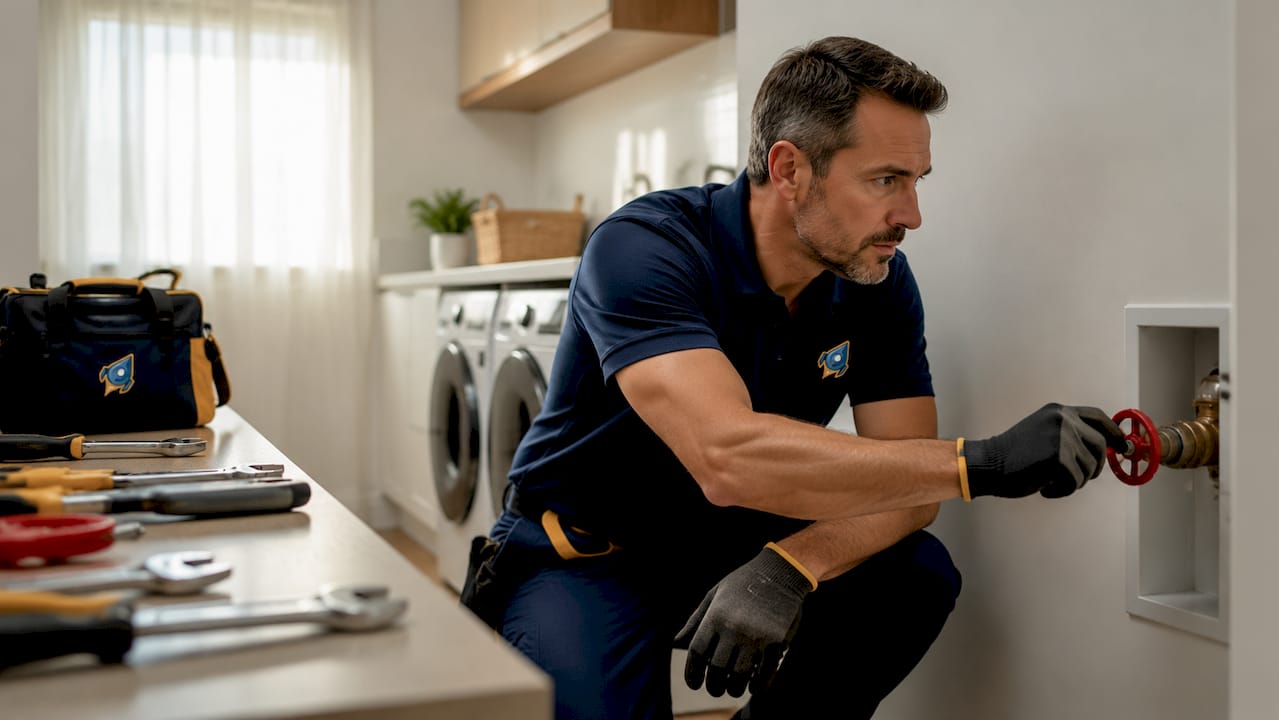
Priority repairs during a plumbing emergency are the immediate, safety-critical actions that prevent a manageable problem from becoming a structural disaster or health hazard. In the plumbing trade, these are known as emergency triage repairs, and they cover everything from shutting off your main water valve to evacuating for a gas leak. Burst pipes, sewage backups, and gas leaks sit at the top of every licensed plumber’s urgency list, and for good reason. Each one can cause irreversible damage or serious injury within minutes. This guide walks you through exactly what to prioritise, in what order, and why it matters.
What are priority repairs during a plumbing emergency?
The term “priority repairs” refers to the subset of urgent plumbing repairs that carry the highest risk of harm if left unaddressed, even briefly. Think of it like triage in a hospital: not every problem needs the same response, but the most dangerous ones demand immediate attention regardless of cost or convenience.
The three categories that always sit at the top of any plumbing repair checklist are burst pipes causing active flooding, sewage backups introducing biohazardous waste into your home, and gas leaks requiring immediate evacuation. Secondary priorities include leaking hot water systems, failed isolation valves, and blocked drains that are causing overflow. Understanding this hierarchy before an emergency occurs is what separates a controlled response from a panicked one.
How do you assess a plumbing emergency quickly?
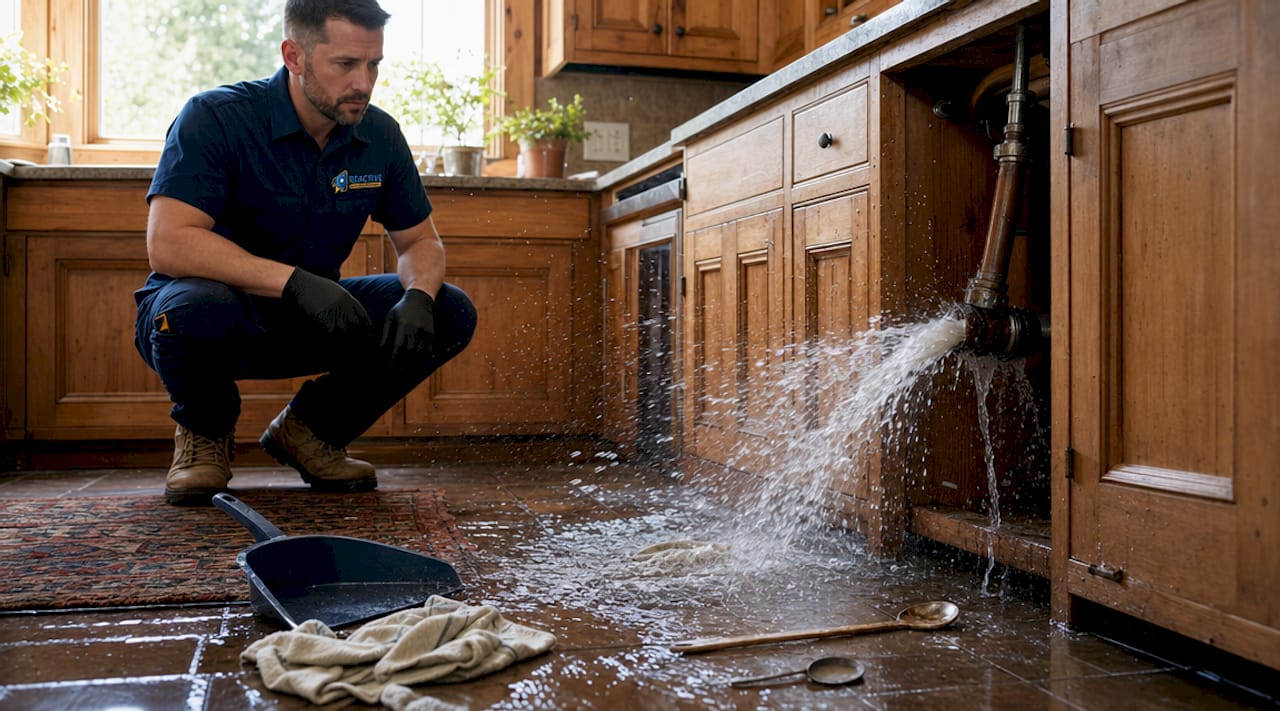
When something goes wrong, the first five minutes determine how much damage you will be dealing with over the next five days. Follow this sequence to triage your situation safely.
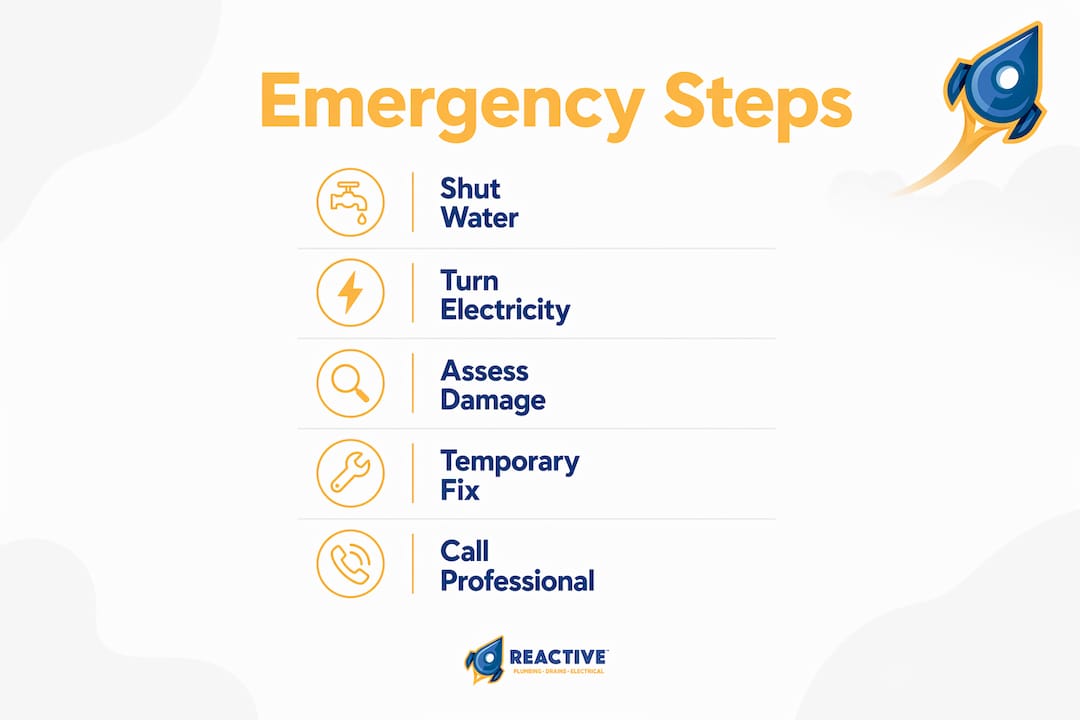
- Locate and shut off the main water valve. For most Australian homes, this is near the water metre at the front of the property or under the kitchen sink. Turning it off stops active flooding immediately.
- Check whether water has reached any electrical areas. Water and electricity together create an electrocution risk. Shut off electricity only if you can reach the switchboard from dry ground. If the path is wet, call your electricity provider and ask them to disconnect power from the street.
- Identify signs of a gas leak. The smell of rotten eggs, a hissing sound near gas lines, or dead patches of grass above buried pipes are all warning signs. If you suspect a gas leak, do not touch any switches or appliances. Leave the property immediately and call your gas provider or 000.
- Document everything before you touch it. Photos and videos taken before any clean-up are the foundation of a successful insurance claim. Insurance carriers assess claims based on documented evidence of the damage at the time of loss, so skipping this step can cost you significantly.
- Remove standing water if it is safe to do so. Once utilities are secured, use buckets, towels, or a wet vacuum to begin removing standing water. This reduces moisture absorption into flooring and walls, limiting the scope of repairs.
Pro Tip: Label your main water valve and switchboard locations now, before any emergency occurs. A small laminated card taped nearby with your plumber’s number and your gas provider’s emergency line can save critical minutes when you are under pressure.
Having a plumbing emergency preparedness checklist ready before anything goes wrong is one of the most practical steps any homeowner can take.
Which repairs take top priority and why?
Not all plumbing problems are equal. Here is how licensed plumbers rank urgent plumbing repairs by risk and damage potential.
- Burst pipes and active flooding. Water intrusion causes structural damage fast. Mould growth becomes a serious risk within 24 to 48 hours of water exposure, meaning the window for a straightforward repair closes quickly. Shut off the water supply immediately and call a licensed plumber.
- Sewage backups. Raw sewage is classified as Category 3 contaminated water, meaning it contains bacteria, viruses, and pathogens that pose direct health risks. Every additional litre of water used when the main sewer line is blocked will back up through your drains, spreading contamination further. Stop all water use in the property the moment you identify a sewage backup.
- Gas leaks. These are treated as immediate emergency-level events requiring evacuation, not a call to your plumber. Contact your gas provider’s emergency line or 000 first. A plumber is called after the gas has been made safe.
- Leaking hot water systems. A failing hot water system can cause scalding, electrical faults, and significant water damage. Isolate the unit at its dedicated valve and switch off the power or gas supply to the unit.
- Temporary fixes to reduce damage. Plumber’s tape (also called PTFE tape) wrapped tightly around a leaking joint can slow a minor leak. Epoxy putty applied over a small pipe crack can hold for several hours. These are not permanent plumbing crisis solutions, but they buy you time until a licensed professional arrives.
“Address the source first, not the symptom. Mopping up water while a burst pipe is still running is like bailing out a boat with the plug still out.” — Reactive Plumbing & Electrical
How to safely apply temporary fixes before help arrives
Temporary plumbing solutions are about damage control, not permanent repair. There are things you can safely do yourself, and things you must leave to a professional.
- Minor pipe leaks. Wrap the affected joint or crack tightly with PTFE tape or apply a two-part epoxy putty. Both are available at Bunnings or Mitre 10. Press the putty firmly over the leak and allow it to set before running water through the line.
- Running toilet cistern. If your toilet is running continuously, lift the cistern lid and manually raise the float arm. This stops water from flowing into the bowl and reduces waste while you wait for a plumber.
- Flooded areas near electrical appliances. Do not use any electrical appliances in or near flooded areas, including hair dryers, fans, or extension leads. The risk of electrocution is real and immediate.
- Sewage backups. Do not attempt to clean up sewage yourself. Category 3 sewage cleanup requires IICRC-certified biohazard restoration teams with specialist PPE, extraction equipment, and disposal protocols. DIY attempts expose you to serious health risks and can worsen contamination.
- When not to attempt any repair. If the leak involves gas lines, the hot water system’s internal components, or any area where water and electricity are in contact, stop and call a licensed professional immediately.
Pro Tip: Keep a basic plumbing emergency kit in your home: PTFE tape, epoxy putty, a small adjustable spanner, and a torch. Store it near your main water valve so it is accessible when you need it most.
Knowing the difference between a safe temporary fix and a job for a professional is covered in detail in our guide on calling a licensed plumber vs DIY.
How to manage costs and logistics during a plumbing emergency
Plumbing emergencies are stressful, and the cost of fixing them can add to that stress quickly. Understanding what drives pricing helps you make faster, smarter decisions.
Emergency plumbers charge between $100 and $500 per hour, with after-hours and weekend callouts sitting at the higher end of that range. Acting quickly to shut off your water supply before calling reduces the scope of damage and, in turn, the total hours a plumber needs to spend on site.
| Action | Impact on cost |
|---|---|
| Shutting off water immediately | Limits water damage, reducing repair scope |
| Documenting damage before clean-up | Supports insurance claims, reducing out-of-pocket costs |
| Calling during business hours where possible | Avoids after-hours surcharges |
| Providing clear details to your plumber | Speeds diagnosis and reduces billable time on site |
When you call a plumber, tell them the type of problem, the location in the property, whether utilities have been shut off, and whether there is any risk of gas or electrical hazard. Clear communication reduces the time they spend assessing on arrival. Our guide on communicating with your plumber covers exactly what to say.
For sewage backups, the correct sequence is to call a biohazard restoration team first, then a plumber to fix the underlying cause. Reversing this order means the plumber may fix the blockage but leave contaminated material behind, which creates ongoing health risks and the likelihood of recurrence.
Common mistakes that make plumbing emergencies worse
Most of the damage we see in plumbing emergencies is not caused by the initial fault. It is caused by what happens in the first hour after the fault occurs.
- Delaying the water shutoff. Every minute of active water flow adds to the damage. Locate your main valve before an emergency, not during one.
- Attempting to reach the switchboard through water. This is one of the most dangerous mistakes a homeowner can make. Never enter a flooded area to reach an electrical panel. Call your electricity provider and ask them to disconnect power remotely.
- DIY sewage cleanup. Raw sewage contains pathogens that cause serious illness. IICRC-certified teams exist specifically for this type of contamination. Attempting to clean it yourself without proper PPE and extraction equipment puts your health at serious risk.
- Ignoring gas leak signs. A faint smell of gas is not something to investigate yourself. Leave the property, do not use your mobile phone until you are outside, and call 000.
- Skipping documentation. Taking photos and videos before any clean-up takes two minutes and can be the difference between a successful insurance claim and a denied one.
“Preparation is the only thing that separates a plumbing emergency from a plumbing disaster. Homeowners who know where their main valve is and have a plumber’s number saved respond faster, spend less, and recover sooner.” — Reactive Plumbing & Electrical
A home plumbing maintenance checklist reviewed annually is one of the most effective ways to catch problems before they become emergencies.
Key takeaways
Effective priority repairs during a plumbing emergency require shutting off water and electricity first, identifying the hazard type, applying safe temporary fixes, and calling licensed professionals before attempting any complex repair.
| Point | Details |
|---|---|
| Shut off water immediately | Locate your main valve before an emergency and turn it off the moment a fault occurs. |
| Treat gas leaks as 000 events | Evacuate first, call your gas provider second, and contact a plumber only after the gas is safe. |
| Never DIY sewage cleanup | Category 3 sewage requires IICRC-certified biohazard teams to protect your health and prevent recurrence. |
| Document before you clean | Photos and videos taken before mitigation are required evidence for insurance claims. |
| Act within 24 to 48 hours | Mould growth begins within this window, so rapid drying and repair limits long-term damage costs. |
What I have learned from years of plumbing emergencies
After responding to hundreds of plumbing emergencies across Sydney, Brisbane, and the Gold Coast, the pattern I see most often is not a lack of knowledge. It is a lack of preparation. Homeowners know they should shut off the water. They just do not know where the valve is when it matters.
The second most common mistake is treating all emergencies the same. A burst pipe and a sewage backup look similar on the surface, both involve water where it should not be, but they require completely different responses. Sending a plumber to a sewage backup before a biohazard team has cleared the site is a waste of money and a health risk. Getting the sequence right is as important as acting quickly.
What I tell every homeowner is this: calm and prepared beats fast and panicked every time. Know your valve locations. Have your plumber’s number saved. Keep a basic emergency kit under the sink. These three things cost almost nothing and change everything when something goes wrong at 2am on a Sunday.
The properties that recover fastest from plumbing emergencies are not the ones with the newest pipes. They are the ones where the owner knew exactly what to do in the first ten minutes.
How Reactive Plumbing & Electrical can help when it matters most
When a plumbing emergency hits, you need a team that picks up the phone and gets there fast.
Reactive Plumbing & Electrical provides 24/7 emergency plumbing services across Sydney, Newcastle, Wollongong, Brisbane, Ipswich, and the Gold Coast. Our licensed plumbers respond quickly to burst pipes, sewage backups, hot water failures, and blocked drains. For damaged sewer and stormwater lines, our pipe relining solutions fix the problem without digging up your yard, saving time and reducing disruption. Save our number before you need it. When an emergency strikes, every minute counts.
FAQ
What is the first thing to do in a plumbing emergency?
Shut off the main water valve immediately to stop active water flow, then assess whether electricity needs to be isolated from a safe, dry location. These two steps prevent the majority of secondary damage.
Is a sewage backup a plumbing emergency?
Yes. A sewage backup is a serious emergency requiring you to stop all water use immediately and call an IICRC-certified biohazard restoration team before contacting a plumber. Raw sewage contamination spreads with every additional litre of water used in the property.
How quickly does mould grow after water damage?
Mould can begin growing within 24 to 48 hours of water intrusion. Drying affected materials within this window is the most effective way to prevent mould remediation costs.
When should I call 000 instead of a plumber?
Call 000 if you suspect a gas leak, if there is any risk of electrocution from water near electrical panels, or if anyone in the property has been injured. A plumber is called after the immediate safety hazard has been resolved.
How much does an emergency plumber cost in Australia?
Emergency plumbers typically charge between $100 and $500 per hour, with after-hours and weekend callouts at the higher end. Shutting off your water supply before calling and providing clear details about the problem can reduce the total time on site and lower your overall bill.