What is an emergency gas repair: a homeowner’s guide
An emergency gas repair is defined as urgent, safety-first work carried out by a licensed gas-fitter to address a suspected or confirmed gas leak or dangerous gas supply malfunction, restoring safe operation only after thorough testing and verification. If you smell something like rotten eggs near your stove, hot water system, or gas metre, that is a gas emergency signal you cannot afford to ignore. The right response in the first few minutes determines whether a minor fault becomes a catastrophe. This guide walks you through the warning signs, the correct safety steps, what licensed professionals actually do on-site, and what the repair will likely cost you.
What is an emergency gas repair and why does it matter?
An emergency gas repair is urgent, safety-first work to address a suspected or confirmed gas leak or other gas-supply danger, with the system returned to service only after testing and verification confirm it is safe. The industry term used by licensed gas-fitters and regulators is gas line repair or emergency gas service, and both phrases describe the same process: locate the fault, make it safe, fix it properly, and test before restoring supply.
This matters because natural gas is highly flammable. The right mixture of gas and air, combined with a single spark from a light switch or a mobile phone, can cause an explosion. That is not an exaggeration for effect. It is the physical reality that shapes every protocol a licensed gas-fitter follows on arrival. Treating a gas fault as anything less than urgent is the most common and most dangerous mistake homeowners make.
Tenants carry the same responsibility as owners when it comes to reporting and evacuating. If you rent, your obligation is to get out and call for help. Your landlord’s obligation is to arrange a licensed repair. Neither party should attempt to locate or fix the fault themselves.
What are the warning signs of a gas leak?
Recognising a gas emergency early gives you the best chance of getting out safely and minimising damage. Natural gas is odourless in its raw form, but utilities add a rotten-egg smell using a compound called mercaptan, precisely so leaks are detectable by smell before concentrations reach dangerous levels. That smell is your primary alert.
Beyond odour, there are several other signs worth knowing:
- Hissing or whistling sounds near gas appliances, flexible hoses, or buried pipes in the yard
- Dead or dying vegetation in an otherwise healthy garden, caused by gas displacing oxygen in the soil around a buried line
- Dust or dirt blowing upward from the ground near a gas pipe, even on a still day
- Bubbles forming in puddles or wet ground near a gas line after rain
- Unexplained increases in your gas bill with no change in usage habits
Physical symptoms in people or pets, including dizziness, nausea, or headaches that clear up when you go outside, can also indicate low-level gas exposure indoors. These symptoms are easy to dismiss as tiredness or illness, which is exactly why subtle leaks go undetected for weeks.
Pro Tip: Install a gas detector near your gas metre and inside any room with a gas appliance. These devices cost between $50 and $150 and provide an early alert before the smell becomes obvious.
Do not ignore any single sign on this list. A hissing sound alone, without any smell, is enough to treat as a potential emergency. Gas-fitters regularly attend jobs where a small fitting had been leaking slowly for months before a homeowner finally called.
What should you do immediately if you suspect a gas leak?
The correct sequence of actions in a gas emergency is not complicated, but it must be followed in order. Skipping a step or acting out of sequence can turn a manageable situation into a fatal one.
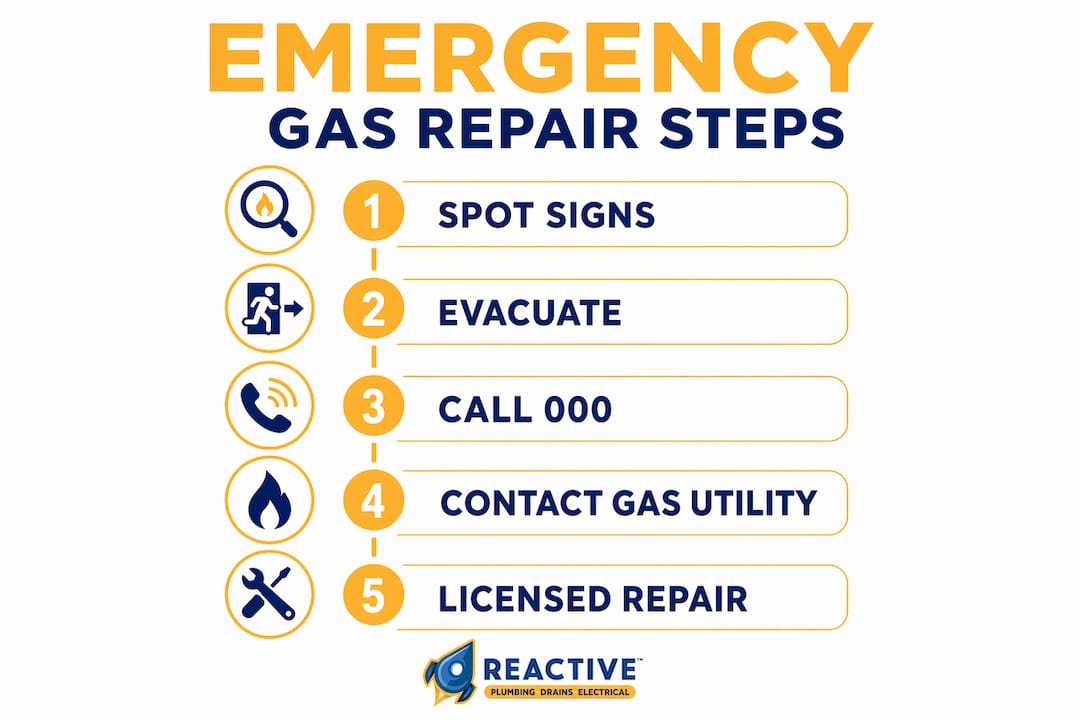
- Stop what you are doing and alert everyone in the building. Do not wait to confirm the smell or sound. Get people moving toward the exits immediately.
- Do not operate any electrical switches, appliances, or devices. This includes light switches, exhaust fans, garage door openers, and mobile phones used indoors. Avoid all ignition sources because even a small spark can ignite gas at the right concentration.
- Leave all doors and windows open as you exit to allow ventilation, but do not go back inside to open them if you have already left.
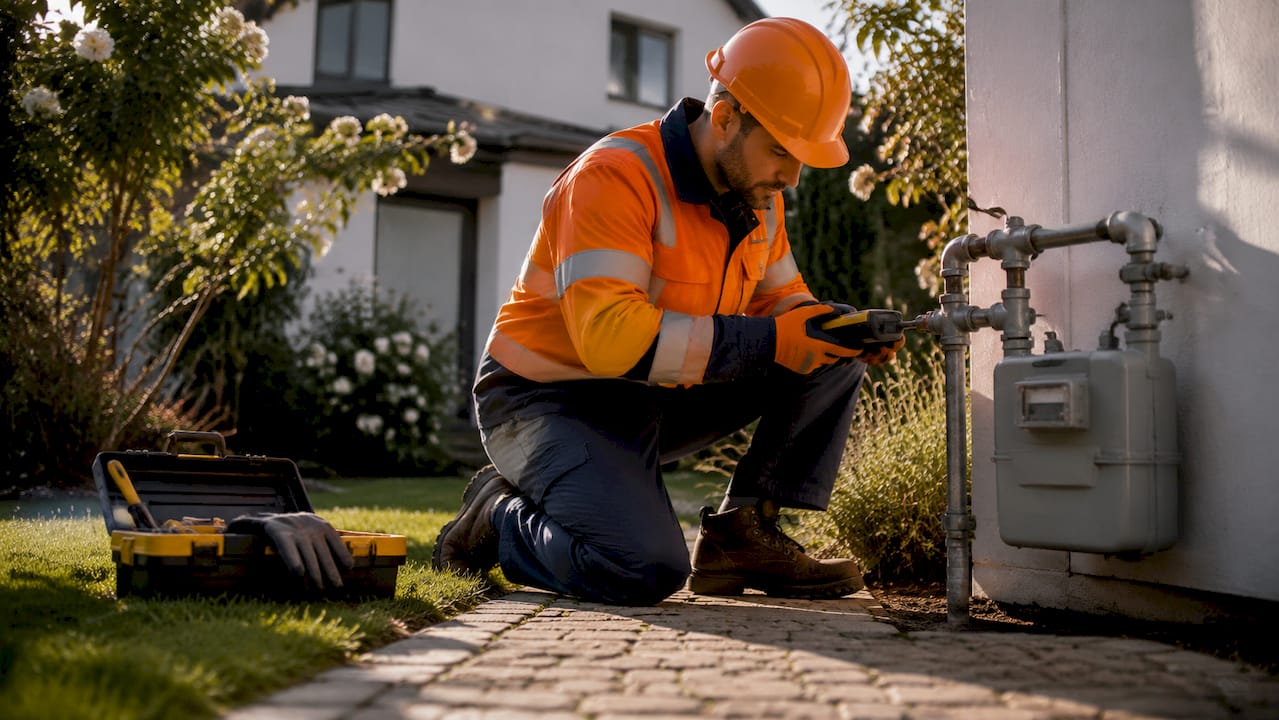
- Turn off the gas at the metre if it is safe to do so on your way out. The gas metre is typically located outside near the front of the property. Turn the valve a quarter turn so it sits perpendicular to the pipe.
- Move well away from the building before using your phone. Call 000 for fire and emergency services, then call your gas utility’s emergency line. In New South Wales, Jemena Gas Networks operates a 24-hour emergency line at 131 909.
- Tell the dispatcher your address, what you can smell or hear, and how long ago you first noticed it. Precise hazard reporting helps dispatchers triage the response and send the right resources.
- Do not re-enter the property until emergency services or a licensed gas-fitter has confirmed it is safe.
Pro Tip: Save your gas utility’s emergency number in your phone now, before you ever need it. In a real emergency, searching for a number costs precious seconds.
The right gas-air mix plus a spark can cause an explosion, which is why removing ignition sources before evacuating is the single most protective action you can take. Every second spent inside after detecting a leak increases your exposure and your risk.
How do licensed professionals carry out an emergency gas repair?
Once emergency services have assessed the scene and confirmed it is safe for a gas-fitter to work, the repair process follows a structured sequence. Gas line repair involves fixing leaks, corrosion, and damage with a focus on restoring safe, sealed, reliable gas delivery using specialised tools and testing procedures.
Here is what that process looks like in practice:
| Stage | What happens | Tools used |
|---|---|---|
| Initial inspection | Visual check of all accessible fittings, flexible hoses, and appliance connections | Torch, inspection mirror |
| Leak detection | Electronic gas detector swept along pipe runs to pinpoint leak location | Combustible gas detector, pressure gauge |
| Isolation | Affected section isolated from the rest of the system to allow safe work | Isolation valves |
| Repair or replacement | Fittings tightened, corroded sections cut out and replaced, or flexible hoses swapped | Pipe cutters, spanners, approved fittings |
| Pressure testing | System pressurised with nitrogen or air and monitored for pressure drop | Pressure gauge, timer |
| Verification and restoration | Once pressure holds, gas is restored and each appliance is tested for correct operation | Gas analyser, appliance test kit |
Licensed professionals use specialised equipment to safely locate leaks, assess damage, and perform repairs following strict protocols. This safety-first approach prevents risks and confirms complete restoration of a safe gas supply before the job is signed off.
One detail homeowners often find surprising: the repair itself is frequently the quickest part of the job. Locating the exact source of a slow leak, particularly in a buried or concealed pipe, can take significantly longer than replacing the faulty section. A good gas-fitter thinks like both a doctor and a detective, ruling out possibilities systematically until the fault is confirmed.
How much does an emergency gas repair cost?
Gas leak repair cost depends on several factors, including the severity of the fault, the location of the pipe, and whether the job requires repair or full replacement of a section. Typical emergency repair costs range between jobs, with more complex faults costing considerably more. This means a loose fitting on an exposed appliance connection is at the lower end, while a corroded buried pipe requiring excavation sits at the higher end.
| Cost factor | Lower cost scenario | Higher cost scenario |
|---|---|---|
| Fault type | Loose fitting or flexible hose | Corroded or damaged buried pipe |
| Access | Exposed, accessible location | Concealed in wall or underground |
| Time of call | Business hours | After hours or public holiday |
| Repair vs replacement | Tighten or seal existing fitting | Replace pipe section or appliance |
| Call-out fee | Included in standard rate | Separate after-hours surcharge |
After-hours emergency call-out fees are a real cost to factor in. Most licensed plumbing and gas companies charge a premium for jobs outside business hours, and that surcharge can add $100 to $200 to the base rate. That said, delaying a call until morning to save money on a confirmed gas leak is never the right decision.
Check your home and contents insurance policy before assuming you will pay the full cost out of pocket. Some policies cover emergency gas repairs, particularly where the fault is caused by a sudden event rather than gradual wear. If you rent, your landlord is responsible for the repair cost. Document everything, including when you reported the fault and what response you received.
How to find and communicate with an emergency gas plumber
Finding a qualified emergency plumber gas service in your area is straightforward if you know what to look for. The key is acting before an emergency, not during one.
- Verify the licence. In Australia, gas-fitters must hold a current gas work licence issued by the relevant state authority. In New South Wales, this is Fair Trading NSW. Ask for the licence number before work begins.
- Confirm 24/7 availability. Not all plumbing companies offer genuine around-the-clock emergency gas service. Check that the company you call has a live person answering, not just an after-hours message service.
- Provide clear information when you call. Give your full address, describe exactly what you can smell or hear, state when you first noticed it, and confirm whether you have already evacuated and turned off the gas. Clear communication of signs and location helps emergency services respond quickly and appropriately.
- Ask the right questions. Before the technician starts work, ask whether they are licensed for gas work in your state, what the call-out fee covers, and whether they will provide a written report after the repair.
- Never attempt DIY repairs. Untrained attempts to fix gas leaks can cause explosions or severe injury. Gas work is legally restricted to licensed gas-fitters in every Australian state and territory.
For guidance on communicating with your plumber during an emergency, including what details to have ready, Reactive Plumbing & Electrical has a practical resource on their website worth bookmarking now.
Key takeaways
An emergency gas repair requires immediate evacuation, removal of all ignition sources, and a call to a licensed gas-fitter before anyone re-enters the property.
| Point | Details |
|---|---|
| Definition is clear | An emergency gas repair is urgent, licensed work to fix a gas leak or dangerous fault before supply is restored. |
| Warning signs are multiple | Rotten egg smell, hissing sounds, dead vegetation, and unexplained bill increases all signal a potential gas emergency. |
| Safety sequence is fixed | Evacuate first, avoid all electrical switches, call 000 and your gas utility from outside, then wait for clearance. |
| Repairs follow strict protocol | Licensed gas-fitters inspect, detect, isolate, repair, pressure-test, and verify before restoring gas supply. |
| Costs vary but DIY is never an option | Emergency repairs typically start around $300 to $500, but unlicensed work is illegal and dangerous in every Australian state. |
Why fast action on gas emergencies is non-negotiable
I have attended enough gas jobs over the years to say this plainly: the calls that go badly are almost always the ones where someone waited. They waited because the smell seemed faint. They waited because it was late at night and they did not want to bother anyone. They waited because they assumed it was probably nothing.
Gas does not reward hesitation. A slow leak that has been building for hours in a poorly ventilated laundry or kitchen can reach explosive concentration faster than most people expect. The homeowners who come out of these situations well are the ones who treated the first sign as a real emergency, got out, and called immediately.
The other pattern I see regularly is tenants who are unsure whether it is their place to call. It absolutely is. If you smell gas in a rental property, your responsibility is to evacuate and call 000. You do not need your landlord’s permission to protect your own safety.
Preventative maintenance is the most underused tool in gas safety. An annual inspection of your gas appliances and flexible hoses by a licensed gas-fitter costs far less than an emergency call-out, and it catches the slow deterioration that precedes most leaks. Flexible hoses on gas cooktops and hot water systems have a recommended service life of about ten years. Many are left in place well beyond that.
If you are a landlord, schedule annual gas safety checks as a non-negotiable part of your property maintenance programme. If you are a tenant, ask your property manager when the last gas inspection was carried out. The answer will tell you a great deal.
Reactive Plumbing & Electrical: here when it matters most

When a gas emergency strikes, you need a team that picks up the phone and arrives ready to work. Reactive Plumbing & Electrical provides 24/7 emergency gas service across Sydney, Newcastle, Wollongong, Brisbane, Ipswich, and the Gold Coast, with licensed gas-fitters who carry the right equipment to locate, repair, and verify gas faults on the first visit. Call us any time and speak directly with a qualified technician.
FAQ
What counts as a gas emergency?
A gas emergency is any situation where you suspect a gas leak or dangerous fault in your gas supply system. Signs include a rotten egg smell, hissing sounds near appliances or pipes, or physical symptoms like dizziness that clear up outdoors.
Can I fix a gas leak myself?
No. Gas work is legally restricted to licensed gas-fitters in every Australian state and territory. Untrained attempts to fix gas leaks can cause explosions or severe injury due to the flammability of natural gas.
How much does an emergency gas repair cost in Australia?
Emergency repair costs typically start between $300 and $500 for straightforward faults, with after-hours call-out fees and more complex repairs adding to that total. Check your home insurance policy, as some cover emergency gas repairs.
Who do I call first in a gas emergency in Australia?
Call 000 for fire and emergency services, then contact your gas utility’s 24-hour emergency line. In New South Wales, Jemena Gas Networks operates an emergency line at 131 909. Make both calls from outside the building.
How long does an emergency gas repair take?
A straightforward repair such as replacing a faulty flexible hose or tightening a fitting can take under an hour. Locating a slow leak in a buried or concealed pipe takes longer, and the total job time depends on how quickly the fault is isolated and whether pressure testing confirms a complete seal.