How residential plumbing works: a homeowner’s guide
Residential plumbing is defined by two subsystems working in tandem: a pressurised water supply network that delivers clean water to every tap and fixture, and a gravity-driven drain-waste-vent (DWV) system that removes wastewater safely while blocking sewer gases from entering your home. Understanding how residential plumbing works gives you the confidence to spot problems early, maintain your system properly, and know when to call a licensed plumber before a small issue becomes an expensive repair. This guide covers the core components, how the DWV system functions, practical maintenance advice, and what you need to know about plumbing responsibilities in shared buildings.
What are the main components of a home plumbing system?
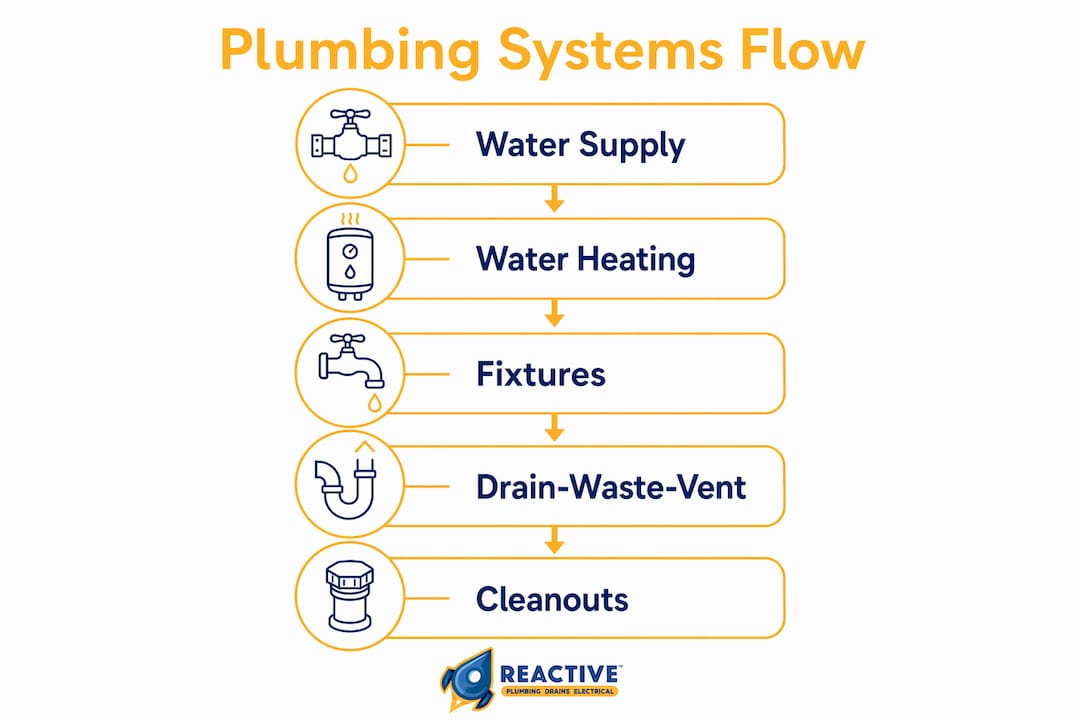
A home plumbing system is made up of two distinct pipe networks that never mix. The supply side carries pressurised potable water from the mains connection to your taps, shower, toilet cistern, and appliances. The drainage side carries used water away by gravity, venting gases through the roof to keep your home safe and odour-free.
Here is a breakdown of the key plumbing system components and what each one does:
- Supply pipes: Carry cold water under mains pressure throughout the house. Hot water supply branches off from the water heater and runs parallel to the cold lines.
- Water heater: Either a storage tank or continuous flow (instantaneous) unit that heats water before it reaches your hot taps. Storage units hold a set volume; continuous flow units heat on demand.
- Fixtures: Taps, showers, toilets, basins, and sinks are the interface points between supply and drainage. They control flow and direct wastewater into the drain network.
- Drain pipes: Carry wastewater away from fixtures by gravity. They are larger in diameter than supply pipes and must be installed at a precise slope.
- Traps: The U-shaped or P-shaped bend beneath every sink and basin. Water sits in the trap at all times, physically blocking sewer gases from travelling up through the drain opening into your home.
- Vent pipes: Run from the drain network up through the roof. They introduce atmospheric pressure into the system, preventing the suction that would otherwise pull water out of traps and break the gas seal.
- Cleanouts: Capped access points built into the drain lines. They allow a plumber to inspect or clear a blockage without cutting into walls or floors.
Pro Tip: If you can hear gurgling from a basin or smell something unpleasant near a floor drain, the trap may have dried out or the vent may be blocked. Run water into the fixture for 30 seconds and see if the smell clears. If it does not, call a plumber.
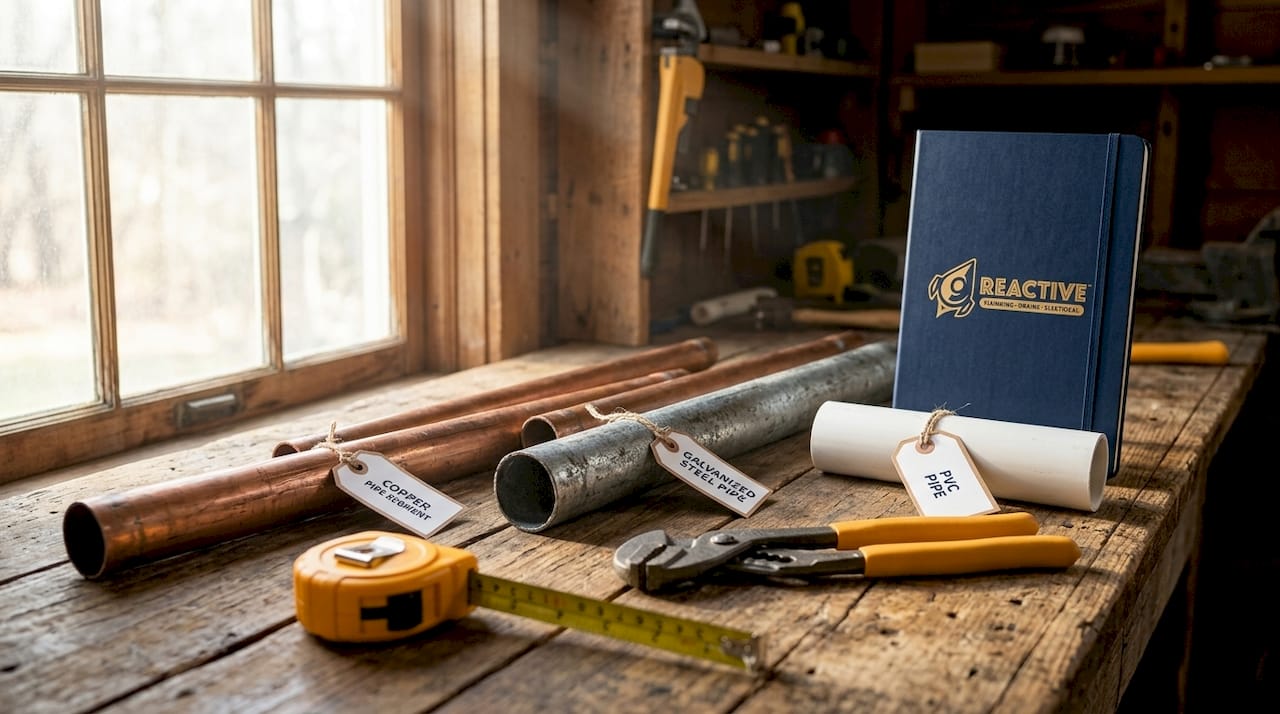
The material compatibility of pipes matters as much as the pipe type itself. Mixing copper and galvanised steel without a dielectric union, for example, accelerates corrosion at the joint. Australian homes built before the 1980s often have a mix of materials that need careful assessment during any renovation or repair.
| Component | Function |
|---|---|
| Supply pipes | Deliver pressurised cold and hot water to fixtures |
| Water heater | Heats water for hot supply lines |
| Traps | Hold a water seal to block sewer gases |
| Vent pipes | Maintain air pressure to protect trap seals |
| Cleanouts | Provide access for inspection and blockage removal |
How does the drain-waste-vent system work?
The drain-waste-vent system is the part of residential plumbing that most homeowners understand the least, yet it is responsible for both hygiene and safety. The DWV system uses gravity to move wastewater downhill through progressively larger pipes until it reaches the sewer main or septic tank. Venting and trapping work together to keep that process safe.
Why pipe slope matters more than most people realise
Drain pipes must be installed at a specific angle to flow correctly. The standard for pipes up to 75 mm in diameter is approximately 20 mm per metre. This is not arbitrary. A slope that is too flat allows solids to settle and build up, causing blockages. A slope that is too steep causes water to rush ahead of solids, leaving them stranded in the pipe. Getting the slope right is one of the most critical installation details in any drainage system.
How traps and vents protect your home
Traps hold a water seal that physically blocks sewer gases, including hydrogen sulphide and methane, from entering the living space. Vent pipes maintain atmospheric pressure in the drain network so that flowing water does not create a vacuum strong enough to siphon that seal dry. When a vent is blocked or missing, the trap empties and sewer gases enter the home. This is a safety issue, not just a comfort one.
There are also maximum trap-to-vent distances defined in plumbing codes. For a 40 mm trap (the size under most bathroom basins), the maximum distance to the vent is around 1.8 metres. Exceed that distance and the trap seal fails under normal use. This is why DIY drain extensions done without understanding the code often create persistent odour problems.
Cleanouts and access
Cleanouts are required access points built into the drain system, typically spaced no more than 30 metres apart. They allow a plumber to insert a drain snake or jet blaster directly into the pipe without cutting into walls. If your home lacks accessible cleanouts, adding them during any renovation is worth the investment. It reduces the cost and disruption of every future drain service call.
Here is how to distinguish between a clog and a venting problem:
- Clog symptoms: Water backs up in one fixture, drains slowly, or overflows. The problem is localised.
- Vent symptoms: Gurgling sounds and sewer odours appear across multiple fixtures. Drains may still flow but make noise as air is pulled through the trap.
- Combined symptoms: Both backing up and gurgling together usually indicate a blockage downstream of a vent connection, affecting pressure throughout the branch.
Knowing the difference helps you describe the problem accurately to your plumber and avoid paying for the wrong fix.
What maintenance practices prevent common plumbing problems?
Proactive maintenance is the single most effective way to avoid costly plumbing repairs. Scheduling a plumbing inspection with a licensed plumber every one to two years catches deteriorating supply lines, slow-developing leaks, and water heater corrosion before they become emergencies.
Between professional visits, there are practical checks every homeowner or renter can do:
- Check under sinks monthly: Look for moisture, staining, or soft cabinetry that signals a slow leak at the trap or supply connections.
- Test water pressure: Normal household pressure sits between 200 and 500 kPa. Pressure above 500 kPa stresses fittings and appliance hoses. A basic pressure gauge from a hardware store threads onto an outdoor tap and gives you a reading in minutes.
- Flush floor drains seasonally: Floor drains in laundries, garages, and bathrooms can dry out if rarely used. Pour a litre of water into them every few months to maintain the trap seal.
- Inspect the water heater annually: Check the pressure relief valve, look for rust or corrosion at connections, and flush sediment from the tank base if it is a storage unit. Most storage water heaters in Australia have a service life of 8 to 12 years.
- Watch for slow drains: A drain that takes longer than usual to clear is not just inconvenient. It is an early warning of partial blockage or a venting issue that will worsen over time.
Pro Tip: Know where your water metre and isolation valve are located before you need them. In a burst pipe or appliance failure, being able to shut off the water supply within seconds can prevent thousands of dollars in water damage.
Our home plumbing maintenance checklist covers seasonal tasks specific to Australian conditions, including checks relevant to summer heat stress on hot water systems and Autumn leaf debris blocking roof vent outlets.
If you notice signs of venting failure such as persistent sewer smells, multiple gurgling drains, or traps that repeatedly run dry, do not delay. These are not cosmetic issues. Sewer gas contains methane, which is flammable, and hydrogen sulphide, which is toxic at elevated concentrations.
Who is responsible for plumbing in apartments and shared buildings?
Understanding home plumbing in a multi-unit building requires knowing where your responsibility ends and the building owner’s begins. The boundary is not always obvious, and disputes over repair costs are common.
As a general rule, internal branch lines and fixtures within your unit are your responsibility as the owner or occupant. The shared risers, stacks, and common-area plumbing are typically maintained by the owners corporation or body corporate. Here is how that typically breaks down in Australian strata buildings:
- Your responsibility: Taps, toilets, basins, shower fittings, the trap under your sink, supply lines within your unit, and your hot water unit if it is inside the lot boundary.
- Body corporate responsibility: The main stack that collects waste from all units, shared water supply risers, roof drainage, and any pipe that serves more than one lot.
- Grey areas: A blockage in a shared drain caused by material from your unit may still result in a cost recovery claim against you, even if the pipe itself is common property.
If you are a renter, your landlord is responsible for maintaining the property in a habitable condition, which includes functional plumbing. Report leaks, blocked drains, and hot water failures to your property manager in writing and keep a record. For anything beyond a minor blockage, a licensed plumber is required by law in every Australian state and territory. Attempting to repair supply pipes, drainage connections, or gas-related plumbing yourself without a licence is a plumbing code violation that can affect your insurance and create liability.
Key takeaways
Residential plumbing functions through two interdependent systems: a pressurised supply network and a gravity-fed DWV system, and understanding both is the foundation of effective home maintenance.
| Point | Details |
|---|---|
| Two-subsystem structure | Every home has a pressurised supply system and a gravity-fed DWV system working together. |
| Traps and vents are safety features | Traps block sewer gases; vents maintain pressure so traps stay full and functional. |
| Pipe slope is non-negotiable | Drain pipes need a precise slope of around 20 mm per metre to flow correctly and avoid blockages. |
| Maintenance prevents emergencies | Annual inspections and monthly checks catch leaks, pressure issues, and drain problems early. |
| Responsibility varies by tenure | In strata buildings, internal fixtures are typically the occupant’s responsibility; shared stacks belong to the body corporate. |
What I’ve learned from years of residential plumbing work
After years working on residential plumbing across Sydney, Brisbane, and the Gold Coast, the pattern I see most often is this: homeowners who understand the basics make better decisions. Not because they fix things themselves, but because they describe problems accurately, act sooner, and avoid the expensive mistakes that come from ignoring early warning signs.
The most misunderstood part of any home plumbing system is the vent. Most people have never thought about the pipes coming out of their roof. They assume plumbing is just water in and water out. But a blocked vent stack can cause symptoms that look exactly like a drain blockage, and if a plumber goes straight to clearing the drain without checking the vent, the problem comes back within days. I have seen homeowners pay for the same “blockage” three times before someone diagnosed the actual cause.
The other thing I would tell every homeowner is to stop treating slow drains as a minor inconvenience. A drain that takes 60 seconds to clear instead of 10 is telling you something. It might be a partial blockage, a venting issue, or a pipe that has shifted and lost its slope. Left alone, each of those gets worse and more expensive to fix. Caught early, most are straightforward.
You do not need to understand every technical detail of how plumbing works in houses. But knowing the difference between a supply problem and a drainage problem, recognising the signs of a venting failure, and knowing where your isolation valve is will save you money and stress. That knowledge is worth more than any single repair.
How Reactive Plumbing & Electrical can help
Whether you are trying to understand a recurring drain issue, need a full plumbing inspection before buying a property, or have a burst pipe at 2 am, Reactive Plumbing & Electrical is ready to help. Our licensed plumbers service Sydney, Newcastle, Wollongong, Brisbane, Ipswich, and the Gold Coast, with 24/7 emergency response and a fully equipped fleet that means we arrive prepared, not just present.
We offer drain clearing services for blocked or slow drains, routine maintenance inspections, hot water repairs, and leak detection across all our service areas. If you want to stay ahead of problems rather than react to them, our plumbing maintenance checklist is a practical starting point. For anything more complex, our team is one call away. Contact Reactive Plumbing & Electrical today to book a licensed plumber you can trust.
FAQ
What are the two main systems in residential plumbing?
Residential plumbing consists of a pressurised water supply system that delivers potable water to fixtures, and a drain-waste-vent (DWV) system that removes wastewater by gravity while venting sewer gases safely through the roof.
Why does my drain gurgle when I flush the toilet?
Gurgling after flushing usually indicates a venting problem rather than a simple blockage. When air cannot enter the drain system through the vent, it is pulled through nearby traps, causing the gurgling sound and potentially breaking the trap seal.
How often should I have my home plumbing inspected?
A licensed plumber should inspect your home plumbing every one to two years. Regular inspections catch deteriorating supply lines, slow leaks, and water heater issues before they develop into costly emergencies.
What is a trap and why does it matter?
A trap is the U-shaped bend beneath sinks, basins, and other fixtures that holds a small amount of water at all times. That water seal physically blocks sewer gases from travelling up through the drain and into your living space.
Can I fix my own plumbing in Australia?
Minor tasks like replacing a tap washer are generally permitted, but any work involving supply pipes, drainage connections, or hot water systems must be carried out by a licensed plumber under Australian law. Unlicensed plumbing work can void your home insurance and create serious safety and compliance risks.