What is a plumbing emergency? A homeowner’s guide
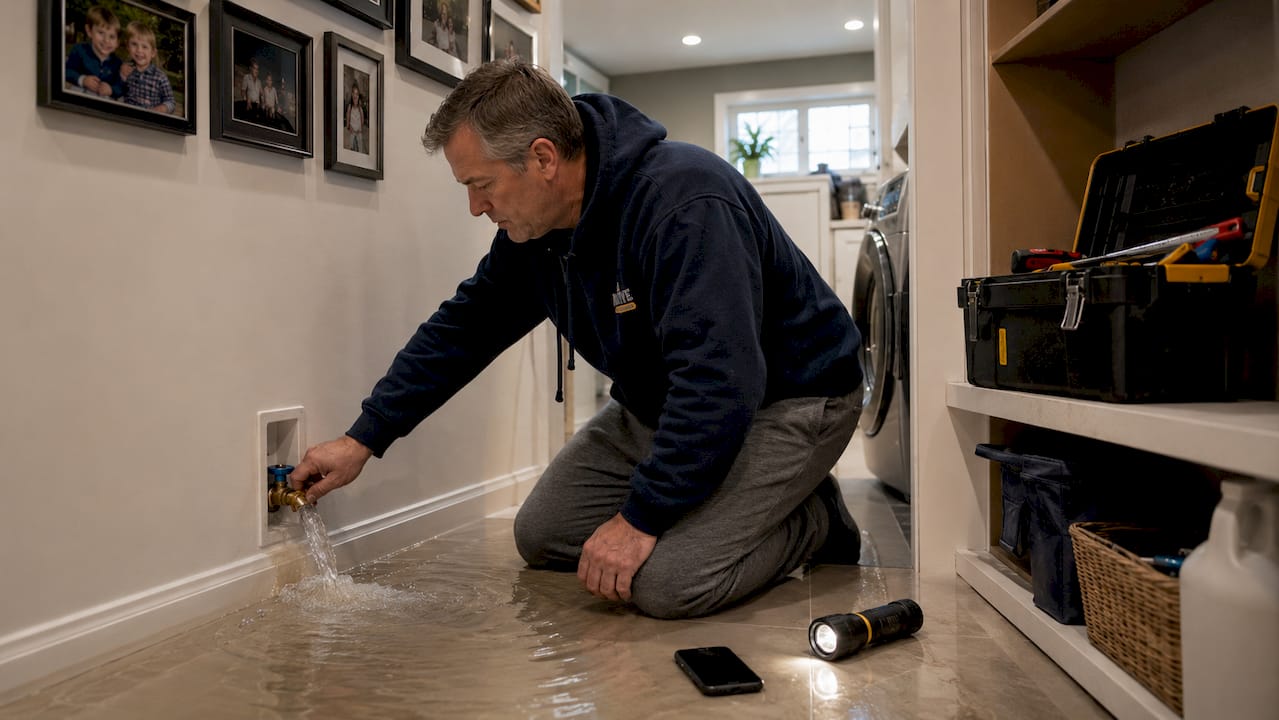
A plumbing emergency is defined as any plumbing problem that creates an immediate risk to safety, health, property, or essential services, requiring urgent professional intervention. Burst pipes, sewage backups, gas leaks, and total loss of running water all qualify. What separates a genuine emergency from an inconvenience is not the size of the problem but the speed at which it can cause serious harm. At Reactive Plumbing & Electrical, we see firsthand how quickly a small leak behind a wall can become a structural repair bill. Knowing the difference could save you thousands.
What is a plumbing emergency and how is it defined?
A plumbing emergency is any situation where active damage, health risks, or loss of essential plumbing services is occurring right now. The industry term used by licensed plumbers is an “urgent plumbing fault,” though most homeowners and tradespeople simply call it a plumbing emergency. Both terms describe the same threshold: a problem that cannot safely wait for a scheduled appointment.
The defining criteria are straightforward. If water is actively flooding a room, sewage is backing up into your home, you smell gas near a fitting, or you have no running water at all, you are dealing with an emergency. These situations share one characteristic: delay makes them worse, not just inconvenient.
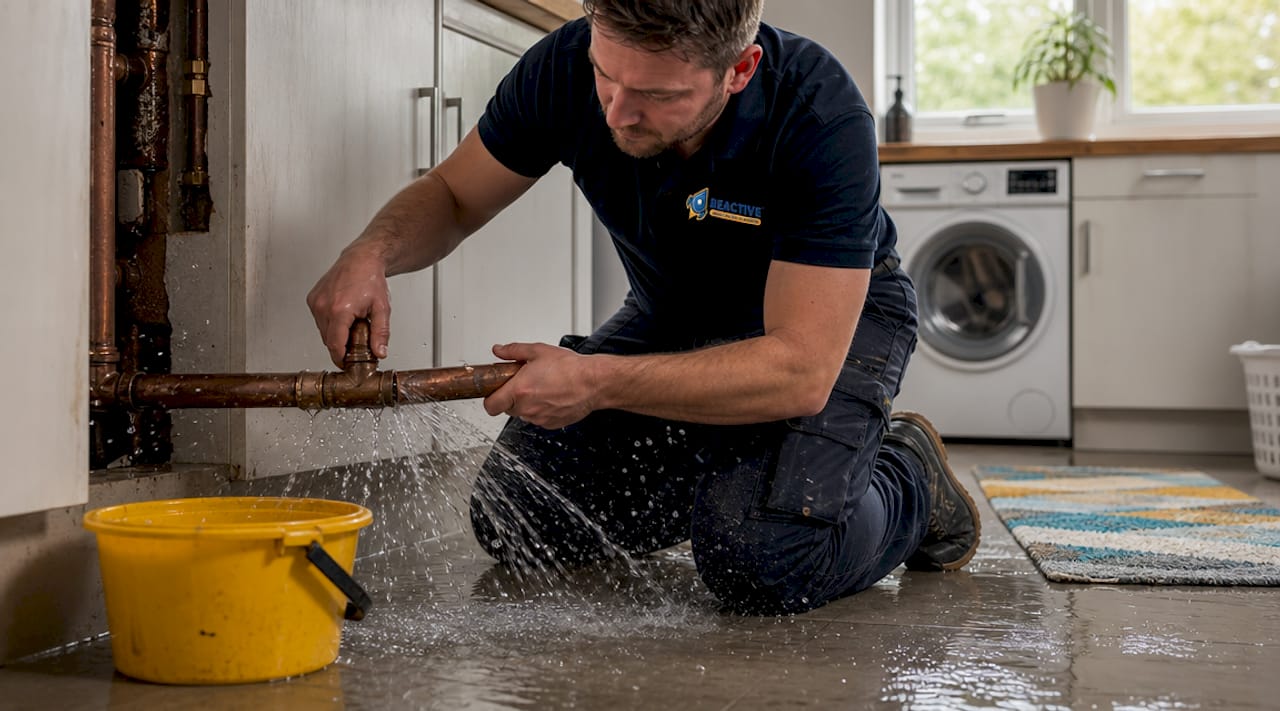
Speed of escalation is the factor most homeowners underestimate. Water spreads behind walls and ceilings before any visible damage appears, meaning a pipe weeping inside a cavity wall can soak timber framing and insulation for days before you notice a stain. By that point, mould is already forming. What started as a minor fault has become a major remediation job.
What common plumbing issues count as emergencies?
The most common plumbing emergencies fall into five clear categories. Understanding each one helps you act quickly rather than second-guessing whether to call for help.
- Burst or heavily leaking pipes. A pipe that has split or blown a joint can release hundreds of litres of water in minutes. Building materials soak up water rapidly, and structural damage follows fast. This is always an emergency, regardless of pipe size.
- Sewage backups. Sewage is a Category 3 biohazard containing bacteria and viruses. If sewage is backing up into your toilet, shower, or floor drain, you need professional help immediately. Contact with raw sewage poses genuine health risks to your household.
- Gas leaks. A smell of gas near a hot water system, stove connection, or gas meter is a life-safety issue. Gas leak protocols require evacuation and contacting your gas utility or emergency services from outside the building. No exceptions.
- Major flooding or loss of drainage. If water is pooling faster than it drains, or drainage has stopped entirely, the risk of water entering electrical systems or subfloor areas is real. This qualifies as an emergency.
- Hot water system failure with leaking or gas smell. A hot water unit that is leaking from the tank body or emitting a gas odour needs urgent attention. A failed pressure relief valve can also create a hazardous situation.
- Complete loss of running water. Losing all water supply to a home or business, particularly in hot weather or where vulnerable people are present, is an urgent plumbing problem that warrants same-day service.
What does not qualify as an emergency? A slow-draining bathroom basin, a dripping tap that is contained, or a single toilet that flushes slowly. These are real problems worth fixing, but they can wait for a scheduled appointment without causing harm.
Pro Tip: Know where your main water shutoff valve is before an emergency happens. In most Australian homes it is located near the water metre at the front of the property or under the kitchen sink. Turning it off in the first 60 seconds of a burst pipe can prevent thousands of dollars in damage.
How to tell if your plumbing problem is actually an emergency
Distinguishing a genuine emergency from a non-urgent fault comes down to three questions. Work through them in order when something goes wrong.
- Is active damage happening right now? Water flowing where it should not, sewage visible in living areas, or gas odour present means damage or danger is occurring in real time. Call for emergency help immediately.
- Does the problem create a health or safety risk? Sewage exposure, gas leaks, and water near electrical switchboards all create direct hazards. If the answer is yes, treat it as an emergency regardless of how small the fault appears.
- Has an essential service been lost? No running water, no hot water in winter, or no working toilets in a home or business with no alternative means the situation cannot wait. Loss of essential plumbing functions qualifies as an emergency requiring immediate help.
- Can you safely contain the problem? If you can turn off the water to the affected fixture and the leak stops completely, the urgency drops. A contained, non-spreading problem with no health risk can often wait for next-day service.
- How fast is it escalating? A leak that doubles in size every hour is an emergency even if it looks minor right now. Urgency is defined by risk and pace, not by how dramatic the problem looks at first glance.
This framework works for both homes and businesses. A commercial kitchen losing hot water during a lunch service is an emergency. A residential bathroom with a slow drain is not.
Pro Tip: Keep a basic plumbing emergency checklist on your fridge or saved on your phone. It should include the location of your main shutoff valve, your gas metre shutoff, and the number of a licensed 24/7 plumber. Having this information ready before a crisis saves critical minutes.
What to do during a plumbing emergency before help arrives
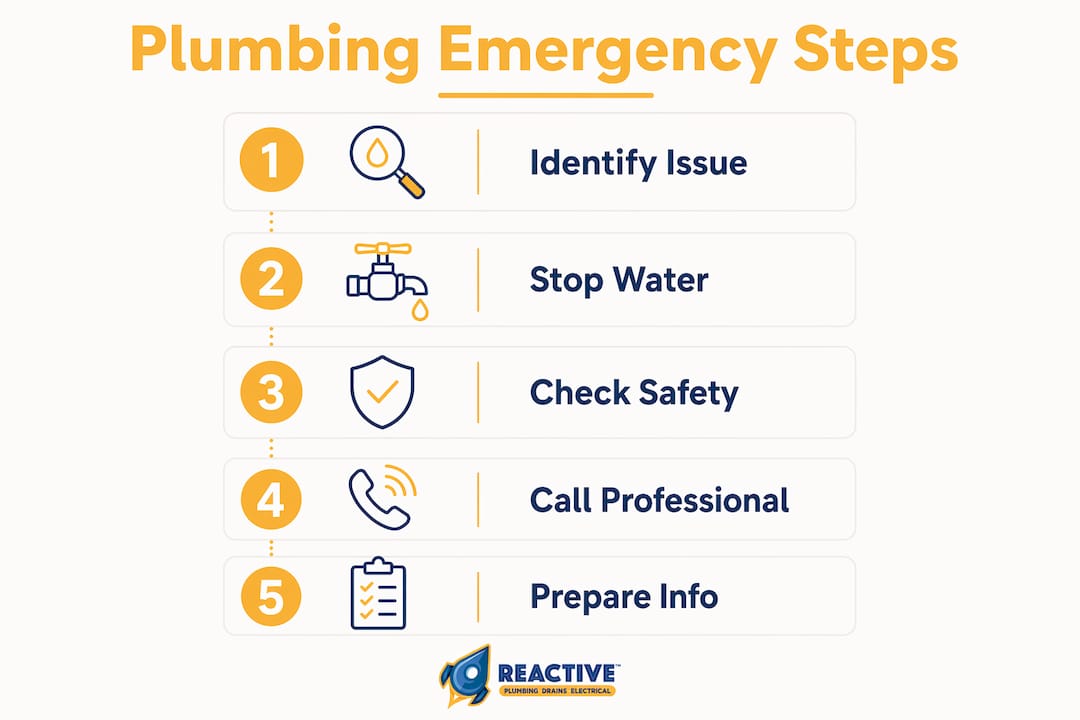
The actions you take in the first few minutes of a plumbing emergency determine how much damage occurs before a licensed plumber arrives. Follow these steps in order.
- Turn off the water supply. For a burst pipe or major leak, turn off the main shutoff valve at the water metre. For a localised fault like a leaking tap or toilet, use the isolation valve directly behind or beneath the fixture. Stopping the water flow is always the first priority.
- Turn off the hot water system. If a pipe has burst, turning off your hot water unit prevents it from running dry and damaging the heating element. Most systems have an isolation valve on the cold water inlet at the top of the unit.
- Do not touch electrical switches if water is near them. Water and electricity are a dangerous combination. If flooding is near your switchboard, meter box, or any power outlet, do not touch any switches. Call an electrician or emergency services if you cannot safely isolate the power.
- Evacuate if you suspect a gas leak. Avoid using any electrical device near a suspected gas leak, including light switches, mobile phones inside the building, or doorbells. Leave the building, leave the door open as you go, and call your gas utility or 000 from outside.
- Contain water where it is safe to do so. Buckets, towels, and plastic sheeting can slow water spread while you wait for help. Move furniture and valuables away from the affected area if you can do so safely.
- Do not attempt DIY repairs on gas lines or sewage systems. Calling a licensed plumber rather than attempting repairs yourself reduces the risk of worsening damage and keeps you safe. Gas and sewage work carries serious health and legal risks when handled without proper licencing.
Pro Tip: Take a short video of the problem on your phone before you contain it. This helps your plumber diagnose the fault faster when they arrive and supports any insurance claim you may need to make.
What to expect from emergency plumbing services
Emergency plumbing services differ from standard booked appointments in three key ways: response time, availability, and cost. Understanding what you are paying for reduces stress when you are already dealing with a crisis.
A rapid response plumber is a licensed tradesperson available outside standard business hours, typically 24 hours a day, seven days a week. Their first job on arrival is to make the situation safe and stop active damage. Full repairs may follow immediately or be scheduled for the next day depending on the complexity of the fault.
| Service type | Typical scope | Key consideration |
|---|---|---|
| Burst pipe response | Isolate, repair or cap pipe, restore supply | May require follow-up wall repairs |
| Sewage backup | Stop source, clear blockage, sanitise area | Requires protective protocols for biohazard |
| Gas leak response | Isolate gas supply, locate fault, make safe | Must be handled by licensed gas fitter |
| Hot water failure | Diagnose, repair or replace unit | 24/7 service available for complete loss |
| Major flooding | Stop source, assess damage, advise on drying | May involve insurer notification |
Emergency plumbing costs are higher than standard rates due to after-hours labour, rapid mobilisation, and the complexity of fault diagnosis under pressure. Factors that influence emergency plumbing costs include time of call-out, fault type, parts required, and whether follow-up work is needed. Always ask for a written scope of work before repairs begin, even in an emergency.
Licensed professionals are non-negotiable for gas, sewage, and any work involving your main water supply. Unlicensed work voids insurance, creates liability, and in the case of gas, can be fatal.
Key takeaways
A plumbing emergency is defined by active damage, health risk, or loss of essential services, and waiting always increases the cost and complexity of repairs.
| Point | Details |
|---|---|
| Emergency definition | Any fault causing active damage, health risk, or loss of essential plumbing services requires immediate help. |
| Top emergency types | Burst pipes, sewage backups, gas leaks, flooding, and total loss of water supply are the most common. |
| First action | Turn off the main water supply or fixture isolation valve as soon as a fault is identified. |
| Gas leaks | Evacuate immediately, avoid all electrical devices, and call your gas utility or 000 from outside. |
| Professional help | Licensed plumbers are required for gas, sewage, and main supply work. DIY in these situations increases risk. |
Brent’s take: the emergencies that catch homeowners off guard
The calls that concern me most are not the dramatic ones. A burst pipe in a visible location gets attention fast. The situations that cause the most damage are the quiet ones: a slow weep behind a bathroom wall, a hot water unit that has been “a bit off” for weeks, or a drain that backs up occasionally but clears on its own.
Homeowners often wait because the problem seems manageable. But small leaks inside walls cause structural damage and mould growth that can cost ten times more to fix than the original fault. The leak did not get worse overnight. It had been getting worse for months.
The other mistake I see regularly is hesitation around gas. If you smell gas, that is not a situation where you investigate first and call second. You leave, you call, and you let the professionals determine whether it is safe to re-enter. Treating a gas smell as a hazard even when you are not certain is always the right call. The cost of being wrong is too high.
My practical advice: build a simple preparedness plan before anything goes wrong. Know where your shutoffs are. Have a licensed plumber’s number saved. Keep a basic home plumbing maintenance checklist and work through it once a year. Most plumbing emergencies do not appear without warning. They follow months of small signs that were easy to ignore.
— Brent
How Reactive Plumbing & Electrical can help
When a plumbing emergency strikes, you need a team that responds fast and fixes it right the first time.
Reactive Plumbing & Electrical provides 24/7 emergency plumbing services across Sydney, Newcastle, Wollongong, Brisbane, Ipswich, and the Gold Coast. Our licensed plumbers handle burst pipes, sewage backups, gas faults, and hot water failures with the equipment and expertise to make your home safe quickly. For homeowners looking to prevent future emergencies, our pipe relining solutions restore ageing sewer and stormwater pipes from the inside without digging up your yard, eliminating the cracks and root intrusions that cause backups and bursts. Call us any time, day or night, for fast, reliable help from a team you can trust.
FAQ
What counts as a plumbing emergency?
A plumbing emergency is any fault that causes active property damage, creates a health or safety risk, or results in loss of essential services such as running water or drainage. Burst pipes, sewage backups, gas leaks, and major flooding all qualify.
Is a dripping tap a plumbing emergency?
A dripping tap is not a plumbing emergency unless it cannot be isolated and is causing flooding or significant water loss. A contained drip can be scheduled for a standard service appointment.
What should I do first in a plumbing emergency?
Turn off the water supply at the main shutoff valve or the nearest isolation valve to stop active damage. If gas is involved, evacuate the building immediately and call your gas utility or 000 from outside.
How do I communicate with a plumber during an emergency?
Tell the plumber the type of fault, where it is located, whether you have turned off the water or gas, and whether there is any risk to electrical systems. Clear, brief information helps them prepare for your job before they arrive and speeds up the repair.
Are emergency plumbing services available after hours in Australia?
Yes. Licensed emergency plumbing services operate 24 hours a day, seven days a week across most major Australian cities including Sydney, Brisbane, and the Gold Coast. After-hours call-outs carry higher rates, so confirming pricing before work begins is always advisable.