What is a plumbing compliance certificate?
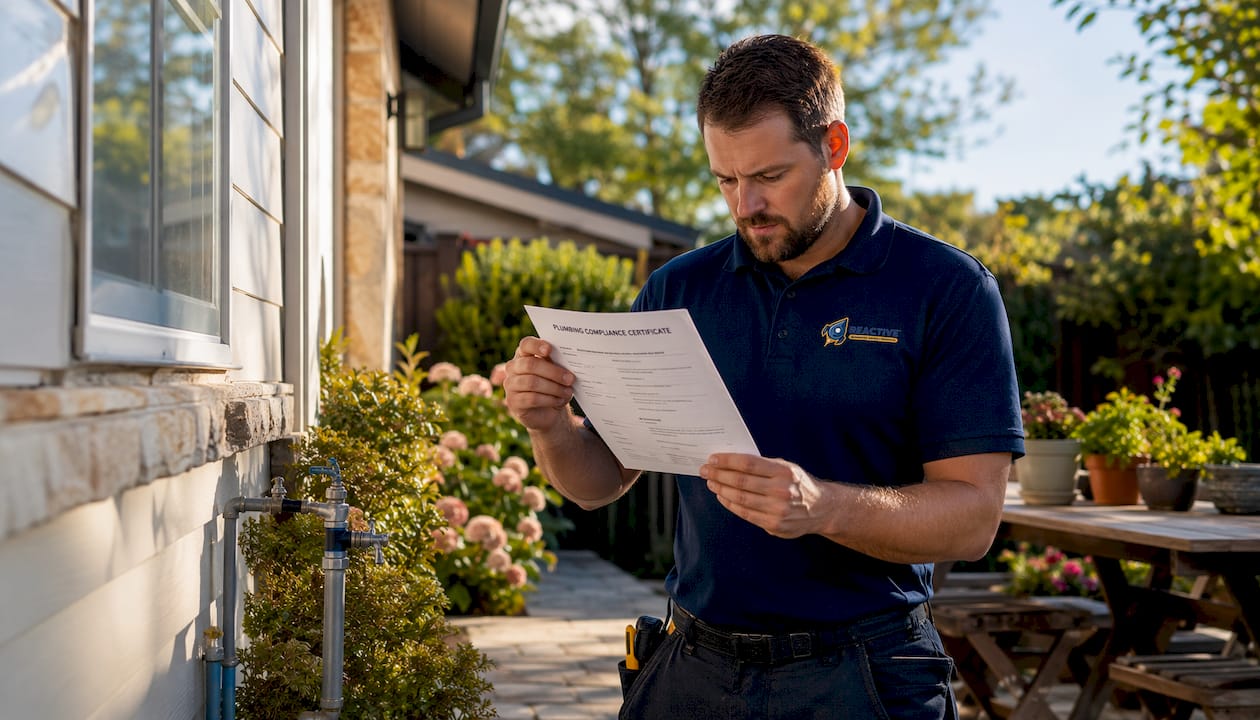
What is a plumbing compliance certificate and why does it matter?
A plumbing compliance certificate is a mandatory legal document issued by a licensed plumber confirming that plumbing work meets the Plumbing Code of Australia, AS/NZS 3500, and all relevant state legislation. Think of it as the official proof that your plumbing has been done properly, by someone qualified to do it. Without one, you have no legal protection if something goes wrong.
The certificate covers a range of works, including:
- New water supply and drainage installations
- Hot water system replacements
- Sewer and stormwater connections
- Gas fitting work
- Major repairs to existing plumbing systems
The Australian Building Codes Board (ABCB) sets nationally consistent plumbing standards through the National Construction Code, which incorporates the Plumbing Code of Australia as Volume Three. Each state and territory then enforces those standards through its own plumbing regulator. Bodies like the Victorian Building Authority (VBA) and the NSW Building Commission oversee compliance at the local level, and the Building Practitioners Board in Victoria handles licensing and disciplinary matters.
When is a plumbing compliance certificate required?
Compliance certificates are required for most significant plumbing and drainage work, including new installations and major repairs. Minor maintenance tasks, such as replacing a tap washer or unblocking a drain, generally do not trigger the requirement. The line between “minor” and “notifiable” work varies slightly by state, so when in doubt, ask your plumber before work begins.
Certificates matter well beyond the day the job is finished. They are:
- Required by insurers when you make a claim related to plumbing damage
- Requested by solicitors and conveyancers during property sales
- Used by Local Government Authorities to audit work quality and protect public health
- Evidence that warranties on fixtures and appliances are valid
Pro Tip: Always ask your plumber for the compliance certificate before you make final payment. Once a tradesperson has left the job, chasing paperwork becomes far harder.
Property transactions are where missing certificates cause the most grief. A buyer’s solicitor will ask for them, and an absent certificate can delay settlement or reduce your negotiating position. Keeping certificates on file from every job protects you at resale.
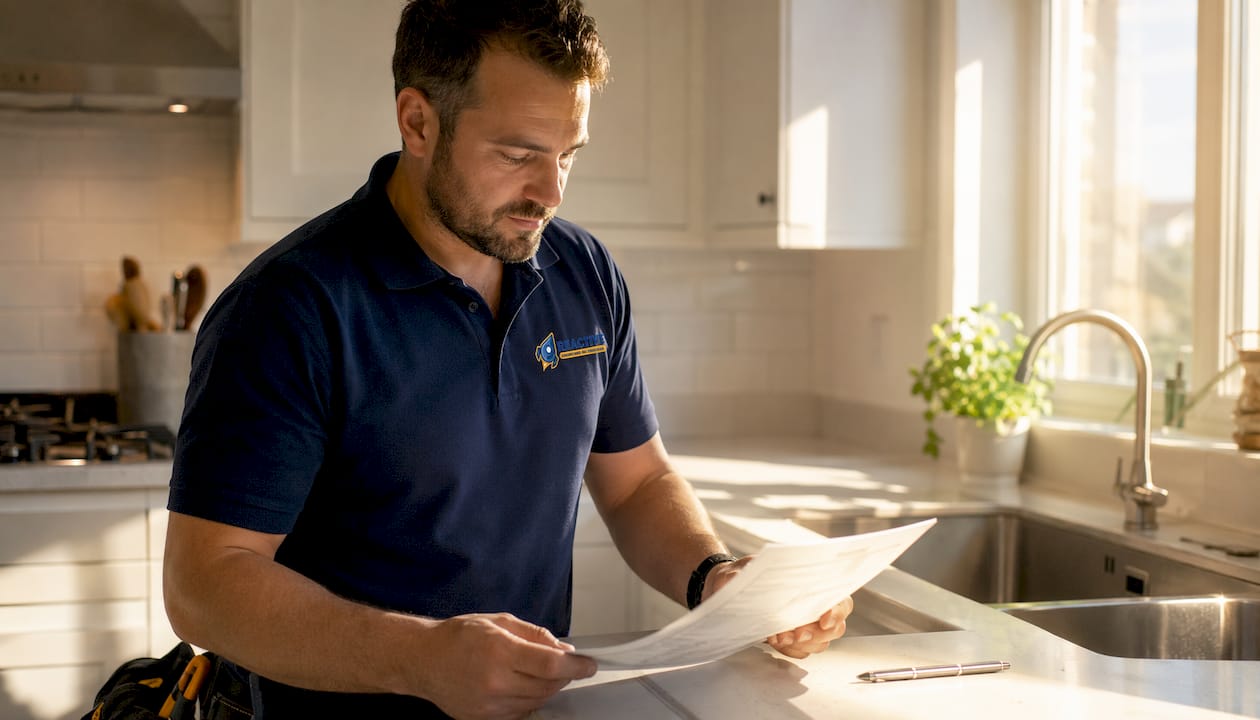
Who is authorised to issue a plumbing compliance certificate?
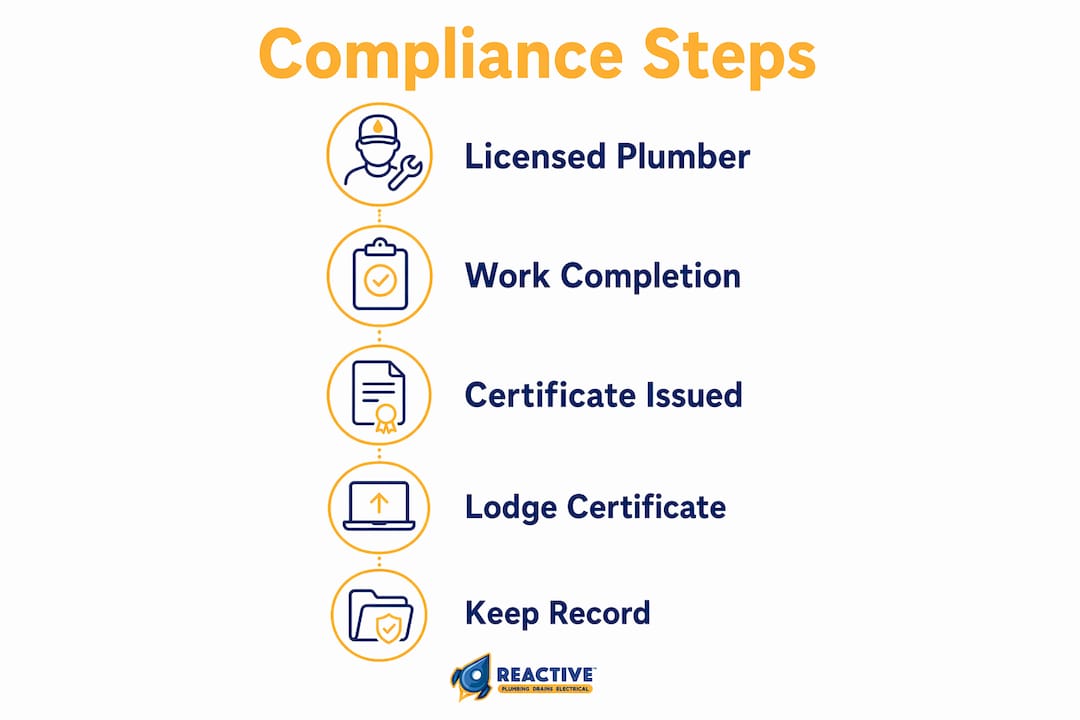
Only a licensed plumber can legally issue a compliance certificate. Registered plumbers, who hold a lower level of authorisation, must either work under the direct supervision of a licensed plumber or restrict themselves to work that does not require a certificate. A certificate signed by an unlicensed or unregistered person has no legal standing.
Across Australian states and territories, licensing is administered by:
- Victoria: Victorian Building Authority (VBA)
- New South Wales: NSW Building Commission
- Queensland: Queensland Building and Construction Commission (QBCC)
- South Australia: Consumer and Business Services (CBS)
- Western Australia: Building and Energy
A licensed plumber can also issue a certificate for work that was started by another licensed plumber, provided they have inspected or tested the prior work, completed or supervised the remaining work, and stated clearly in the certificate that everything meets the required standards. This matters when a job changes hands mid-project.
What details must a plumbing compliance certificate include?
A valid certificate contains specific information, and any missing item can render it unacceptable to regulators or insurers. According to the Victorian Building Authority, a compliance certificate must include:
- The licensed plumber’s name, licence number, and contact details
- A description of the work carried out
- A compliance statement confirming the work meets prescribed standards
- The eleven-digit consent number, where applicable
- Confirmation that an ‘as-laid’ plan has been lodged with the relevant water authority, where required
- Details of appliances and fixtures installed, with any relevant comments
- If the work was not completed, a clear note stating what was done, why it was not finished, and the stage reached
That last point surprises many homeowners. A licensed plumber must still issue a certificate for incomplete work, specifying exactly what was and was not done. This protects you legally if a dispute arises later about the scope of the job.
How and when to lodge or obtain a plumbing compliance certificate
Lodgement timelines and methods vary by state, but the general rule is that the plumber must issue the certificate to you and lodge it with the relevant authority within five to seven days of completing the work. In Victoria, lodgement happens through the VBA360 portal. In NSW, plumbers submit via the MyInspections Gateway operated by the NSW Building Commission, or through the local plumbing regulator for work requiring a local inspection.

| State | Lodgement portal | General timeline |
|---|---|---|
| Victoria | VBA360 | Within 5 days of completion |
| New South Wales | MyInspections Gateway / local regulator | On completion or prior to final inspection |
| Queensland | QBCC / Local Government Authority | On completion of notifiable work |
| South Australia | CBS online system | On completion |
As a homeowner, you are entitled to receive a copy of the certificate directly from the plumber. If you did not receive one, contact the relevant state authority to check whether a certificate was lodged. Keep every certificate you receive in a permanent file with your property documents.
Do compliance certificates expire?
Compliance certificates do not expire. They attest to the condition of the work at the time it was completed, and that record stands permanently. However, if you later modify or extend the plumbing, a new certificate is required for that additional work. The original certificate remains valid for the scope it covered.
Where certificates become a problem is when they are missing entirely. Without them:
- Insurers may decline claims related to the uncertified work
- Buyers may request a price reduction or walk away from a sale
- You may face orders to rectify or remove non-compliant work at your own cost
Store certificates alongside your building permit, title documents, and any warranties. A digital scan backed up to cloud storage is a sensible precaution.
How to choose a licensed plumber and protect your compliance
Hiring a licensed plumbing professional is the single most reliable way to guarantee you receive a valid compliance certificate. An invoice alone proves payment, not quality. Only a compliance certificate proves the work meets the Plumbing Code of Australia, and that distinction matters when your insurer or a future buyer asks for evidence.
Before work begins, verify your plumber’s licence through your state authority’s online register. In Victoria, that is the VBA’s public register. In NSW, check the NSW Building Commission’s licence lookup tool. A legitimate plumber will not hesitate to provide their licence number upfront.
Compliance certificates give homeowners peace of mind by validating work quality and protecting against common defects like waterproofing failure. An invoice tells you what you paid. A certificate tells you what you got.
Uncertified plumbing work carries real risk beyond paperwork. If a burst pipe or waterproofing failure causes damage and the work was never certified, your insurer has grounds to reject the claim. Understanding common plumbing code violations can also help you ask the right questions before a job starts.
What happens if plumbing work does not meet compliance?
When plumbing work fails to meet the required standard, the path forward depends on how the issue is identified. If a plumbing inspector flags non-compliant work during an inspection, the licensed plumber responsible is typically required to rectify it at their own cost. The regulator, whether the VBA, QBCC, or NSW Building Commission, can issue a rectification order specifying what must be fixed and by when.
As a homeowner, if you suspect work is non-compliant, contact your state plumbing authority or the relevant Local Government Authority to request an inspection. Document everything in writing. If the original plumber is unresponsive, you can lodge a formal complaint with the regulator, who has the power to investigate and compel rectification. In Queensland, the QBCC manages this process directly for licensed contractors. Acting quickly limits the damage and keeps your legal options open.
Reactive Plumbing & Electrical: licensed work, proper paperwork, every time
Getting the plumbing work done is only half the job. The other half is making sure you walk away with the right documentation to protect your home, your insurance, and your investment.
Reactive Plumbing & Electrical operates across Sydney, Newcastle, Wollongong, Brisbane, Ipswich, and the Gold Coast, with fully licensed plumbers who provide compliance certificates as a standard part of every qualifying job. Whether you need pipe relining for a damaged sewer line, a hot water system replacement, or emergency drain clearing, our team handles the work and the paperwork. No chasing certificates after the fact. Get in touch today for a quote and the peace of mind that comes with fully compliant, properly documented plumbing.
FAQ
Do I need a plumbing compliance certificate?
Yes, for most significant plumbing work in Australia, a compliance certificate is legally required. Minor maintenance tasks like replacing a tap washer are generally exempt.
Who provides a certificate of compliance?
Only a licensed plumber can legally issue a compliance certificate. Registered plumbers without a licence must work under supervision and cannot issue certificates independently.
What is the purpose of a compliance certificate?
A compliance certificate confirms that plumbing work meets the Plumbing Code of Australia and relevant state legislation. It protects homeowners legally, supports insurance claims, and is required during property sales.
How do I get my compliance certificate?
Your licensed plumber is required to give you a copy within five to seven days of completing the work. If you did not receive one, contact your state plumbing authority to check whether a certificate was lodged on your behalf.
Key takeaways
A plumbing compliance certificate is a legally binding document that only a licensed plumber can issue, confirming work meets the Plumbing Code of Australia and protecting homeowners on insurance, resale, and safety grounds.
| Point | Details |
|---|---|
| Legal requirement | Compliance certificates are mandatory for most significant plumbing work across all Australian states and territories. |
| Licensed plumbers only | Only a licensed plumber can legally issue a certificate; a certificate from an unlicensed person has no legal standing. |
| Lodgement timeline | Plumbers must issue and lodge certificates within five to seven days of completing the work. |
| Permanent record | Certificates do not expire and should be stored permanently with your property documents. |
| Reactive Plumbing & Electrical | Reactive Plumbing & Electrical provides compliance certificates as standard on all qualifying jobs across Sydney, Newcastle, Brisbane, and beyond. |