How to fix a blocked drain flooding your bathroom
What to do right now if your bathroom is flooding
A blocked drain flooding your bathroom needs one action above all others: shut off the water supply immediately. Every second the water keeps running, it soaks deeper into your subfloor, grout, and the ceiling of the room below.
Here is what to do in the first few minutes:
- Close the nearest isolation valve to the affected fixture first. This is usually located under the basin or behind the toilet. If that does not stop the flow, turn off the main supply at the water metre near an external wall.
- Identify the source fixture if you can. A single overflowing drain points to a local blockage. Water backing up through multiple fixtures at once suggests a main sewer line problem.
- Contain the spread with towels rolled against door gaps, and place buckets under any active drips.
- Photograph everything before you start cleaning up. Your insurer will want documentation.
- Call an emergency plumber if the main valve will not stop the flow, sewage is backing up, or water is rising near electrical outlets.
Pro Tip: Keep a pair of rubber gloves and a torch in your bathroom cabinet. In a flooding emergency, you will need both within the first 60 seconds.
Table of Contents
- How to stay safe when your bathroom floods
- How to unblock a bathroom drain causing flooding
- How to clean up and dry your bathroom after a flood
- When should you call a professional plumber?
- How to prevent blocked drains and bathroom flooding
- Key takeaways
- Why licensed local expertise makes all the difference
- Reactive Plumbing & Electrical: fast, licensed help when you need it most
- FAQ
How to stay safe when your bathroom floods
Safety comes before any attempt to unblock the drain. Water and electricity together create a serious electrocution risk, and floodwater in a bathroom can carry contaminants you do not want on your skin.
Work through this checklist before you step into standing water:
- Switch off the electricity at the circuit breaker for any circuit feeding bathroom lights, heated towel rails, or power points. Do this from a dry location before entering the room.
- Wear rubber-soled shoes and gloves. Bare feet on a wet tile floor near live outlets is a genuine hazard.
- Move valuables and electrical appliances out of the wet area immediately.
- Ventilate the room by opening windows and the door. This matters especially if you plan to use any cleaning products.
- Never use chemical drain cleaners while standing water is present. Chemical cleaners in standing water create dangerous splash-back, toxic fumes, and hazardous reactions if mixed with other products already in the drain.
Australian regulations under the Work Health and Safety Act 2011 govern the use of concentrated acid-based drain cleaners, and even low-concentration retail products require strict PPE and ventilation at all times. When in doubt, skip the chemicals entirely and go mechanical.
How to unblock a bathroom drain causing flooding
Most bathroom blockages are closer to the surface than you think. Most bath and shower blockages occur close to the surface of the drain throat and are made up almost entirely of hair tangled with soap residue. That is good news, because it means you can often clear the problem without any special tools.
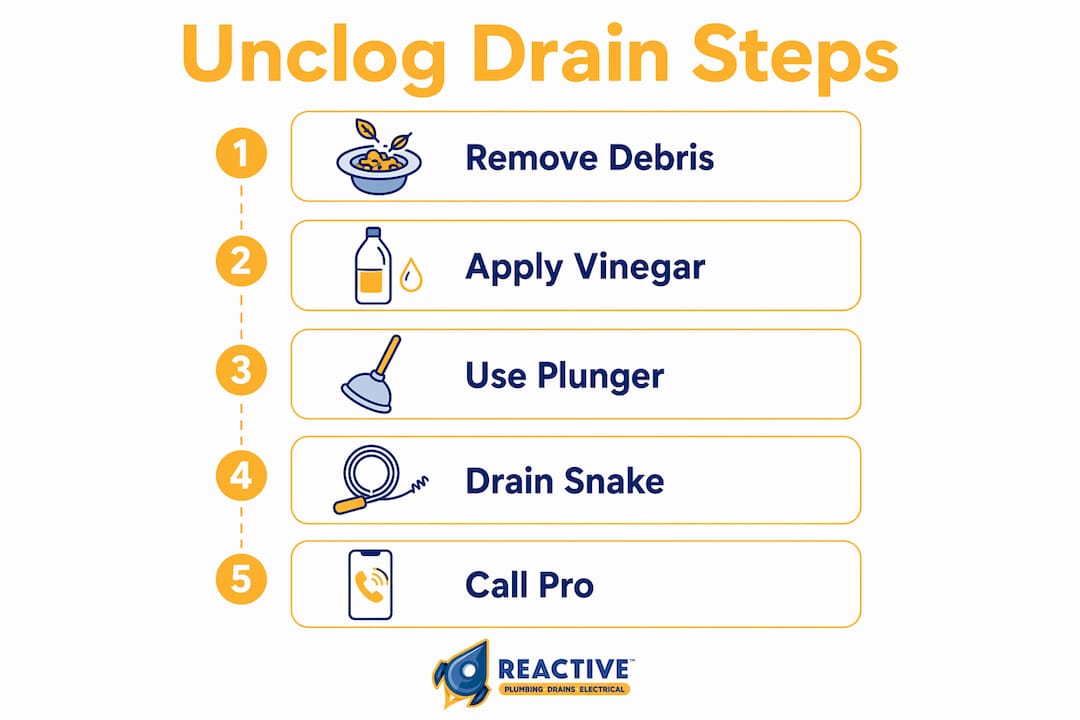
Step 1: Remove debris by hand
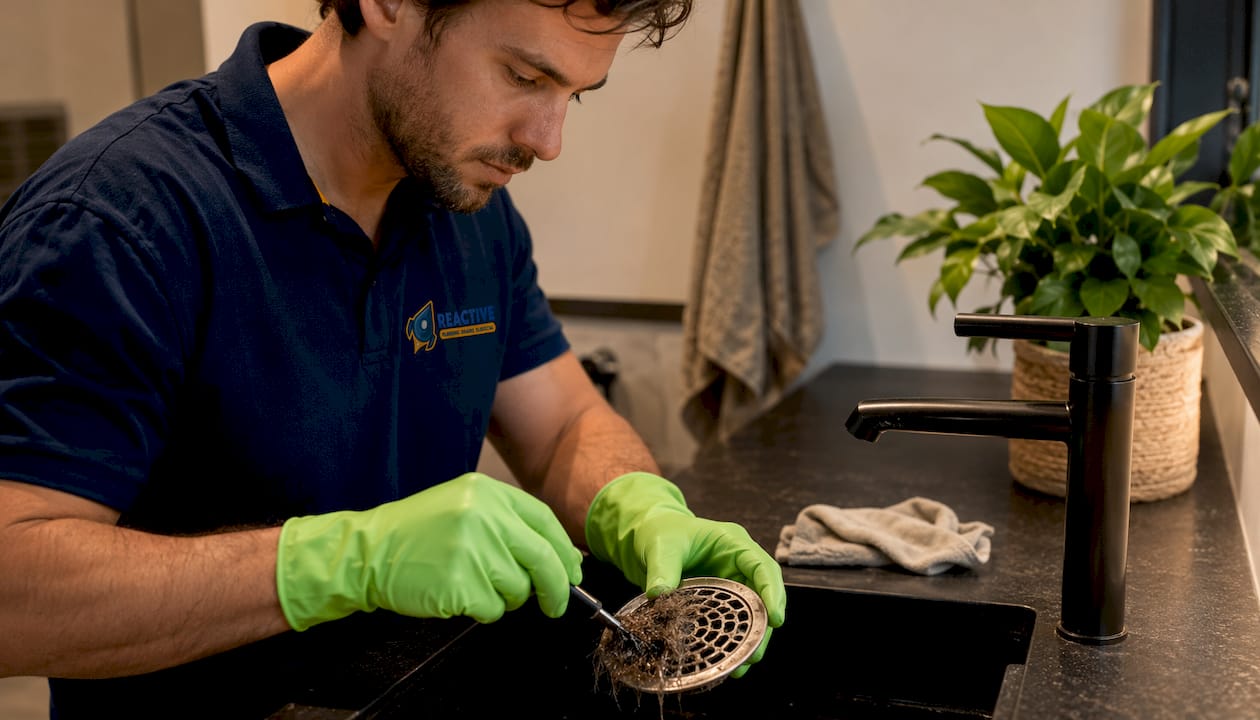
Put on rubber gloves and pull out any hair or soap scum you can see around the drain cover. A straightened wire coat hanger bent into a small hook works well for pulling out clumps just below the surface. This alone resolves many slow bathroom drains without any further effort.
Step 2: Try baking soda and white vinegar
Pour half a cup of baking soda into the drain, follow it immediately with half a cup of white vinegar, then cover the drain and leave it for 30 minutes. Flush with hot tap water afterwards. This method works well on mild organic build-up and is safe for PVC pipes. Do not use boiling water on PVC or porcelain fixtures.
Step 3: Use a plunger
A cup plunger (flat bottom) suits shower and basin drains. Make sure there is enough water in the basin to cover the rubber head, press down firmly to create a seal, then pull up sharply. Repeat 10–15 times. A flange plunger works better for toilets.
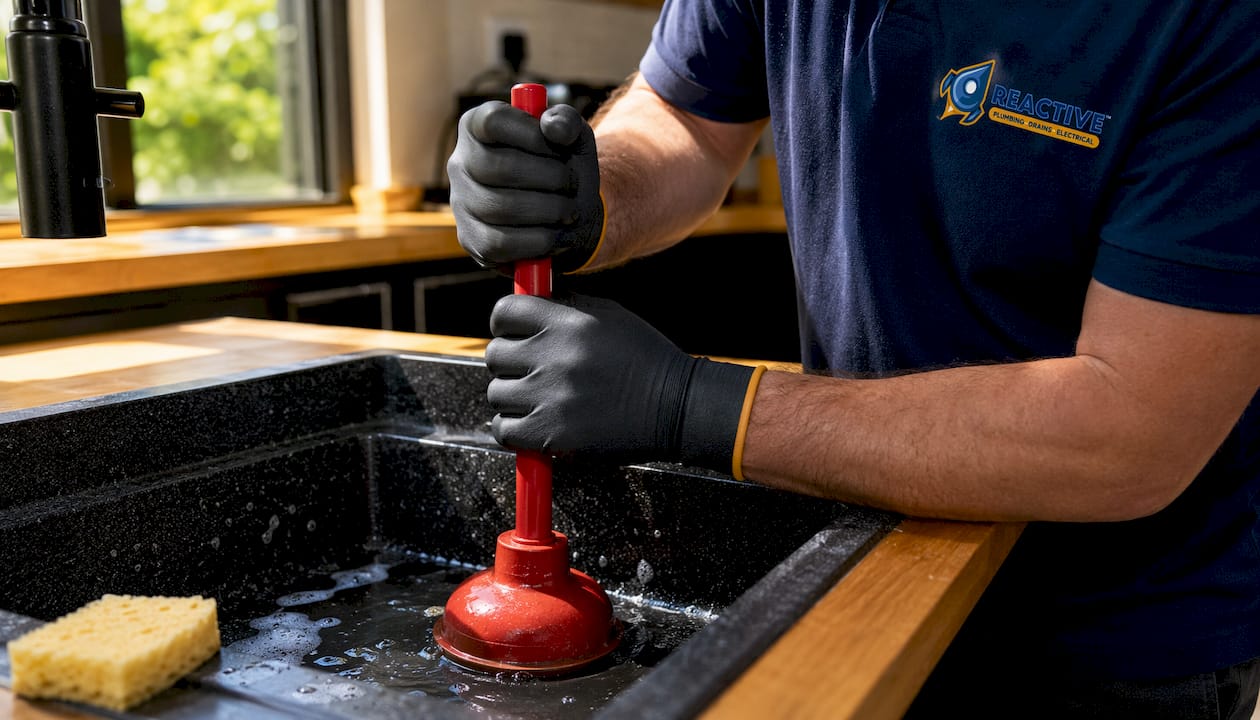
Step 4: Use a drain snake or auger
A hand-operated drain snake, available from most Australian hardware stores, feeds into the drain until it meets resistance. Rotate the handle to break up or hook the blockage. Do not force it. Forcing a snake through plastic pipes can cause cracks that create a bigger problem than the original blockage.
Never mix chemical drain cleaners with baking soda and vinegar residue in the drain. The combination can produce dangerous fumes and a violent reaction. If you have already tried the natural method, flush thoroughly with water before considering any chemical product. Better still, skip chemical cleaners altogether and move straight to a professional if mechanical methods have not worked after two attempts.
Pro Tip: For types of residential drain blockages beyond hair and soap, the fix changes. Grease blockages in a basin respond better to hot water flushes than to a snake. Knowing what caused the blockage saves you time.
How to clean up and dry your bathroom after a flood
Once the drain is clear and the water has stopped, the cleanup needs to happen quickly. Mould can begin forming quickly if moisture is left to sit, and water that soaks into a subfloor can cause structural damage that costs far more to repair than the original blockage.
Follow these steps in order:
- Remove standing water with buckets, mops, or a wet vacuum. Work from the edges of the room toward the drain.
- Soak up residual moisture with old towels or absorbent cloths, paying close attention to grout lines, the base of the vanity, and the floor around the toilet.
- Ventilate aggressively. Open windows and doors, run the exhaust fan continuously, and bring in a pedestal fan or dehumidifier if you have one.
- Disinfect all affected surfaces with a bathroom-safe disinfectant once the area is dry to the touch. This prevents mould and removes any contaminants from the floodwater.
- Inspect walls and the subfloor for soft spots, bubbling paint, or discolouration. These are signs that water has penetrated beyond the surface.
- Contact a water damage restoration professional if the flooding was extensive or if you find evidence of subfloor or wall damage.
| Area affected | Drying time (with ventilation) | Mould risk if untreated |
|---|---|---|
| Tile floor surface | 2–4 hours | Low |
| Grout and tile joints | 24 hours | Moderate |
| Timber subfloor | 48 hours | High |
| Wall cavities | — | Very high |
Pro Tip: A cheap moisture metre from a hardware store tells you whether the subfloor is actually dry before you close the room up. Guessing and getting it wrong means mould remediation later.
When should you call a professional plumber?
DIY methods clear the majority of simple hair and soap blockages, but some situations call for a licensed plumber straight away. Attempting to force a fix when the problem is in the main sewer line can push the blockage deeper and damage your pipes.
Call a professional immediately if you notice any of these signs:
- Multiple fixtures are blocked at once. If the toilet, shower, and basin are all slow or backing up together, the blockage is in the main sewer line, not an individual drain.
- Water backs up in unexpected places. Flushing the toilet causes water to appear in the shower, or running the washing machine backs up the basin.
- Sewage smell from the drains. This points to a deep blockage or a broken seal somewhere in the system.
- Gurgling sounds from drains or the toilet. A sign of a partial blockage that air cannot get past.
- DIY attempts have not worked after two tries. Continuing risks pushing the blockage deeper or cracking a pipe.
Professional plumbers carry CCTV drain cameras and hydro-jetters that can diagnose and clear blockages no DIY tool can reach. Hydro-jetting operates at pressures upward of 5,000 PSI, which strips grease and debris from pipe walls entirely rather than just punching a hole through the blockage. For blocked drains in the Inner West and across Sydney, Reactive Plumbing & Electrical offers 24/7 emergency response with licensed professionals.
Pro Tip: Before the plumber arrives, clear the area around the affected fixtures and note which drains are slow or blocked. The more specific your description, the faster the diagnosis.
How to prevent blocked drains and bathroom flooding
The most effective bathroom flooding solution is the one that stops the problem before it starts. Most blockages build gradually over weeks or months, which means simple weekly habits make a real difference.
- Fit a hair catcher in every shower and bath drain and clean it weekly. These cost very little from any hardware store and catch the leading cause of bathroom blockages before it enters the pipe.
- Never pour cooking fat, oil, or grease down the sink. Let it cool, scrape it into a container, and put it in the bin. Even small amounts accumulate on pipe walls over time.
- Only flush toilet paper. “Flushable” wipes do not break down in Australian sewer systems and are a leading cause of blockages.
- Flush drains with hot tap water weekly to shift soap and minor grease build-up before it hardens.
- Schedule a professional drain inspection if you have recurring slow drains or live in an older property. A CCTV inspection identifies tree root intrusion or pipe deterioration before it becomes a flooding emergency.
A good home plumbing maintenance checklist covers drain care alongside other key checks, and running through it twice a year keeps small issues from turning into expensive ones.
Pro Tip: Know where your main water shut-off valve is before an emergency happens. Walk every adult in the household to its location so anyone can act fast if a drain overflows.
Key takeaways
Fixing a blocked drain flooding your bathroom requires immediate water shut-off, safe DIY unclogging, thorough drying, and professional help when the blockage is beyond the reach of household tools.
| Point | Details |
|---|---|
| Shut off water first | Close the nearest isolation valve or the main supply to stop flooding damage immediately. |
| Safety before entry | Switch off electricity at the circuit breaker if water is near outlets before stepping into the flooded area. |
| Most blockages are shallow | About 90% of bath and shower blockages occur within the first 10–20cm of the drain throat, mainly hair entangled with soap residues; manual removal with tools like wire hangers is often faster and safer than chemicals. |
| Dry within 24 hours | Mould can begin forming within 24 hours of flooding; ventilate and disinfect as soon as the water is removed. |
| Call Reactive Plumbing & Electrical | For severe, persistent, or multi-fixture blockages, Reactive Plumbing & Electrical provides 24/7 licensed emergency response across Sydney and surrounding regions. |
Why licensed local expertise makes all the difference
There is a pattern we see repeatedly: a homeowner spends an afternoon on a blockage, tries three different products, and eventually calls us after the problem has got worse. The original fix would have taken 20 minutes with the right equipment. The delay turned a $200 job into a $600 one.
The honest truth about bathroom drain blockages is that DIY methods are genuinely effective for the majority of cases, and we encourage homeowners to try them first. A plunger and a drain snake clear most hair and soap blockages without any professional involvement. The mistake is persisting past two failed attempts when the blockage is clearly deeper in the system.
What separates a licensed plumber from a DIY attempt is not just the tools, though a hydro-jetter and a CCTV camera do make a significant difference. It is the ability to diagnose accurately. A gurgling drain and a sewage smell together tell a different story than a simple hair clog, and treating them the same way wastes time and risks pipe damage. Licensed professionals working under Australian plumbing regulations carry the training to read those signs correctly on the first visit.
Reactive Plumbing & Electrical’s 24/7 availability means a flooding emergency at 11 PM on a Sunday gets the same response as a weekday call. That kind of reliability, backed by licensed tradespeople and a well-equipped local fleet, is what gives homeowners genuine peace of mind rather than a temporary fix.
Reactive Plumbing & Electrical: fast, licensed help when you need it most
When a blocked drain has already flooded your bathroom, you need a team that can respond the same day, diagnose accurately, and fix it properly the first time. Reactive Plumbing & Electrical does exactly that, with licensed plumbers available 24/7 across Sydney, Newcastle, Wollongong, Brisbane, Ipswich, and the Gold Coast.
For blockages that go beyond a plunger, Reactive Plumbing & Electrical uses CCTV drain cameras and hydro-jetting to clear the pipe completely and identify any underlying damage. If recurring blockages point to a deteriorating pipe, pipe relining repairs the pipe from the inside without digging up your floors or garden. You can also use the pipe relining cost calculator to get a clear picture of what a permanent fix would cost before committing. Call Reactive Plumbing & Electrical now to book an emergency drain inspection or get a same-day quote.
FAQ
How do you unblock a badly blocked bathroom drain?
Start by removing visible hair and debris by hand, then try a plunger or a hand-operated drain snake. If the blockage does not clear after two attempts, or if multiple fixtures are affected, call a licensed plumber rather than risk pushing the blockage deeper.
Can a blocked drain cause bathroom flooding?
Yes. A blocked drain prevents water from escaping, causing it to back up and overflow onto the floor. If the blockage is in the main sewer line, water can back up through multiple fixtures at once, making the flooding worse and faster.
Does pouring boiling water down a drain unblock it?
Hot tap water can shift mild grease and soap build-up in a kitchen sink, but avoid boiling water on PVC pipes or porcelain fixtures as it can cause damage. For bathroom drains blocked with hair, manual removal or a plunger is more effective.
Why is my bathroom drain overflowing?
The most common cause is a build-up of hair and soap residue in the first 10–20cm of the drain throat, which accounts for about 90% of bath and shower blockages; manual removal typically resolves these. If the overflow affects more than one fixture, it suggests a main sewer blockage and requires professional attention from a licensed plumber.