
Plumbing tempering valve: what Australian homeowners need to know
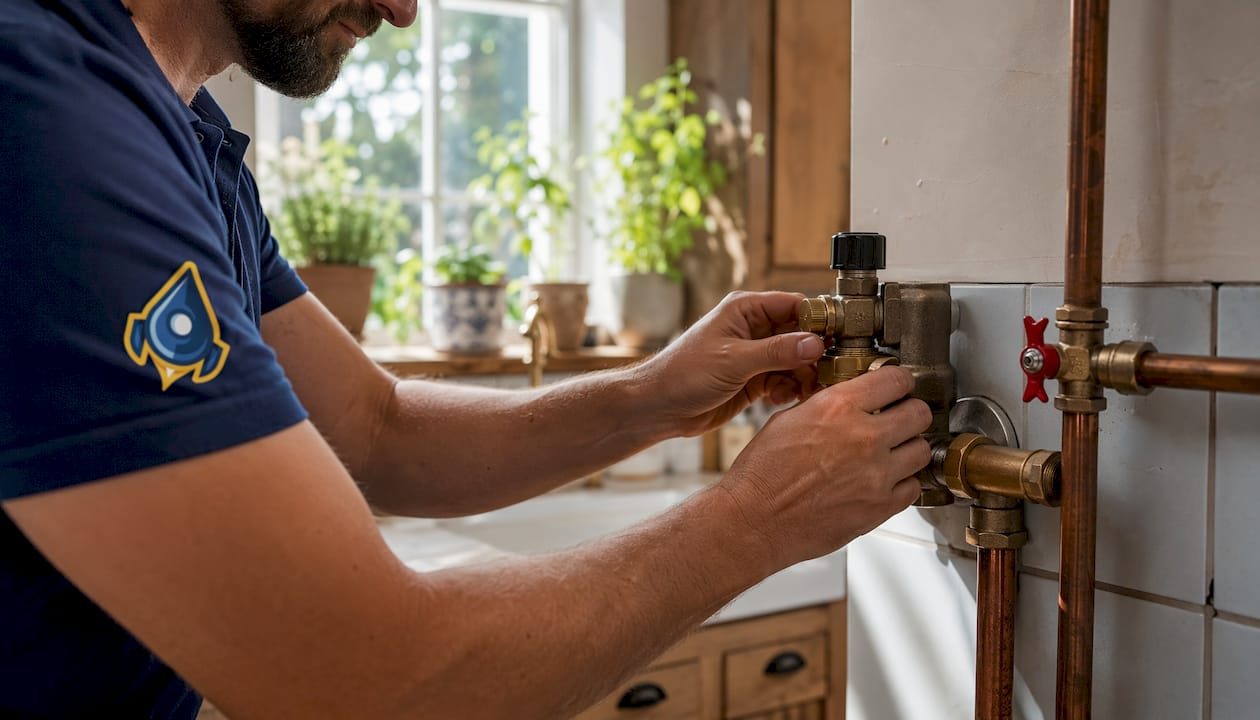
A plumbing tempering valve blends stored hot water with cold mains water so that taps, showers, and basins deliver water at a safe temperature limit, while your hot water system keeps its storage temperature sufficiently high to suppress Legionella bacteria. These temperature requirements for outlet water and storage temperature are foundational in the Plumbing Code of Australia and AS/NZS 3500.4. If the water at your shower feels scalding or noticeably cooler than usual, grab a probe thermometer, run the tap for 30 seconds, and measure. Temperatures above the recommended safe limit mean the valve needs adjustment or replacement by a licensed plumber.
Hot liquid scalds send thousands of Australians to hospital each year. Temperature reduction devices such as tempering valves are one of the most effective scald prevention measures available for residential properties.
Table of Contents
- What exactly is a tempering valve and where does it sit?
- How does a tempering valve actually work?
- Tempering valves versus thermostatic mixing valves: which do you need?
- What do Australian rules actually require?
- How to check and safely adjust a tempering valve
- How to tell if your tempering valve is failing
- Maintenance, testing frequency and what it typically costs
- Installation best practice: placement, dead legs, and protection
- When should you call a licensed plumber?
- Reactive Plumbing & Electrical: licensed tempering valve service across eastern Australia
- Key takeaways
- The part most homeowners get wrong
- Useful sources and further reading
- FAQ
What exactly is a tempering valve and where does it sit?
A tempering valve is a mechanical, temperature-mixing device. It sits on the hot water outlet pipe, usually right next to the water heater or inside a service cupboard, and blends hot stored water with cold mains water before it reaches your taps and showers. There are no electronics involved. The valve responds to temperature changes using a thermostatic element, which is a wax or bimetallic component that expands and contracts with heat.
Its primary safety role is straightforward: allow the water heater to run hot enough to kill bacteria, while preventing dangerously hot water from reaching the people in your home. Without one, a storage system set at 60°C would deliver water at close to that temperature directly to a shower or bath, which can cause a serious scald in seconds.
Key facts about residential tempering valves:
- Factory pre-set to approximately 50°C for domestic use
- Mixing accuracy of ±3°C under normal operating conditions
- Installed adjacent to the water heater, not at the fixture itself
- Suitable for electric, gas, solar, and heat pump hot water systems
- Required on showers, baths, basins, and bidets; optional on kitchen sinks and laundry troughs
How does a tempering valve actually work?
Inside the valve body, a thermostatic element sits in the mixed water stream. As the outlet temperature rises, the element expands and progressively closes off the hot water inlet while opening the cold water inlet. When the outlet temperature drops, the element contracts and the process reverses. This proportional mixing action happens continuously, keeping the delivered water close to the set temperature.
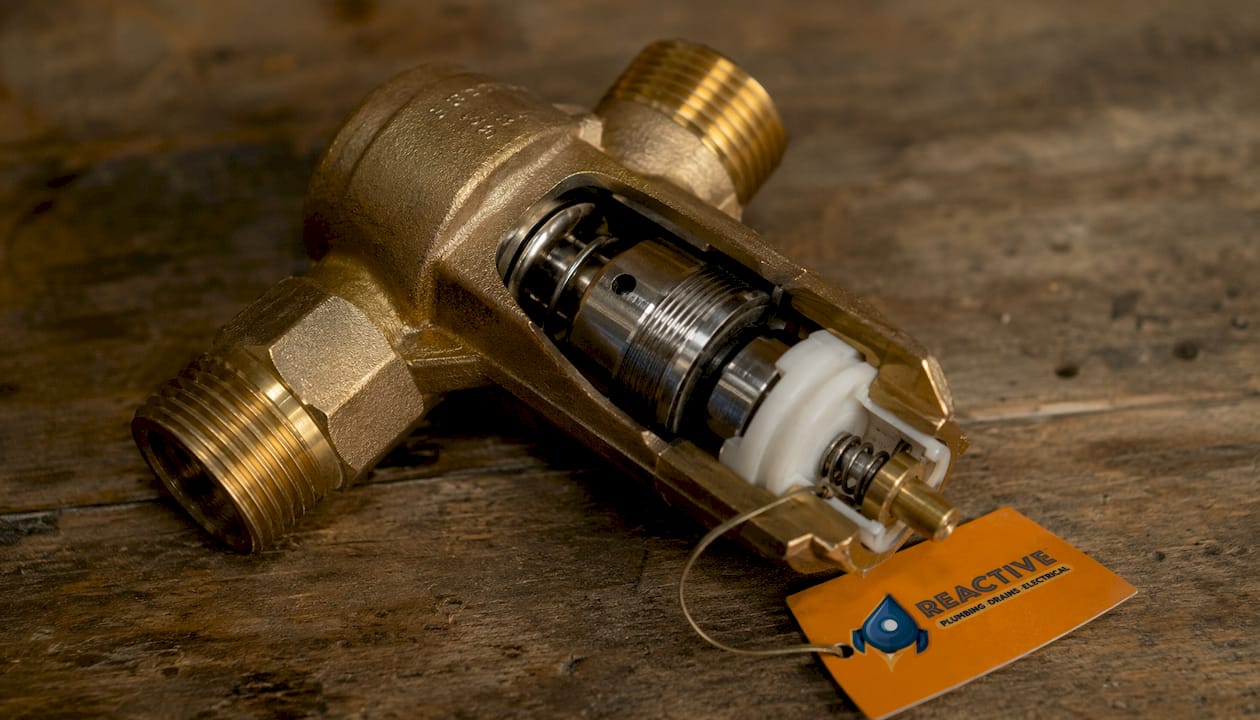
The ±3°C mixing accuracy means a valve set to 50°C should deliver water between 47°C and 53°C under stable conditions. In practice, sudden changes in inlet pressure or temperature, such as someone flushing a toilet while you are in the shower, can cause brief fluctuations. A well-maintained valve recovers quickly; a worn one may not.
Most residential valves are not field-adjustable by the homeowner beyond a small setpoint screw. The factory setting of approximately 50°C is intentional and aligns with the AS/NZS 3500.4 delivery temperature requirement.
Tempering valves versus thermostatic mixing valves: which do you need?
Homeowners frequently confuse these two devices, and the distinction matters for both safety and compliance. Both blend hot and cold water, but they are built to different accuracy standards and carry different maintenance obligations.
Key differences at a glance:
- Accuracy: Tempering valves have a typical mixing accuracy, while TMVs offer higher precision suitable for sensitive applications.
- Thermal shut-off: TMVs include a fail-safe that shuts off flow if cold water supply is lost; tempering valves do not
- Testing: Both require annual field testing; TMV critical components must be replaced within 5 years
- Typical settings: Tempering valves are set to a maximum of 50°C; TMVs are used where 45°C maximum is required
- Where each is used: Tempering valves suit most residential installs; TMVs are mandated in hospitals, aged care facilities, and schools
The Plumbing Code of Australia is clear on this point. Where the required maximum delivery temperature is 45°C, the device must be a TMV or a thermostatically controlled tap. Where 50°C is the maximum, a tempering valve is an acceptable solution. For most Australian homes, a tempering valve is fit-for-purpose and simpler to maintain. If you manage a property that houses vulnerable people, check with a licensed plumber whether a TMV is required. You can also read more about TMV compliance obligations for higher-risk settings.
What do Australian rules actually require?
The compliance picture for Australian homeowners is built around two core numbers and a clear list of covered fixtures.
Storage temperature: Your hot water system must maintain a minimum of 60°C in the storage tank. This is not optional. Storing water below 60°C creates conditions where Legionella can multiply.
Delivery temperature: The Plumbing Code of Australia requires that sanitary fixtures used for personal hygiene, showers, baths, handbasins, and bidets, receive water at no more than 50°C. Kitchen sinks and laundry troughs are not covered by this requirement, though temperature control is optional for those fixtures.
“All heated water installations involving sanitary fixtures, including new installations, alterations, additions and repairs to existing installations, must deliver water at a temperature mandated under the standard.”
Queensland Housing guidance, Plumbing Newsflash 456
Testing obligations: Under AS 4032, tempering valves must be tested every 12 months. South Australia explicitly requires this; Victoria’s Building Authority recommends annual servicing in line with AS 4032.3. If a valve is not functioning correctly, it must be rectified or replaced. Replacement of the whole valve, rather than individual components, is the standard approach for tempering valves.
The rules also apply when you replace a hot water system. If you are swapping out an old unit, the plumber must confirm that all personal hygiene fixtures meet the temperature control requirements of AS/NZS 3500.4. This may mean installing a tempering device if one is not already present. For more on storage system requirements, see our dedicated guide.
How to check and safely adjust a tempering valve
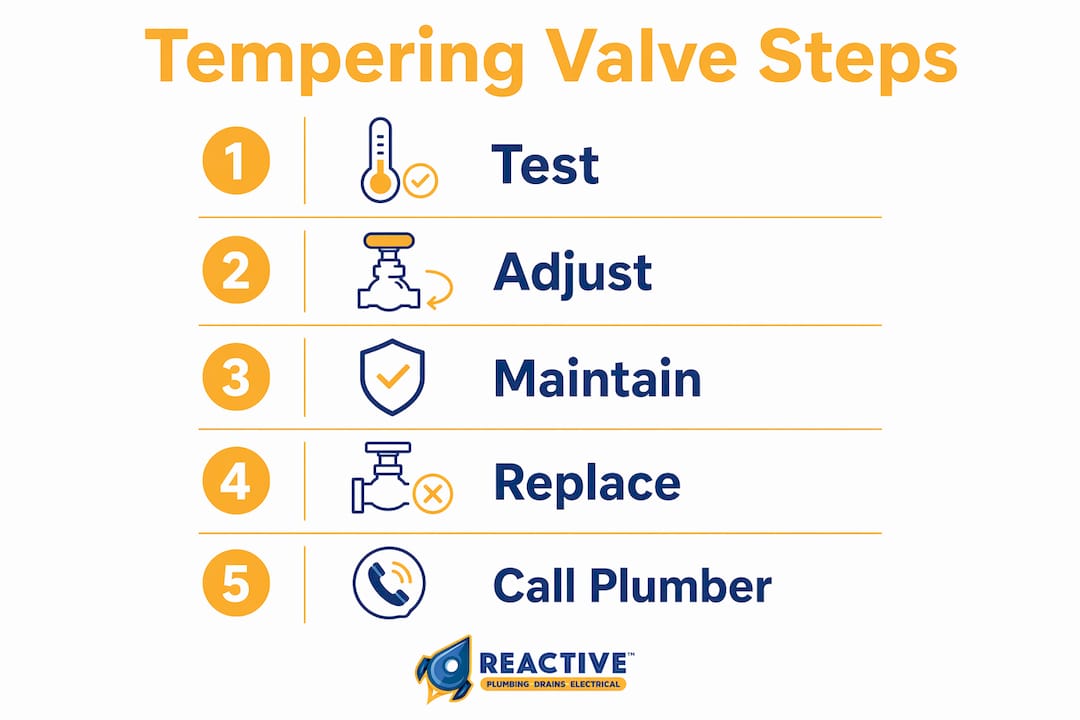
You can verify your outlet temperature yourself. Adjusting the setpoint is a minor task in most cases, but replacing the valve or working on inaccessible installations is licensed plumber territory.
Before you start: Warn other household members not to use hot water during the test. Have a probe thermometer ready.
- Run the hot tap at the closest personal hygiene fixture (shower or basin) for 30 seconds to flush any standing water from the pipe.
- Hold the probe thermometer under the running water and wait for the reading to stabilise, usually 10–15 seconds.
- Record the temperature. A reading no higher than 50°C is within the acceptable range. Above 50°C means the valve needs attention.
- If the reading is slightly high, locate the tempering valve (usually near the water heater). Most valves have a small adjustment cap or screw. Turn it incrementally towards the cooler setting, then re-test at the tap.
- If the reading is still outside range after one adjustment, or if the valve is inaccessible, stop and call a licensed plumber.
What you can do yourself: Minor setpoint adjustments on an accessible valve, and temperature testing with a thermometer.
What requires a licensed plumber: Valve replacement, pressure fault diagnosis, inaccessible valve relocation, and any work on the water heater itself.
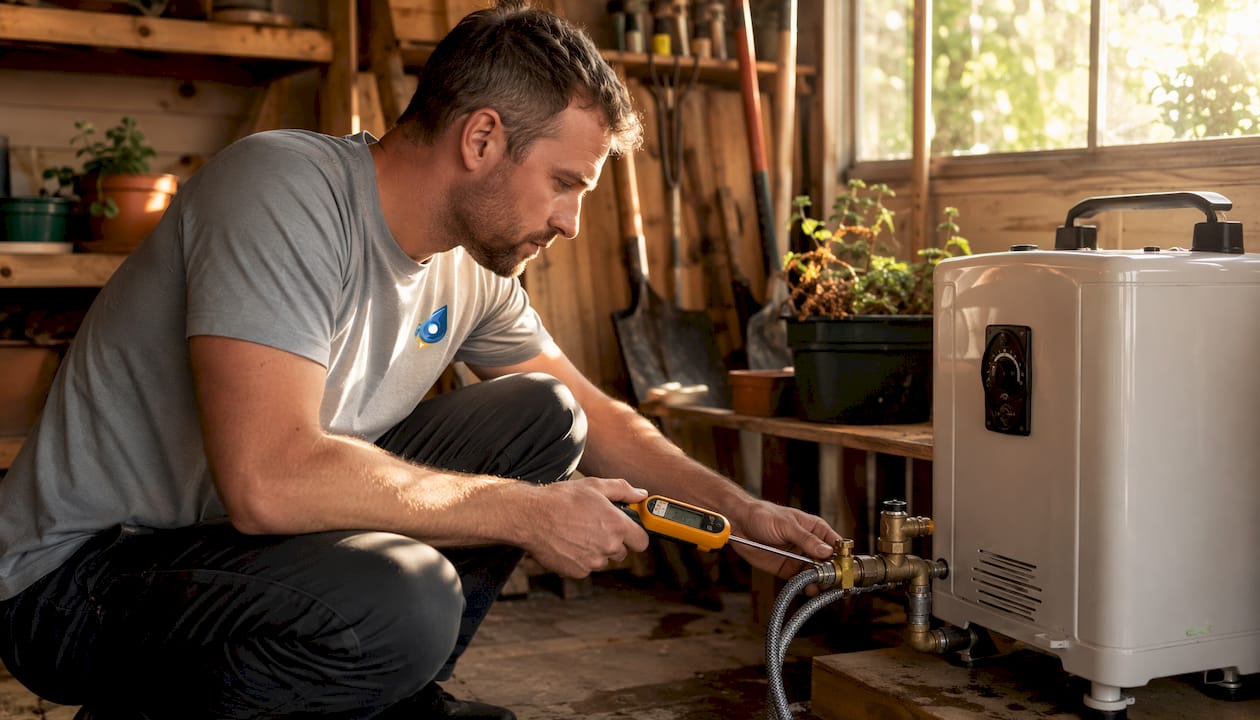
Pro Tip: Write the valve’s setpoint reading and the date of your test on a piece of tape stuck to the valve body or inside the service cupboard door. This simple record makes annual checks faster and gives your plumber a useful baseline. Add it to your home plumbing maintenance checklist so it does not get forgotten.
How to tell if your tempering valve is failing
Symptoms are usually obvious once you know what to look for. The most common signs are water that is consistently too hot, consistently too cold, or that fluctuates unpredictably during use.
| Symptom | Likely cause |
|---|---|
| Water above 53°C at personal hygiene fixtures | Valve stuck open on hot side, worn thermostatic element |
| Water too cold despite heater running hot | Valve stuck open on cold side, blocked hot inlet |
| Temperature swings during use | Pressure imbalance, debris in strainer, partially blocked inlet |
| Dripping or weeping from the valve body | Worn seals or O-rings, internal corrosion |
| No hot water at fixtures but heater is fine | Valve seized, debris blockage |
Simple checks you can do before calling a plumber: verify the storage temperature is at or above 60°C using the heater’s thermostat display, check whether the cold water supply pressure has changed, and inspect the valve body for visible leaks or corrosion.
If you are seeing intermittent hot water or temperature swings that come and go, the tempering valve is a common culprit, but a failing water heater can produce identical symptoms. A licensed plumber can isolate the cause quickly.
Maintenance, testing frequency and what it typically costs
Annual testing is the baseline expectation under AS 4032, and most manufacturers align their guidance with that interval. Replacement intervals depend heavily on water quality. In areas with hard water or high sediment, valves can fail within 5 years. In areas with softer water and good strainer maintenance, a quality valve may last 8 years or longer.
| Service | Typical Australian cost range |
|---|---|
| Annual test and report | $80 |
| Strainer clean and service | $100 |
| Valve replacement (supply and fit) | $250 |
| Emergency call-out (after hours) | $150 call-out fee plus parts |
These are indicative ranges. Actual costs vary by location, access difficulty, and the specific valve model.
Hard water accelerates mineral build-up inside the valve, which causes the thermostatic element to stick and the strainer to block. Fitting an accessible strainer upstream of the valve and flushing it annually extends service life noticeably. The RMC HeatGuard installation manual specifically advises fitting accessible strainers so sediment does not damage the valve’s internal components. When a valve does reach end of life, the standard approach is full replacement rather than internal component repair.
Installation best practice: placement, dead legs, and protection
Where the valve sits in your system affects both compliance and performance. The AS/NZS 3500.4 standard requires that tempering valves be “readily accessible,” though the standard does not define that term precisely, which has led to some variation in practice across states.
Good installation practice covers several points:
- Avoid long dead legs. A dead leg is a section of pipe between the valve and the fixture that holds stagnant water. Long dead legs increase cold water draw-off before hot water arrives and create conditions for microbial growth. Branch pipes should contain no more than 2 litres of water or exceed 10 lineal metres from the temperature control device to the fixture outlet.
- Fit isolation valves and strainers. These allow the valve to be serviced or replaced without draining the whole system, and the strainer protects the valve from debris.
- Protect the valve from heat during installation. Never expose the valve body to direct heat during soldering or brazing. Use heat sinks or complete all hot work before fitting the valve.
- Flush the system before fitting a new valve. Scale, solder beads, and debris left in the pipework after a heater replacement will damage the new valve’s seals almost immediately.
- Accessibility for roof-mounted solar systems. Queensland’s plumbing guidance recommends locating tempering valves at ground level (no higher than 1.6 metres), within one metre of an inspection hatch, or in close proximity to the storage tank on single-storey buildings only, to avoid working-at-heights risks.
When should you call a licensed plumber?
Some situations call for a professional without hesitation. DIY adjustments have limits, and crossing them puts your safety and your compliance at risk.
Call a licensed plumber immediately if:
- Outlet temperature exceeds 50°C after your own adjustment attempt
- You find visible leaks, corrosion, or damage on the valve body
- The valve is inaccessible (roof-mounted, inside a wall, or behind fixed cabinetry)
- You have no hot water at personal hygiene fixtures despite the heater running normally
- The valve has not been tested in more than 12 months
Legal and compliance reasons to use a licensed plumber:
- Valve replacement must comply with the Plumbing Code of Australia and AS/NZS 3500.4
- Annual field testing under AS 4032 must be documented; a licensed plumber can provide a test report
- In several states, TMV maintenance and replacement must be carried out by a licensed plumber
Questions to ask your plumber before they start:
- Are you licensed in this state for plumbing work?
- Do you carry out AS 4032 field testing and provide a written test report?
- What is the replacement warranty on the new valve and the labour?
- Will you confirm the storage temperature is at or above 60°C as part of the service?
If you are dealing with a hot water emergency, do not wait for a scheduled appointment.
Reactive Plumbing & Electrical: licensed tempering valve service across eastern Australia
When your tempering valve needs more than a quick temperature check, you want a licensed team that knows the AS 4032 requirements and can hand you a written test report at the end of the job.

Reactive Plumbing & Electrical’s licensed plumbers carry out annual tempering valve testing, strainer servicing, setpoint adjustments, and full valve replacements across Sydney, Newcastle, Wollongong, Brisbane, Ipswich, and the Gold Coast. Every service includes a documented compliance record so you have proof of testing if you ever need it. Emergency hot water services are available 24/7, so a failed valve at an inconvenient hour is not a problem you have to sit with. If you are unsure whether your current setup meets the Plumbing Code of Australia requirements, a safety inspection is the fastest way to find out. Contact Reactive Plumbing & Electrical to book a tempering valve inspection or replacement today.
Key takeaways
A tempering valve keeps your hot water system legally compliant and your household safe by capping outlet temperatures at 50°C while storage stays at 60°C or above.
| Point | Details |
|---|---|
| Storage vs outlet temperatures | Store at 60°C minimum; deliver no more than 50°C at showers, baths, basins, and bidets. |
| Annual testing is mandatory | AS 4032 requires tempering valves to be tested regularly, typically on an annual basis, with documentation maintained. |
| Replacement interval | Most valves last several years, though hard water and poor strainer maintenance can shorten their service life. |
| When to call a plumber | Outlet above 50°C, visible leaks, inaccessible valve, or no test in over 12 months. |
| Reactive Plumbing & Electrical | Licensed testing, replacement, and compliance reporting across Sydney, Newcastle, Wollongong, Brisbane, Ipswich, and the Gold Coast. |
The part most homeowners get wrong
Most of the tempering valve questions we see come down to one misunderstanding: homeowners assume the valve is either working or it is not, and that a working valve needs no attention. The reality is more nuanced. A valve can be technically functional, meaning it is mixing water, while still delivering temperatures outside the compliant range. A worn thermostatic element might hold the outlet at 53°C consistently, which feels fine in the shower but is above the legal maximum and represents a real scald risk for a child or elderly person.
The annual test requirement exists precisely because valves drift. A probe thermometer test once a year, documented and compared against last year’s reading, tells you whether the valve is holding its setpoint or slowly creeping in the wrong direction. That trend matters more than any single reading.
We also see properties where the valve was installed correctly but the strainer was never cleaned. Sediment from ageing pipes accumulates, restricts flow, and forces the valve to work harder than it was designed to. A $100 strainer service can add years to a valve’s life. Skipping it often means a $400 replacement instead.
The compliance framework in Australia is genuinely well-designed. The 60°C storage and 50°C delivery combination is not arbitrary; it reflects decades of public health evidence on Legionella control and scald prevention. Following it is not bureaucratic box-ticking. It is the practical minimum for a safe home.
Useful sources and further reading
The following sources underpin the regulatory and technical claims in this article. They are the appropriate starting point for any compliance question.
| Source | What it covers |
|---|---|
| Plumbing Code of Australia — Heated Water Temperature Control advisory note | PCA setpoints (50°C delivery, 60°C storage), fixture requirements, TMV vs tempering valve distinctions, AS 4032 testing obligations |
| Queensland Housing — Plumbing Newsflash 456 | Tempering valve location guidance, accessibility requirements, solar system placement recommendations |
| ABCB Handbook: Warm Water Systems | TMV operation, dead leg limits, branch pipe sizing, state-by-state maintenance obligations |
| AS/NZS 3500.4 — Heated Water Services (via CCC Engineering guide) | Delivery and storage temperature requirements, recirculation and dead leg guidance |
| RMC HeatGuard Installation Manual | Installer best practice: heat protection during soldering, strainer fitting, system flushing |
| Builtwater Solutions — TMVs and Tempering Valves | AS 4032 field testing and replacement intervals, scald prevention context |
For compliance questions specific to your state or territory, contact your state’s plumbing regulator directly, as requirements can vary from the national baseline.
FAQ
What is a tempering valve in plumbing?
A tempering valve is a mechanical device that blends hot stored water with cold mains water to cap the outlet temperature at a safe level, typically no more than 50°C, at taps and showers used for personal hygiene.
Can I adjust a tempering valve myself?
You can make minor setpoint adjustments on an accessible valve and verify the outlet temperature with a probe thermometer, but valve replacement, pressure fault diagnosis, and work on inaccessible valves must be carried out by a licensed plumber.
How do I tell if my tempering valve is faulty?
The clearest signs are outlet water consistently above 50°C, temperature swings during use, visible leaks from the valve body, or no hot water at personal hygiene fixtures despite the heater running normally.
How often should a tempering valve be replaced?
Most tempering valves last 5–8 years, though hard water and infrequent strainer maintenance can shorten that range considerably. Annual testing under AS 4032 will indicate when a valve is no longer holding its setpoint and needs replacement.