Common home plumbing mistakes Australians make
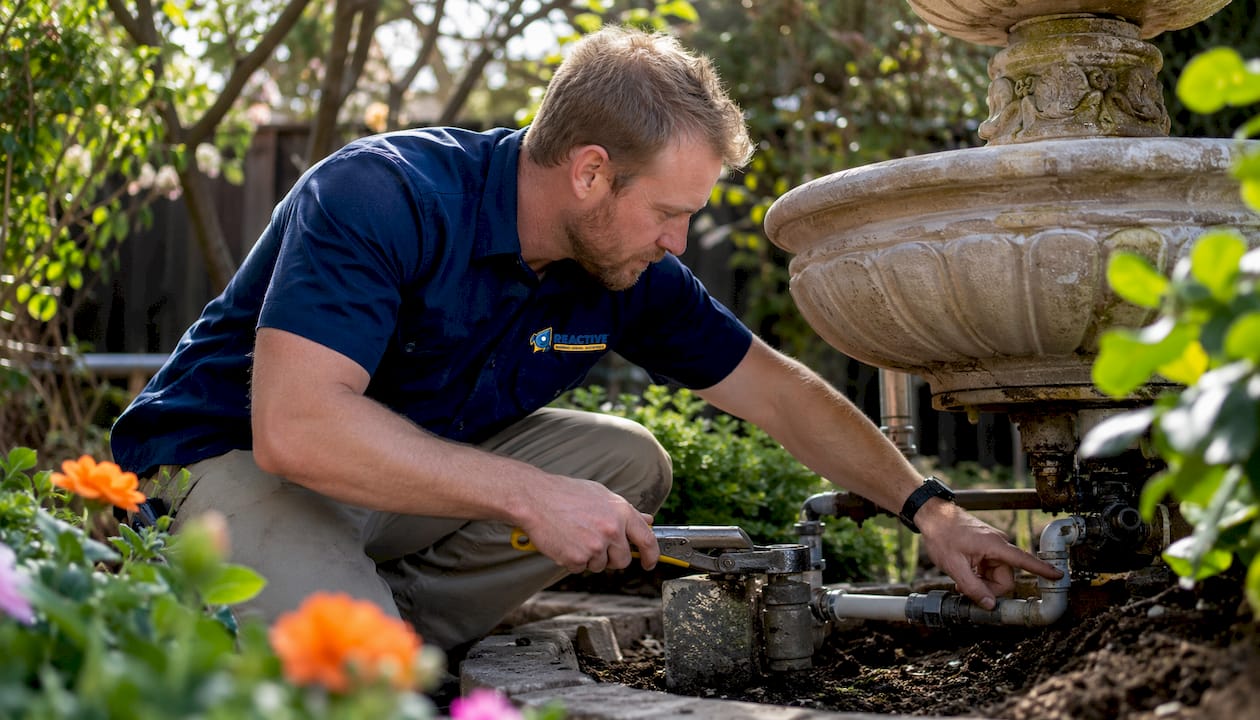
Most Australian homeowners will face a plumbing problem at some point, and more often than not, the damage traces back to a mistake that was entirely avoidable. Whether it’s a slow-draining sink that gets ignored for months or a DIY repair that voids your home insurance, the consequences of getting plumbing wrong can be expensive and stressful.
Here are the most common home plumbing mistakes to watch out for:
- Slow-draining sinks left untreated until a full blockage forms
- Clogged bath or shower drains from hair and soap build-up
- Running toilets wasting significant amounts of water daily
- Faulty or ageing water heaters ignored until they fail completely
- Low water pressure caused by undetected leaks or corroded pipes
- Leaky pipes hidden behind walls causing mould and structural damage
- Dripping taps dismissed as minor when they signal worn washers or valve seats
- Sewer system backups from tree root intrusion or accumulated debris
- Using inappropriate pipe materials or fittings for the job
- Skipping regular maintenance and inspections
- Failing to insulate pipes, leading to heat loss or, in colder regions, freezing
Under Australian law, most plumbing work must be carried out by a licensed plumber. Homeowners are only permitted to handle minor unregulated tasks such as replacing tap washers, cistern washers, shower heads, or water filter cartridges, and using a plunger. Everything else requires a licensed professional. A licensed plumber must also provide a Certificate of Compliance within a few working days of completing major work, giving you documented proof that the job meets Australian standards. Without it, your insurance cover and property resale value can both be at risk. Reactive Plumbing & Electrical operates across Sydney, Newcastle, Wollongong, Brisbane, Ipswich, and the Gold Coast, and every job comes with full compliance documentation.
Table of Contents
- What causes common plumbing problems and how do you prevent them?
- DIY plumbing errors and the compliance risks for Australian homeowners
- Reactive Plumbing & Electrical: licensed, local, and ready when you need us
- FAQ
- Key takeaways
What causes common plumbing problems and how do you prevent them?
Understanding what drives each issue is the fastest way to stop it happening in the first place. Below, we work through the most frequent problems and what you can actually do about them.
Slow-draining sinks and clogged bath or shower drains
Slow drains are almost always a build-up problem: grease, food scraps, and soap residue in kitchen sinks; hair and conditioner in bathrooms. A drain strainer is the simplest preventive measure you can buy, and it costs less than $10. For a mild blockage, a plunger or a mixture of baking soda and white vinegar can clear the obstruction without damaging your pipes. Avoid chemical drain cleaners regularly, as repeated use corrodes older PVC and copper pipes over time.
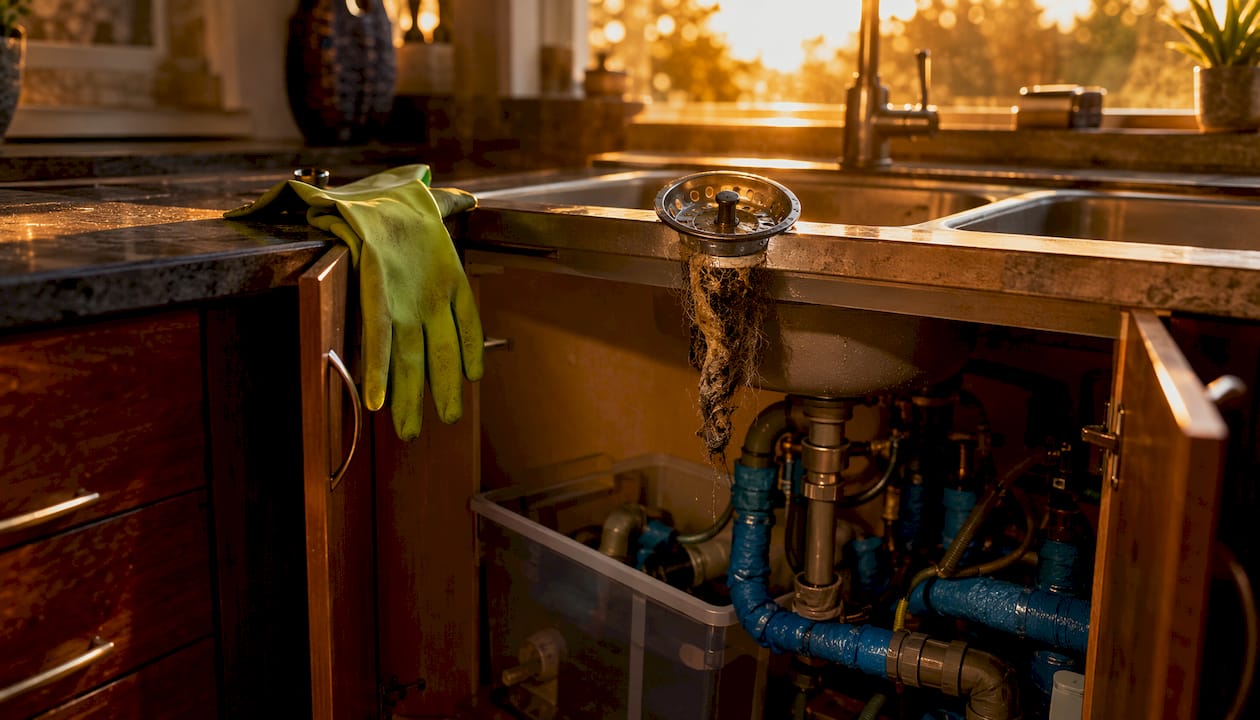
If the slow drain keeps returning after clearing, the problem is likely further down the line. That is when a professional drain clearing service with jet blasting or CCTV inspection makes sense, because you need to see what is actually causing the restriction.
Running toilets and faulty water heaters
A running toilet is one of the most wasteful plumbing problems in any home. The cause is usually a worn flapper valve or a faulty fill valve inside the cistern. Replacing a cistern washer is one of the few tasks Australian regulations permit homeowners to do themselves, so this is a reasonable DIY fix if you are comfortable doing it.
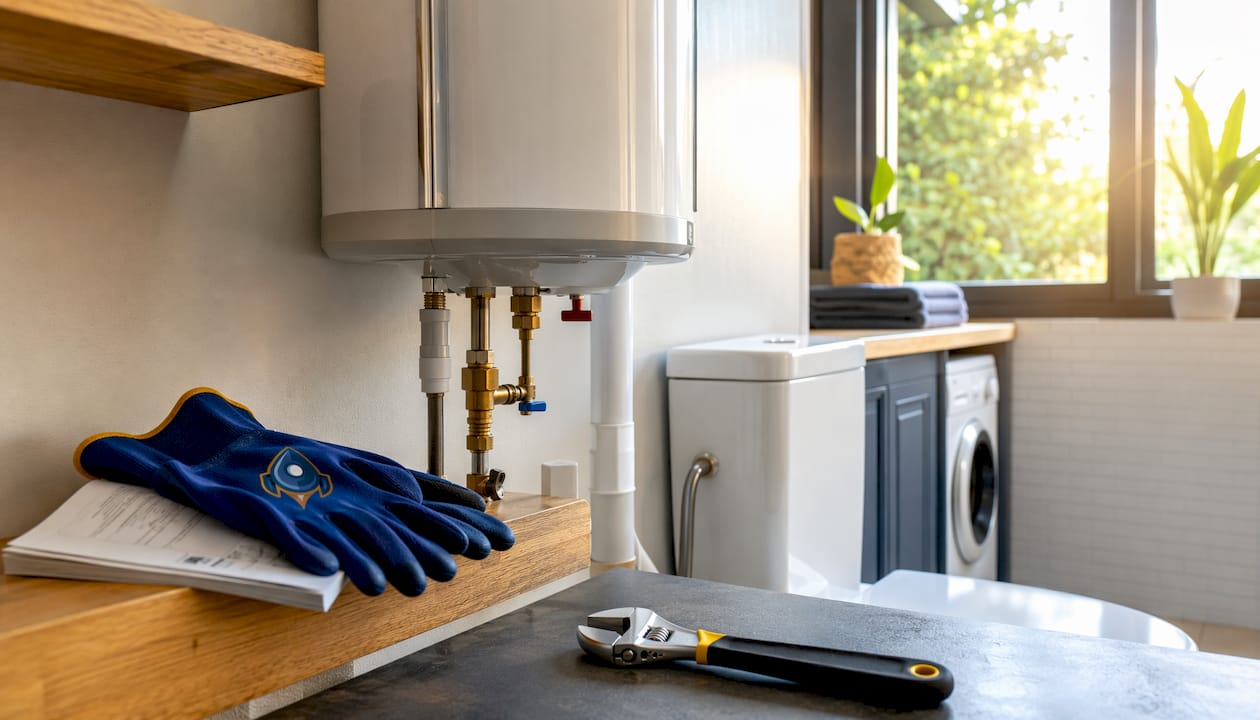
Faulty water heaters are a different matter. Signs of trouble include inconsistent water temperature, discoloured water, rumbling noises from the tank, or visible corrosion around the unit. Hot water system repairs and replacements must be carried out by a licensed plumber under Australian law. Ignoring early warning signs often means the unit fails entirely at the worst possible moment, and an emergency replacement costs significantly more than a timely repair. If your hot water system is showing any of these signs, get it looked at before it becomes urgent.
Leaky pipes, dripping taps, and pipe insulation
A dripping tap is rarely just a nuisance. It usually means a worn washer, a damaged O-ring, or a faulty valve seat, and left alone, it can waste thousands of litres of water annually. Replacing a tap washer is permitted as a DIY task, but if the tap body itself is corroded or the valve seat is damaged, a licensed plumber needs to assess it.
Leaky pipes are more serious. Hidden leaks behind walls or under floors can cause mould growth, timber rot, and structural damage that costs far more to fix than the original pipe repair. Hidden plumbing damage from incorrect installations or undetected leaks often goes unnoticed until it has caused major water damage. Pipe insulation is also worth attention, particularly in areas of your home that experience temperature extremes. Uninsulated pipes in roof cavities or under the house lose heat in winter, reduce hot water efficiency, and in colder parts of Australia, can crack. Wrapping exposed pipes with foam lagging is a straightforward maintenance task that pays for itself quickly.
Low water pressure and sewer system backups
Low water pressure across multiple taps usually points to a leak somewhere in the system, a partially closed isolation valve, or corrosion narrowing the internal diameter of older pipes. Checking your isolation valves first costs nothing. If pressure is still poor after that, a licensed plumber can use pressure testing to locate the source.
Sewer backups are among the most unpleasant and potentially hazardous plumbing problems a homeowner can face. Tree root intrusion is the most common cause in established Australian suburbs, where older clay or concrete sewer pipes are particularly vulnerable. Grease accumulation and flushing non-flushable items are the other main culprits. A CCTV drain inspection will identify the exact cause, and pipe relining is now a widely used solution for damaged sewer lines because it repairs the pipe from the inside without excavation.
Choosing the right pipe materials and fixture installation
Using the wrong pipe materials is one of the most common plumbing errors to avoid during any renovation or repair. Selecting pipes and fittings that are not appropriate to Australian standards or the specific application causes leaks, corrosion, and premature failure. Copper, CPVC, and cross-linked polyethylene (PEX) each suit different applications and pressure ratings. Mixing incompatible metals, such as copper and galvanised steel, causes galvanic corrosion at the joint, which will eventually fail.
Incorrect fixture installation is equally problematic. A toilet, basin, or shower installed without proper falls on the drainage line will drain slowly or not at all. Venting problems from poor installation affect how smoothly all connected fixtures drain. These are not issues you can easily fix after tiling is complete, which is why getting the installation right the first time matters so much.
Water quality issues and corrosion
Hard water, common across many parts of Australia, causes limescale build-up inside pipes and on fixture surfaces. Over time, this narrows pipe diameter and reduces flow. Water filtration systems can address this, and a plumbing maintenance checklist for Australian homes should include periodic checks for scale build-up, particularly around hot water systems and washing machine connections.
Corrosion from poor water quality or incompatible materials weakens pipes from the inside. Discoloured water, a metallic taste, or visible rust staining around taps are all warning signs worth investigating promptly.
Regular maintenance and inspection
Routine inspection is the single most effective way to prevent costly plumbing repairs. Checking pipe insulation, looking for signs of moisture under sinks, testing water pressure, and clearing slow drains before they block completely are all tasks that take minutes but can prevent thousands of dollars in damage. Scheduling a professional inspection every one to two years gives you a clear picture of your system’s condition and catches problems before they escalate.
Pro Tip: Turn off your water at the main isolation valve and check your water meter. If the meter continues to move with all taps off, you have a hidden leak somewhere in the system.
DIY plumbing errors and the compliance risks for Australian homeowners
The appeal of DIY plumbing is understandable. A quick fix feels faster and cheaper than calling a professional. The reality, though, is that unlicensed plumbing work carries legal, financial, and safety risks that often outweigh the initial saving.
What you can and cannot do yourself
Australian regulations draw a clear line between regulated and unregulated plumbing work. Under the rules that apply across states including Western Australia and Queensland, homeowners may carry out only minor unregulated tasks:
- Replacing tap washers or cistern washers
- Replacing a shower head
- Replacing a water filter cartridge
- Using a plunger to clear a blockage
Everything else, including any work involving water supply lines, drainage, hot water systems, or sanitary plumbing, must be done by a licensed plumber. It is illegal for an unlicensed person to advertise or perform regulated plumbing work, and anyone caught doing so risks prosecution and fines.
The most common DIY mistakes
Even well-intentioned homeowners make the same errors repeatedly. Over-tightening connections is one of the most frequent: excessive force on fittings cracks the fitting body or damages the thread, creating a leak that may not appear for weeks. Using the wrong tools, such as an adjustable spanner where a basin wrench is needed, causes the same kind of damage.
Ignoring pipe slope requirements is another common error. Drainage pipes need a specific fall to carry waste effectively. Too shallow and waste sits in the pipe; too steep and the liquid runs ahead of the solids, leaving them behind to accumulate. Failing to vent drainage correctly causes gurgling, slow draining, and unpleasant odours throughout the house.
Using incompatible materials, such as mixing pipe types or using fittings not rated for the application, creates weak points that fail under pressure. These failures often happen inside walls or under floors, where the damage builds silently.
Compliance callout: Under the Plumbing and Drainage Act 2011 (NSW) and equivalent legislation in other states, defective or non-compliant plumbing work can be directed for repair or disconnection by the plumbing regulator. Non-compliant work can also result in denied insurance claims and complications when selling your property.
The real cost of getting it wrong
Industry experts are consistent on this point: DIY plumbing often costs more in the long run than hiring a licensed professional from the start. Incorrect diagnosis means fixing the symptom rather than the cause, so the problem returns. Hidden damage from a faulty installation, such as a slow leak behind a wall, can cause mould, timber rot, and structural issues that cost far more to remediate than the original repair.
Licensed plumbers diagnose the root cause rather than just the visible symptom, which is why the same problem rarely comes back after a professional repair. The benefits of a licensed plumber extend beyond the repair itself: you get documented compliance, insurance protection, and the assurance that the work meets Australian standards.
The same principle applies to other licensed trades. Just as you would engage a licensed HVAC contractor for heating and cooling work rather than attempting it yourself, plumbing demands the same respect for licensing requirements. The safety and compliance stakes are identical.
When you are genuinely unsure whether a job requires a licensed plumber, the safest approach is to check before you start. Our guide on when to call a licensed plumber vs DIY walks through the decision clearly.
Reactive Plumbing & Electrical: licensed, local, and ready when you need us
When a plumbing problem goes beyond a washer replacement, you want someone who knows Australian regulations, carries the right licence, and can actually get to you quickly. That is exactly what Reactive Plumbing & Electrical delivers across Sydney, Newcastle, Wollongong, Brisbane, Ipswich, and the Gold Coast.
Every job is handled by licensed professionals who provide a Certificate of Compliance as standard. We cover the full range of residential plumbing needs: leak detection, hot water repairs, drain clearing, water filtration, and pipe relining for damaged sewer and stormwater lines. Pipe relining is particularly worth knowing about if you have an older home: it repairs cracked or root-invaded pipes from the inside, with no excavation required and full compliance documentation on completion. Emergency hot water services are available 24/7, and flexible financing options mean an urgent repair does not have to become a financial crisis. Get in touch with Reactive Plumbing & Electrical today for a quote or to book an inspection.
FAQ
What are the most common plumbing mistakes to avoid?
The most common plumbing mistakes include ignoring slow drains until they block completely, attempting regulated plumbing work without a licence, using incompatible pipe materials, over-tightening fittings, and skipping routine maintenance inspections. Each of these can lead to costly repairs or compliance issues.
What is the 135 rule in plumbing?
The 135-degree rule refers to the preferred angle for drain pipe junctions, where a 135-degree fitting is used to maintain smooth flow and reduce blockage risk. Proper venting and pipe slope angles are required under Australian plumbing codes to maintain system function and avoid backups.
What is the 3 tee rule in plumbing?
The 3 tee rule is a guideline limiting the number of tee fittings on a single drainage run to prevent flow restrictions and venting problems. Definitions vary slightly by jurisdiction, but the principle is consistent: too many tees on one line disrupts drainage performance and can cause recurring blockages.
What do plumbers wish you knew?
Licensed plumbers consistently point out that most call-outs could have been avoided with earlier attention to warning signs, and that DIY repairs on regulated work often cost more to fix than the original problem. Hiring a licensed professional from the start saves money by correctly diagnosing the root cause rather than just the visible symptom.
Does unlicensed plumbing work affect my home insurance?
Yes. Unlicensed plumbing work can result in denied insurance claims because there is no Certificate of Compliance to prove the work met Australian standards. It can also complicate property sales, as buyers and conveyancers increasingly request compliance documentation for all major plumbing work.
Key takeaways
Avoiding common home plumbing mistakes requires knowing which tasks you can legally do yourself, using the right materials, and calling a licensed plumber for anything beyond minor maintenance.
| Point | Details |
|---|---|
| Licensed plumber required | All regulated plumbing work in Australia must be done by a licensed professional; unlicensed work risks fines, denied insurance claims, and compliance issues. |
| Certificate of Compliance matters | Licensed plumbers must provide a Certificate of Compliance within five working days of major work, protecting your insurance cover and resale value. |
| DIY often results in higher costs over time | Industry experts confirm that incorrect DIY diagnosis and material misuse typically result in greater long-term costs than hiring a licensed plumber from the start. |
| Maintenance prevents most problems | Routine inspection of pipe insulation, water pressure, and drains catches issues early and avoids expensive emergency repairs. |
| Reactive Plumbing & Electrical | Provides licensed, compliant plumbing services across Sydney, Newcastle, Wollongong, Brisbane, Ipswich, and the Gold Coast, including 24/7 emergency hot water and pipe relining. |