
Lights flickering at home? causes, fixes & warning signs

Lights flickering is defined as a rapid, intermittent variation in electrical supply to a light fixture, and it ranges from a harmless loose bulb to a serious wiring fault that can start a fire. Most homeowners and business owners encounter this problem at some point, and the good news is that many causes are straightforward to identify. This guide walks you through the eight most common causes, safe DIY fixes you can try today, and the warning signs that mean you need a licensed electrician on the phone immediately.
What are the common causes of lights flickering?
Flickering lights have eight main causes, spanning everything from a bulb that needs tightening to a fault at your main electrical panel. Knowing where your problem sits on that spectrum is the first step to fixing it safely.
The most frequent causes include:
- Loose or poorly seated bulbs. A bulb that is not fully screwed in will lose contact intermittently, causing a flicker. This is the most common and easiest fix.
- Incompatible LED bulbs and dimmer switches. Many older dimmer switches were designed for incandescent bulbs. Pairing them with LED bulbs causes a persistent flicker because the dimmer cannot regulate the lower wattage correctly.
- Voltage dips from large appliances starting up. Air conditioners, pool pumps, and refrigerators draw a surge of current when their motors start. Flickering from large motor appliances is often normal, but severe or prolonged dips can indicate an undersized electrical service.
- Loose wiring connections. A loose wire at a light fitting, switch, or junction box creates resistance, which causes voltage to fluctuate. This is a fire risk and should not be ignored.
- Shared neutral circuits. Shared neutral wiring violates current Australian electrical standards and causes flickering without any fault in the fixture itself. It is common in homes built before 1980.
- Aluminium wiring in older homes. Homes wired between 1965 and 1975 may have aluminium wiring, which oxidises over time, creating resistance, heat, and a real fire hazard.
- Loose neutral wire at the panel or metre. This is one of the most dangerous causes. It creates a voltage imbalance across your home’s circuits.
- Main electrical panel or utility supply issues. Faults at the switchboard or the street-level supply can cause flickering across the entire property.
Pro Tip: Keep a simple log of when the flickering occurs. Note the time, which lights are affected, and whether any appliances were running. This information helps a licensed electrician diagnose the problem far more quickly.
How can you safely troubleshoot minor flickering yourself?

Safe DIY troubleshooting covers a narrow but useful range of fixes. Before you touch anything, switch off the light at the wall switch and wait for the bulb to cool completely.
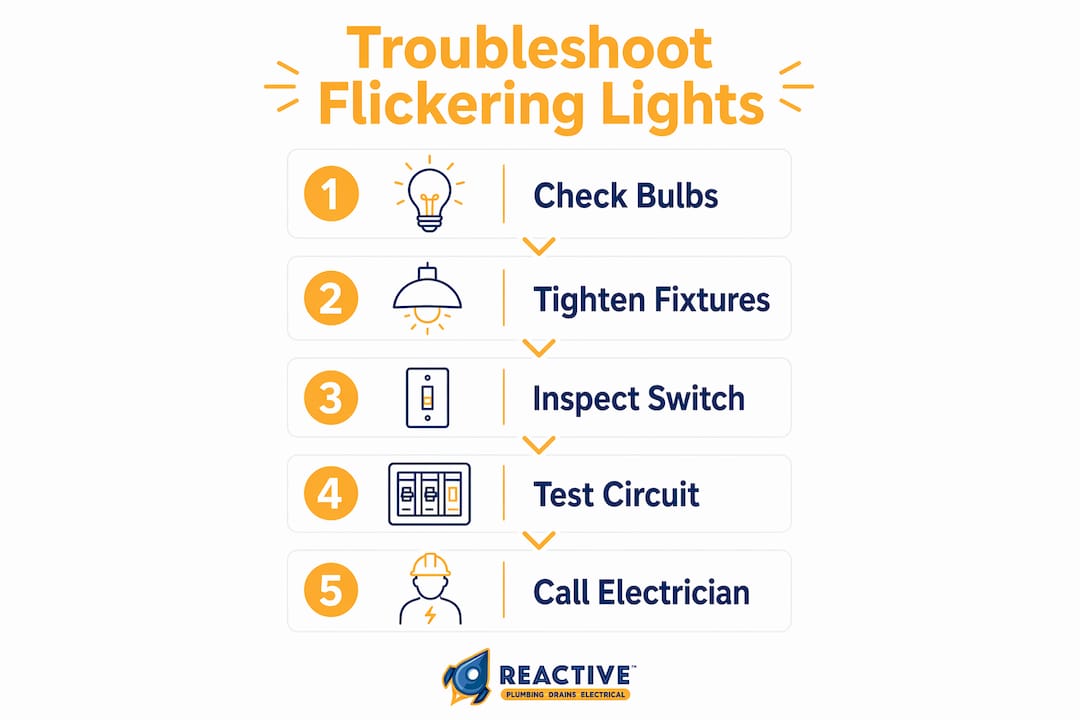
Follow these steps in order:
- Check and tighten the bulb. Turn the light off, wait two minutes, then firmly reseat the bulb. Switch it back on and observe. If the flicker stops, you are done.
- Replace the bulb. If tightening does not help, swap the bulb for a new one of the same type. A failing bulb will flicker as it nears the end of its life.
- Check LED and dimmer compatibility. If you have a dimmer switch and LED bulbs, check whether your dimmer is rated for LEDs. LED-compatible dimmer switches cost between $20 and $30 and are a straightforward replacement. Look for dimmers labelled “LED compatible” or “trailing edge.”
- Observe the pattern. Is the flicker in one bulb, one room, or the whole property? Pattern identification is the key to knowing whether you have a minor or serious problem.
- Check for appliance correlation. Switch on your air conditioner or another large appliance and watch the lights. A brief, single dip when the motor starts is normal. Repeated or prolonged dimming is not.
What DIY fixes are safe vs. what requires a professional?
| Task | DIY Safe? | Notes |
|---|---|---|
| Tighten or replace a bulb | Yes | Always switch off first |
| Replace a dimmer switch | Yes, with caution | Turn off at the circuit breaker first |
| Replace a light fitting | No | Requires a licensed electrician |
| Inspect junction box wiring | No | Risk of shock and fire |
| Open or inspect the switchboard | No | Illegal and dangerous without a licence |
Pro Tip: If you replace a dimmer switch yourself, always turn off the circuit at the switchboard first and use a non-contact voltage tester to confirm the power is off before touching any wires.
How do you identify serious electrical problems from flickering?
Some flickering patterns are not minor inconveniences. They are warning signs of conditions that can cause electrical fires or electrocution. Knowing the difference could protect your home and your family.
Watch for these serious warning signs:
- Flickering across multiple rooms or the whole property. Flickering affecting multiple rooms correlating with power fades signals a high-urgency issue with your panel or service wiring. Do not delay calling a licensed electrician.
- Flickering accompanied by a burning smell or buzzing sound. These are signs of arcing or overheating wiring. Switch off the affected circuit at the switchboard and call an emergency electrician immediately.
- Some rooms brightening while others dim simultaneously. This is the classic sign of a loose neutral wire at your panel or metre. A loose neutral creates a severe voltage imbalance that can damage appliances and electronics, and it is a genuine fire hazard.
- Flickering that coincides with a tripping circuit breaker. This points to an overloaded circuit or a fault in the panel wiring.
- Flickering in an older home with no recent electrical inspection. If your home was built before 1980, shared neutral circuits or aluminium wiring may be the cause, both of which require professional assessment.
Safety note: Never open your switchboard or attempt to inspect internal panel wiring yourself. Improper work on electrical panels can void your home insurance and create fire hazards. Only a licensed electrician should perform these tasks under Australian law.
If you notice any of the serious signs above, the right response is to switch off the affected circuits at the switchboard, avoid using those circuits, and contact a licensed electrician. A 24-hour electrician is the right call when the flickering is accompanied by smells, sounds, or widespread power issues.
What mistakes do people make when fixing flickering lights?
Most flickering light repairs go wrong because the homeowner guesses rather than tests. Systematic testing and pattern recognition are the difference between a quick fix and a wasted afternoon, or worse, a safety incident.
The most common mistakes include:
- Replacing bulbs without checking the dimmer. If your dimmer is incompatible with LEDs, you will keep buying new bulbs and the flicker will keep returning. Fix the dimmer first.
- Ignoring sparks or smells. Any flickering accompanied by a burning smell, visible sparks, or a buzzing sound is an emergency. Treating it as a minor annoyance is dangerous.
- Overloading circuits. Plugging too many high-draw appliances into the same circuit causes voltage drops that flicker lights throughout the room. Spread high-draw appliances across different circuits.
- Tampering with the switchboard. Homeowners sometimes attempt to tighten connections inside the switchboard themselves. This is illegal without a licence in Australia and creates serious risks.
- Skipping regular electrical safety checks. Many serious wiring faults develop slowly and silently. A periodic safety inspection catches loose connections, degraded wiring, and panel issues before they become emergencies.
Pro Tip: If you have tried the basic DIY steps and the flickering continues, stop guessing and call a licensed electrician. A professional can use a clamp metre and thermal imaging to pinpoint the fault in minutes, saving you time and keeping you safe.
One more point worth making: older Australian homes are disproportionately affected by intermittent light issues. If your property was built before 1980, the probability of shared neutral circuits or aluminium wiring is high enough that a professional inspection is worth scheduling even if the flickering seems minor right now.
Key takeaways
Persistent or widespread flickering lights almost always points to a wiring or panel fault that requires a licensed electrician, not a DIY fix.
| Point | Details |
|---|---|
| Start with the simplest cause | Check and tighten the bulb before assuming a wiring fault. |
| Match your dimmer to your bulbs | LED-compatible dimmers cost $20–$30 and eliminate most LED flicker issues. |
| Pattern tells you the urgency | Single bulb flickering is minor; whole-house flickering is an emergency. |
| Loose neutral wire is serious | Rooms brightening while others dim signals a voltage imbalance requiring immediate professional attention. |
| Never open the switchboard yourself | Panel work is illegal without a licence in Australia and can void your home insurance. |
Why i take flickering lights more seriously than most people expect
I have been called out to properties where a homeowner had been living with flickering lights for months, assuming it was just a dodgy bulb. In more than a few of those cases, we found loose connections inside junction boxes that were showing early signs of heat damage. One job in particular stands out: a home in Western Sydney where the kitchen lights had been flickering on and off for about six months. The owner had replaced the bulbs twice. When we opened the junction box above the ceiling, the wire insulation was discoloured from heat. That is not a near-miss you want to have.
My honest view is that most people underestimate how quickly a loose connection can escalate. Electricity does not give you many warnings before it becomes a problem. The flickering is the warning. The fire is what comes after if you ignore it long enough.
That said, I do not want to alarm anyone unnecessarily. A single flickering bulb that stops after you tighten it is exactly what it looks like. The key is knowing when to stop troubleshooting yourself and pick up the phone. If the flicker is in more than one room, if it comes with any sound or smell, or if it keeps returning after you have tried the basic fixes, that is your signal to call a professional. Scheduling routine electrical maintenance once every few years is one of the simplest things you can do to keep your home safe and avoid expensive emergency repairs down the track.
— Brent
Reactive plumbing & electrical can sort your electrical issues fast
If your flickering lights have not responded to the basic fixes in this guide, or if you have spotted any of the serious warning signs, Reactive Plumbing & Electrical is ready to help. Our licensed electricians serve Sydney, Newcastle, Wollongong, Brisbane, Ipswich, and the Gold Coast, and we offer 24/7 emergency electrical services for situations that cannot wait.

We carry out full electrical diagnostics, wiring inspections, switchboard upgrades, and safety checks for both residential and commercial properties. Whether you need a quick fault diagnosis or a full panel assessment, our team arrives equipped to find the problem and fix it properly the first time. Do not wait for a minor flicker to become a serious hazard. Contact Reactive Plumbing & Electrical today and get a licensed electrician on the job.
FAQ
Why are my lights flickering in multiple rooms?
Flickering across multiple rooms typically signals a fault at your main electrical panel, a loose neutral wire, or a shared neutral circuit. These are high-urgency issues that require a licensed electrician.
Is it safe to ignore lights flickering occasionally?
A single bulb flickering occasionally after you have tightened it is generally low risk. Flickering that recurs, spreads to other rooms, or comes with buzzing or burning smells is not safe to ignore.
Can incompatible LED bulbs cause flickering?
Yes. Many older dimmer switches are not rated for LED bulbs, which causes persistent flickering. Replacing the dimmer with an LED-compatible model, which costs around $20–$30, resolves the issue in most cases.
What does a loose neutral wire do to my lights?
A loose neutral wire at the panel or metre creates a voltage imbalance, causing some rooms to brighten while others dim. This is a fire hazard and requires immediate attention from a licensed electrician.
How often should i schedule an electrical safety check?
Australian homeowners are generally advised to have an electrical safety inspection every three to five years, or sooner if the property is older than 25 years or has experienced recurring electrical issues.