How water damage affects plumbing: a homeowner’s guide
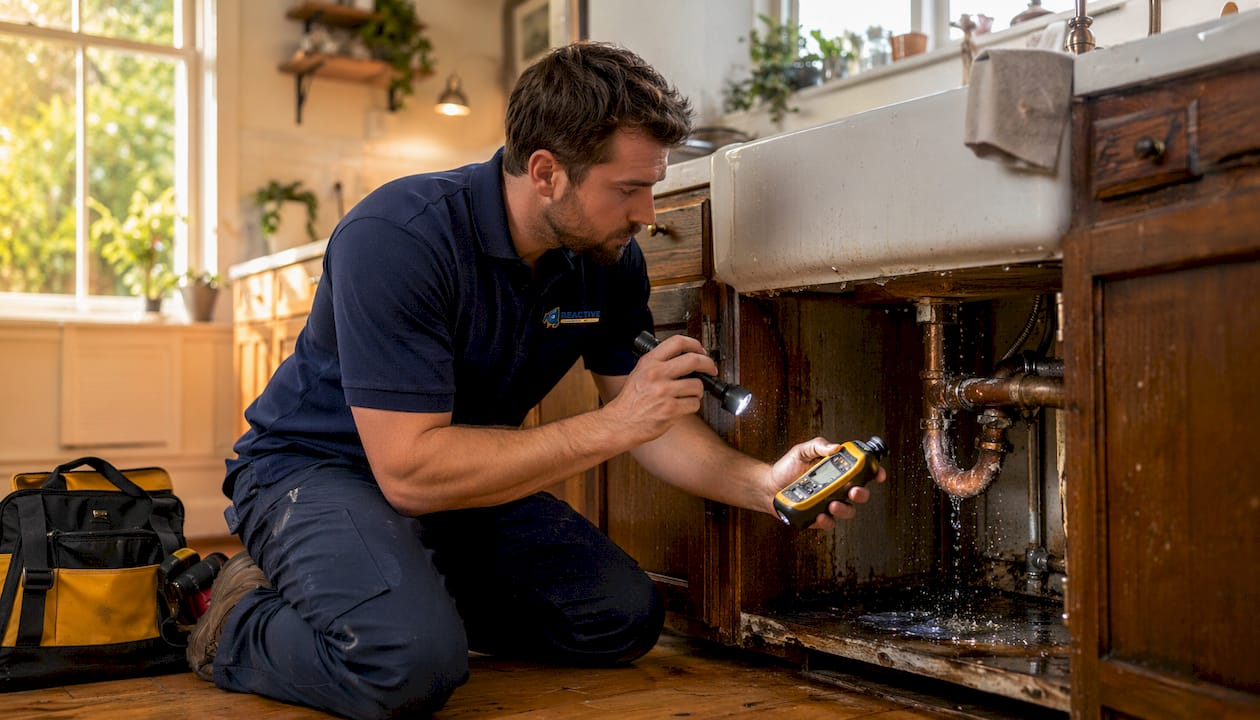
Water damage is the leading cause of plumbing deterioration in Australian homes, triggering pipe corrosion, joint failure, and soil movement that can undermine your property’s foundations. Understanding how water damage affects plumbing is the first step toward protecting your home from costs that can spiral well beyond what most homeowners expect. Water ingress affects 20–40% of Australian apartment buildings, with annual rectification costs reaching $610 million nationally. That figure reflects a problem that is widespread, expensive, and largely preventable with the right knowledge.
How does water damage affect plumbing systems?
Water damage affects plumbing through three main pathways: direct pipe corrosion, mechanical stress from soil movement, and the slow degradation of fittings and connections. Each pathway compounds the others over time. A small leak saturates the surrounding soil, which then shifts and places stress on pipe joints, which then crack further, releasing more water. The cycle is self-reinforcing and often invisible until the damage is severe.
92% of building defect claims in Australia involve water-related defects, including plumbing failures. That statistic tells you this is not a fringe problem. It is the most common building defect category in the country, affecting homes of every age and construction type.
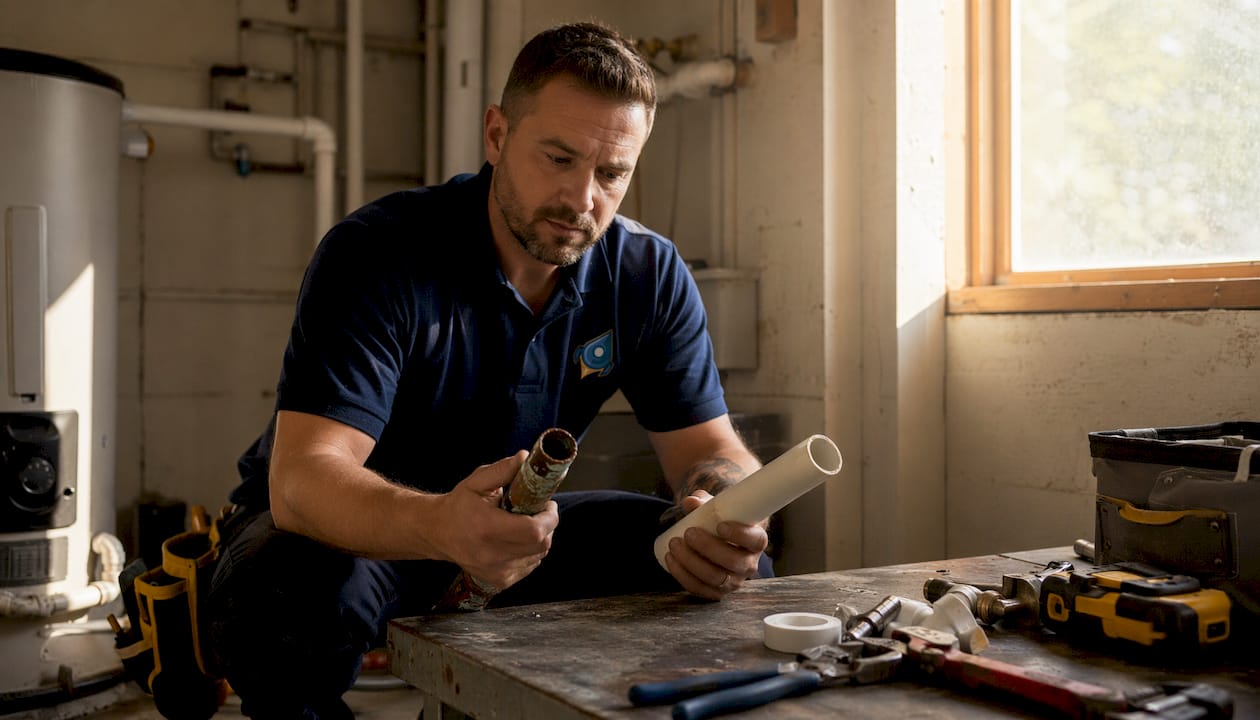
The water damage effect on plumbing systems is also shaped by the materials involved. Older copper pipes corrode when exposed to persistent moisture. PVC pipes can kink or crack under soil pressure. Galvanised steel pipes, common in homes built before the 1980s, rust from the inside out when water quality changes. Each material has a different failure mode, but all are vulnerable when water is present in the wrong place for too long.
Which plumbing components are most at risk from water damage?
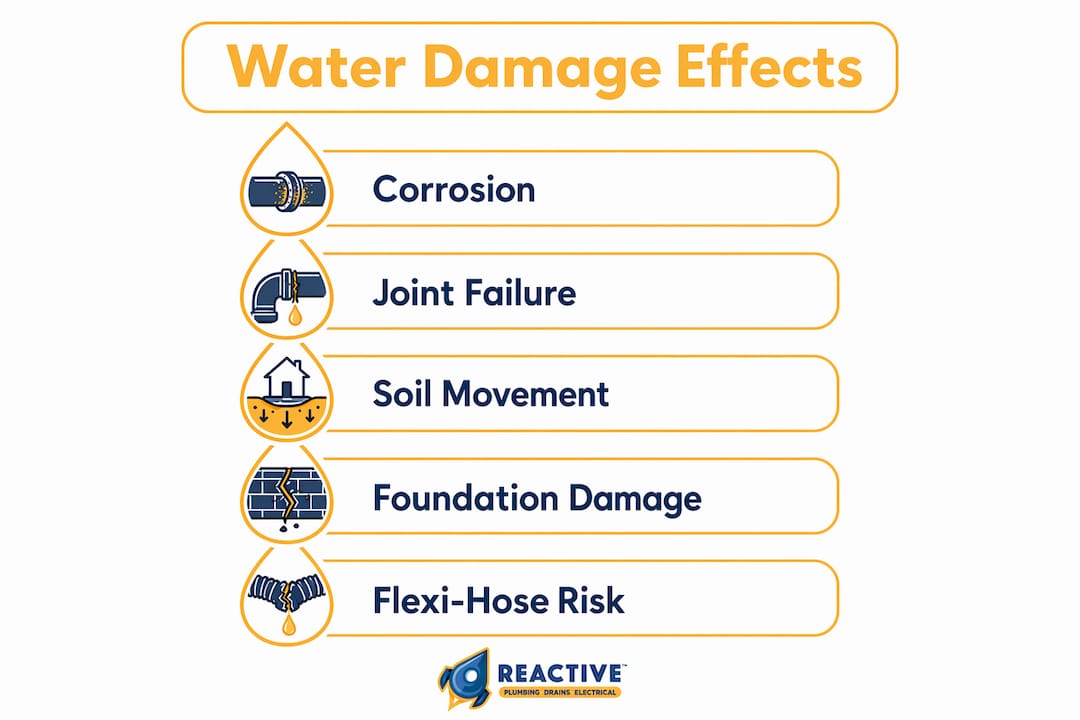
Flexi-hoses are the single most dangerous component in a modern Australian home’s plumbing system. These braided stainless steel hoses connect taps, toilets, and dishwashers to the water supply, and they degrade silently from the inside. Flexi-hose failures account for one in ten home insurance claims at Suncorp, with average payouts reaching $30,000 and some claims exceeding $100,000. The financial exposure is significant, and the failure often happens without any warning.
The most vulnerable plumbing components include:
- Flexi-hoses: Degrade due to corrosion, kinking, or age. Most have a lifespan of 10 years, yet 60% of homeowners never inspect them.
- Pipe joints and fittings: Expand and contract with temperature changes, loosening seals over time and allowing slow leaks to develop.
- Isolation valves: Seize up when unused for long periods, making it impossible to shut off water quickly during an emergency.
- Hot water system connections: Subject to constant pressure cycling, which accelerates wear on inlet and outlet connections.
- Sewer and stormwater pipes: Crack under root intrusion or soil movement, allowing groundwater infiltration and sewage leaks.
Open-plan modern homes increase the scale of water damage when a flexi-hose bursts, because water spreads rapidly across large floor areas before anyone notices. This is one reason insurance payouts have risen sharply in recent years.
Pro Tip: Inspect every flexi-hose in your home twice a year. Look for bulging, rust staining, or kinking. Turn off the water mains whenever you leave the property unoccupied for more than 24 hours. This single habit prevents the majority of catastrophic flexi-hose failures.
How does water damage affect the soil and foundation around plumbing?
Australia’s reactive clay soils create a unique and serious risk that most homeowners underestimate. These soils expand when wet and shrink when dry, and a leaking pipe buried beneath your slab triggers that cycle repeatedly. Reactive clay soils cause swelling and shrinking cycles that stress both plumbing joints and concrete foundations, leading to cracked slabs, tilted footings, and progressive pipe damage.
The technical terms for this process are “heave” and “subsidence.” Heave occurs when saturated soil swells upward, pushing against your slab and pipes from below. Subsidence occurs when soil dries out or is washed away, causing the ground to drop and leaving pipes and foundations without adequate support. Both processes damage plumbing, and both are triggered or worsened by leaks.
Water leaks corrupt soil bearing capacity by washing away fine particles, softening the soil matrix, and creating voids beneath slabs. The damage to soil structure continues even after the plumbing is repaired. This is the part that surprises most homeowners: fixing the pipe does not automatically fix the ground.
Leaks that go undetected for months can cause foundation movement that costs far more to rectify than the original plumbing repair. The soil damage outlasts the leak itself, and without geotechnical assessment, you may not know the full extent of the problem until cracks appear in your walls or floors.
Plumbing design in reactive soil areas should follow AS 2870, the Australian standard for residential slabs and footings, and AS/NZS 350 guidelines for appropriate pipe installation. When a licensed plumber assesses your property, ask specifically whether the soil classification has been considered in the repair design. Many standard repairs do not account for soil reactivity, which leads to repeat failures.
Pro Tip: If you notice cracks appearing in your internal walls or doors that no longer close properly, treat these as potential signs of foundation movement caused by a plumbing leak. Call a licensed plumber for professional leak detection before engaging a builder.
What are the signs of plumbing issues after water damage?
Early detection is the difference between a manageable repair and a structural crisis. Silent leaks that start as minor drips can cause foundational subsidence costing far more than the early repair would have. Knowing what to look for gives you a genuine advantage.
Watch for these signs of plumbing issues after water damage:
- Unexpectedly high water bills: A sudden increase in usage without a change in habits points to a slow leak somewhere in the system.
- Damp patches or staining: Discolouration on walls, ceilings, or floors, especially in areas near pipes or wet areas, signals active moisture intrusion.
- Persistent musty odour: Mould grows within 24–48 hours of water exposure. A musty smell in a room with no obvious source often means water is trapped inside a wall or under a floor.
- Gurgling or dripping sounds: Sounds from pipes when no taps are running indicate air or water movement in places it should not be.
- Soft or warped flooring: Timber floors that bounce, bubble, or discolour near bathrooms or kitchens are absorbing moisture from below.
- Water near electrical fittings: This is an urgent safety issue. Areas with water near electrical fittings must be treated as live and require professional management before any plumbing repairs begin.
Modern leak detection methods include acoustic listening devices, thermal imaging cameras, and tracer gas testing. These tools locate leaks without breaking open walls or digging up floors. A licensed plumber using these techniques can find a hidden leak in a fraction of the time that older methods required.
How can you prevent and address water damage effects on plumbing?
Preventing plumbing problems from water damage comes down to regular maintenance, fast response, and choosing the right repair method. The good news is that most serious damage is preventable with a structured approach. A home plumbing maintenance checklist gives you a practical framework for staying on top of inspections without needing to remember every detail.
Follow these steps to protect your plumbing system:
- Inspect flexi-hoses every six months. Check for rust, bulging, or kinking. Replace any hose older than ten years, regardless of its appearance.
- Turn off the water mains when leaving home for more than 24 hours. This single action eliminates the risk of a burst hose flooding your property while you are away.
- Schedule a licensed plumber inspection annually. A professional can identify corrosion, pressure issues, and early joint failure before they become emergencies. Review preventive plumbing measures to understand what a thorough inspection covers.
- Act immediately on any sign of a leak. Early leaks cause significant mould growth and foundation movement when left unaddressed. Same-day response limits the damage.
- Consider trenchless pipe relining for damaged sewer or stormwater pipes. Pipe relining inserts a new pipe lining inside the existing pipe without excavation, preserving your garden and reducing repair time significantly.
- Keep electrical safety front of mind. Do not operate switches or touch wet electrical zones where water damage has occurred. Contact a licensed electrician before resuming normal use of any affected area.
- Document everything for insurance. Most Australian home insurance policies cover sudden and accidental water damage but exclude gradual leaks. A written report from a licensed plumber confirming the cause and suddenness of the damage significantly improves your claim outcome.
Pro Tip: If you are a property manager, build flexi-hose inspection into your routine entry condition reports. Documenting hose condition at each tenancy change creates a clear record that protects both you and your landlord client in any insurance dispute.
Key takeaways
Water damage causes pipe corrosion, joint failure, and soil instability that compound over time, making early detection and regular maintenance the most cost-effective protection for any Australian property.
| Point | Details |
|---|---|
| Flexi-hoses are the highest risk component | Inspect every hose twice yearly and replace any hose older than ten years. |
| Soil reactivity amplifies pipe damage | Australian reactive clay soils worsen leaks by causing heave and subsidence around pipes and slabs. |
| Silent leaks cause the most damage | Unexplained water bills, damp patches, and musty odours are early warning signs that demand prompt action. |
| Water near electrics is a safety emergency | Treat any wet electrical zone as live and call a licensed professional before touching anything. |
| Documentation protects your insurance claim | A licensed plumber’s written report on cause and timing is the key to a successful sudden-damage claim. |
What I have learned from years of water damage repairs
I have seen the same pattern repeat itself more times than I can count. A homeowner notices a slightly higher water bill, assumes it is a billing error, and does nothing for three months. By the time we arrive on site, there is mould behind the bathroom wall, the subfloor is saturated, and in some cases the slab has started to move. The repair bill is ten times what it would have been if they had called us at the first sign.
The thing that surprises most people is the soil. They expect to fix the pipe and be done with it. But in Sydney, Brisbane, and across the Gold Coast, the reactive clay soils mean the ground has already changed shape by the time the leak is found. We often need to address both the plumbing and the foundation, and that conversation is always harder when it could have been avoided entirely.
Flexi-hose neglect is the other pattern I see constantly. These hoses are out of sight under sinks and behind toilets, so homeowners simply forget they exist. Accurate cause determination for water damage often requires forensic analysis because soil movement, design faults, and installation errors all overlap. That complexity is exactly why a licensed plumber’s report matters so much for insurance purposes.
My honest advice: treat your plumbing like you treat your car. You would not skip a service and hope for the best. The same logic applies to your pipes, hoses, and connections. Proactive care costs a fraction of reactive repair.
— Brent
Reactive Plumbing & Electrical: pipe relining for water-damaged pipes
When water damage has compromised your sewer or stormwater pipes, traditional excavation is not your only option. Reactive Plumbing & Electrical specialises in trenchless pipe relining, a method that repairs damaged pipes from the inside without digging up your garden, driveway, or flooring.
The benefits of pipe relining over traditional replacement include significantly less disruption, faster completion times, and a durable result that resists root intrusion and further corrosion. For properties on reactive soils where repeated pipe stress is a real risk, a relined pipe holds up far better than a patched or replaced section. If you are dealing with the aftermath of water damage and need a priority plumbing repair assessment, our licensed team is available 24/7 across Sydney, Newcastle, Wollongong, Brisbane, Ipswich, and the Gold Coast. Contact Reactive Plumbing & Electrical to book an inspection and get a clear picture of what your pipes actually need.
FAQ
What is the most common plumbing failure caused by water damage?
Flexi-hose failure is the most common cause of significant water damage in Australian homes, accounting for one in ten home insurance claims at Suncorp, with average payouts of $30,000.
Can water damage cause plumbing issues in pipes I cannot see?
Yes. Concealed pipes corrode, crack, and lose joint integrity from persistent moisture, often without any visible sign until the damage is extensive. Acoustic and thermal imaging leak detection can locate these hidden failures.
How does soil movement from water damage affect my plumbing?
Leaks saturate reactive clay soils, causing them to swell and then shrink as they dry. This heave and subsidence cycle stresses pipe joints and can crack slabs, creating ongoing damage even after the original leak is repaired.
How do I know if a water leak is affecting my home’s foundation?
Signs include internal wall cracks, doors or windows that no longer close properly, uneven floors, and persistent damp patches. A licensed plumber using leak detection methods can confirm whether a leak is the cause.
Will my home insurance cover water damage to plumbing?
Most Australian home insurance policies cover sudden and accidental water damage but exclude gradual leaks or wear and tear. A written report from a licensed plumber confirming the cause significantly improves your chances of a successful claim.