
Why your circuit breaker keeps tripping: causes and fixes
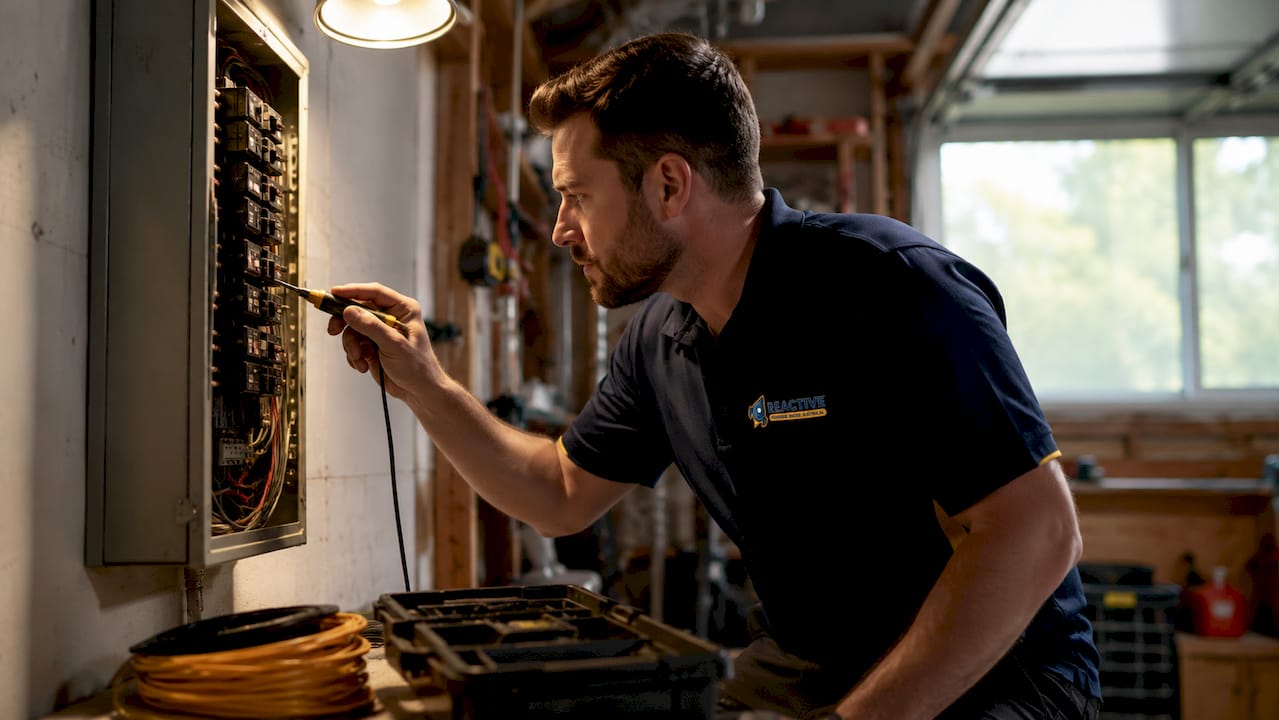
A circuit breaker keeps tripping because it detects unsafe electrical conditions, such as overcurrent, short circuits, or earth faults, and cuts power to prevent fire or electric shock. In Australian homes, general purpose circuits are typically rated at 10 or 16 amps, with kitchen circuits reaching up to 20 amps. When demand or a fault pushes current beyond that rating, the breaker does exactly what it is designed to do. Understanding why circuit breaker keeps tripping repeatedly is the difference between a minor inconvenience and a serious safety hazard you should not ignore.
Why does a circuit breaker keep tripping? The most common reasons
Circuit overloading is the most frequent cause of tripping breakers. It happens when the combined draw of appliances on a single circuit exceeds its rated capacity. Think of running a microwave, toaster, and kettle all from the same kitchen circuit at once. The breaker trips to stop the wiring from overheating.
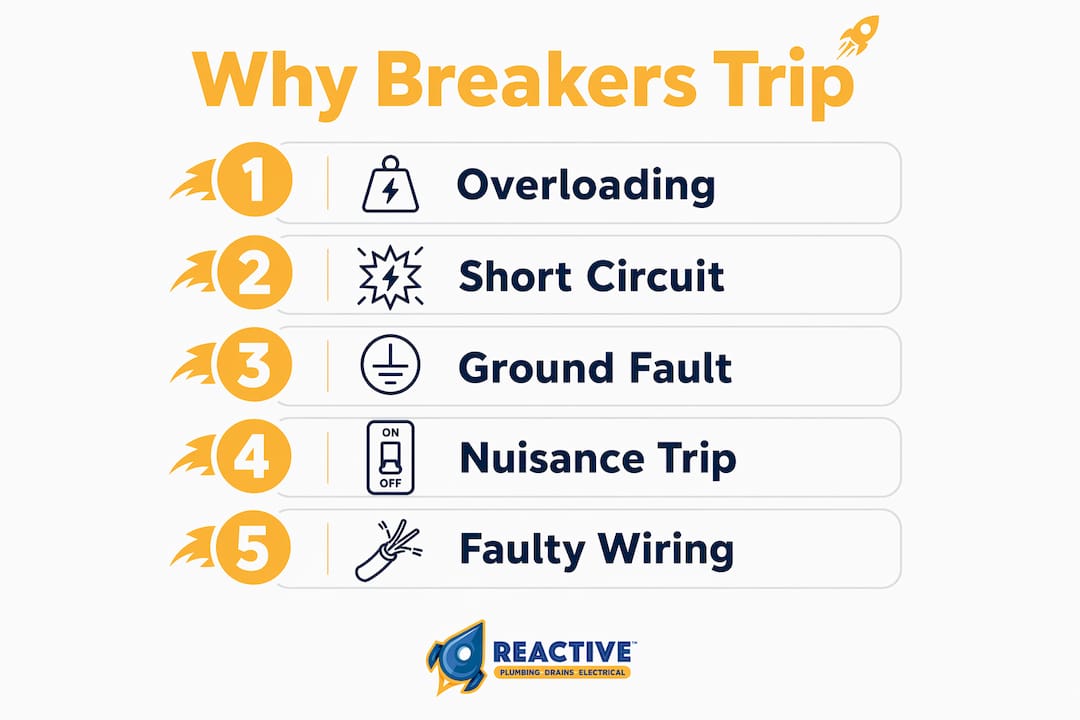
Beyond overloading, there are several other circuit breaker tripping reasons that homeowners encounter regularly:
- Overloaded circuits. Multiple high-power appliances running simultaneously push current past the breaker’s rated limit. Redistributing appliances across separate circuits is the straightforward fix.
- Short circuits. A short circuit occurs when an active wire contacts a neutral wire, causing an instantaneous surge of current. The heat generated can melt wiring and start fires if the breaker does not interrupt power immediately. Signs include a burning smell and visible sparks.
- Earth faults (ground faults). These happen when a live wire contacts an earthed surface or metal casing. Residual Current Devices (RCDs) detect the resulting leakage current and trip instantly to reduce the risk of electric shock. Earth faults are especially common near water sources, including kitchens, bathrooms, and outdoor areas.
- Faulty appliances. Older appliances with degraded seals or worn wiring are a frequent root cause of repeated RCD trips. Moisture ingress through cracked seals is a common culprit in older washing machines and dishwashers.
- Aged wiring. Older Australian homes sometimes contain aluminium wiring, which oxidises and expands over time. This loosens connections and causes arcing and heat buildup well before a breaker trips, creating hidden fire risks.
- Nuisance tripping. Modern electronics generate harmonic distortion and small leakage currents that can trip breakers even when no single fault exists. More on this below.
Pro Tip: If your breaker trips the moment you reset it, do not keep resetting it. That immediate retip signals a serious fault, such as a short circuit or earth fault, that needs a licensed electrician to diagnose safely.
How can you tell if a tripping breaker is an emergency?
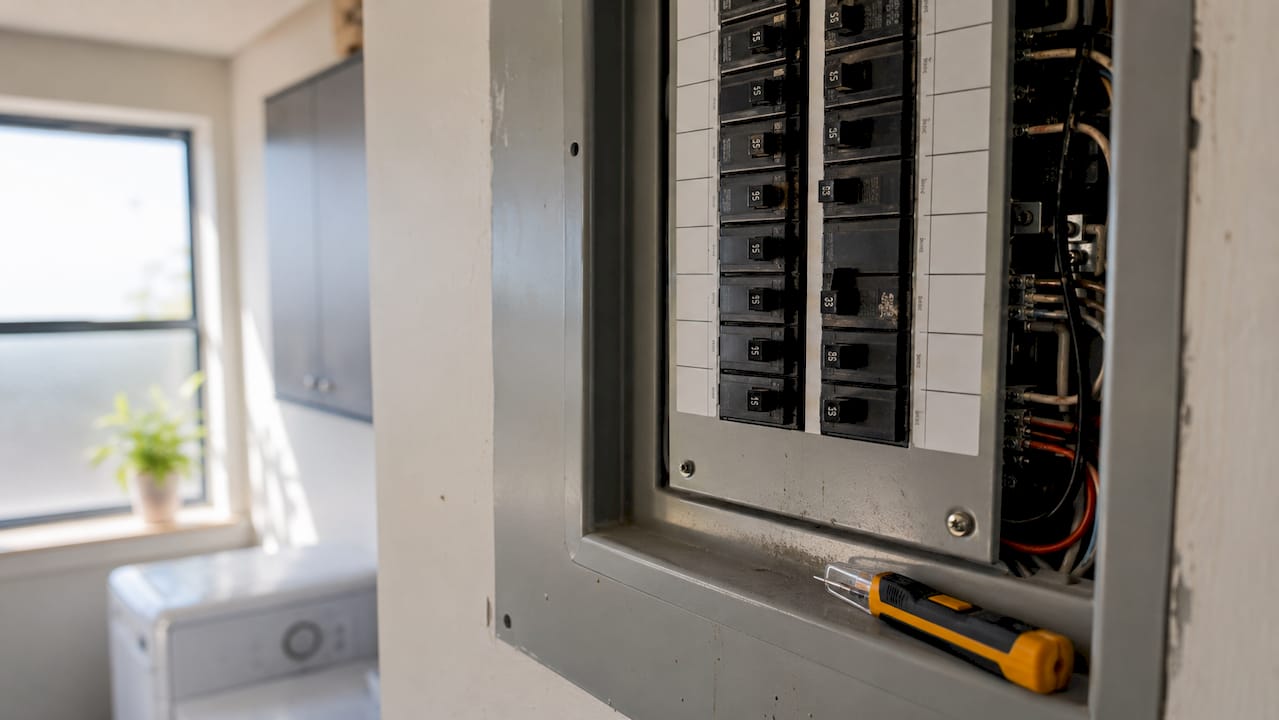
A properly maintained circuit should almost never trip. Frequent tripping is a deliberate safety warning, not a quirk of the system. Ignoring it significantly increases long-term fire risk.
Certain signs mean you should stop using the affected circuit immediately and call a licensed electrician:
- Breaker trips multiple times in a single week, or fails to stay reset
- You notice a burning smell near the switchboard or power points
- Lights on the circuit flicker or buzz before or after the trip
- You see scorch marks or discolouration around outlets or the switchboard
- The breaker trips with no appliances running at all
That last point deserves attention. A breaker tripping with nothing switched on points to dangerous faults such as arcing in the walls or insulation breakdown. Arcing produces intense heat in concealed wiring and is a leading cause of electrical fires in residential properties. If you notice flickering lights alongside tripping, treat the combination as urgent.
The rule is simple. One trip after plugging in too many appliances is manageable. Repeated tripping, especially with any of the warning signs above, requires professional inspection without delay.
Why does nuisance tripping happen with no obvious fault?
Nuisance tripping is one of the more confusing frequent circuit breaker problems homeowners face. The breaker trips, you check every appliance, find nothing wrong, and reset it. Then it trips again. The cause is often invisible to the naked eye.
Modern homes experience nuisance tripping from two main sources: harmonic distortion and accumulated leakage currents. Non-linear loads, meaning devices that do not draw power in a smooth, consistent wave, generate harmonic currents that confuse protective devices. This matters because it means your breaker is responding to a real electrical condition, just not one caused by a single faulty device.
The most common culprits include:
- LED lighting drivers. Many LED downlights use switch-mode drivers that generate triplen harmonics. A single LED globe causes negligible leakage, but a home fitted with 30 or 40 downlights can push combined leakage currents past the RCD’s trip threshold.
- Switch-mode power supplies. Laptop chargers, phone chargers, and gaming consoles all use switch-mode supplies. Each draws a tiny leakage current. Collectively, they add up.
- Solar inverters, battery storage, and EV chargers. Voltage transients from motor starts or switching events in these systems can trigger sensitive RCDs, particularly in homes with newer renewable energy infrastructure.
- Older RCDs. An ageing RCD may have a lower effective trip threshold than its rated value, making it more susceptible to nuisance trips from normal leakage levels.
The reliable diagnostic tool for nuisance tripping is power quality monitoring. A licensed electrician can connect a power quality analyser to your switchboard to record harmonic levels, leakage currents, and voltage transients over time. This takes the guesswork out of the diagnosis entirely.
Pro Tip: If nuisance tripping started after you installed LED lighting or a solar system, tell your electrician. That timeline narrows the diagnosis significantly and saves time on site.
Steps to safely troubleshoot frequent circuit breaker trips
Before calling an electrician, there are a few safe steps you can take to narrow down the cause. These steps help identify whether the problem is a specific appliance or the circuit itself.
- Unplug everything on the affected circuit. Reset the breaker. If it holds, the problem is almost certainly an appliance, not the wiring.
- Plug appliances back in one at a time. Wait a minute or two between each one. The breaker tripping after you add a specific device identifies the likely culprit.
- Test the suspect appliance on a different circuit. Testing on a different circuit confirms whether the fault is in the appliance or the original circuit. If it trips the second circuit too, the appliance is faulty. If it runs fine, the original circuit has a problem.
- Spread high-draw appliances across different power points. Avoid running a kettle, toaster, and microwave from the same double power point. Use separate circuits where possible.
- Do not force a breaker that will not reset. If the breaker trips immediately on reset, or feels warm to the touch, stop. That is a job for a licensed electrician.
The point at which you stop DIY troubleshooting is when the breaker trips with nothing plugged in, when you smell burning, or when the breaker itself shows any physical damage. At that point, the risk of continuing outweighs any benefit.
Homeowners in older properties should be especially cautious. Hidden wiring hazards like aluminium wiring and degraded insulation are common in older Australian homes and often cause subtle trips that are early indicators of dangerous arcing. A switchboard upgrade is often the right long-term solution for homes with outdated electrical infrastructure.
Key takeaways
A circuit breaker that trips repeatedly is always signalling a real electrical condition, and the cause must be identified and fixed to protect your home and family.
| Point | Details |
|---|---|
| Overloading is the top cause | Running multiple high-draw appliances on one circuit exceeds the rated 10–20 amp limit and trips the breaker. |
| Short circuits and earth faults are urgent | These faults generate dangerous heat or shock risk and require immediate professional attention. |
| Nuisance tripping has modern causes | LED drivers, switch-mode supplies, and solar systems can combine to exceed RCD thresholds without a single faulty device. |
| Safe troubleshooting has clear limits | Unplug, reset, and test one appliance at a time, but stop if the breaker trips with nothing connected. |
| Older homes carry hidden risks | Aluminium wiring and degraded insulation in older properties cause subtle trips that signal dangerous arcing. |
What I’ve learned from years of electrical callouts
I have been on enough callouts to know that the most dangerous situation is not the homeowner who calls us in a panic. It is the one who has been resetting the same breaker three times a week for six months and decided it was just “being fussy.” Breakers do not develop personalities. They trip because something is wrong.
The other misconception I see regularly is homeowners assuming the appliance is always to blame. Sometimes it is. But just as often, the circuit itself is the problem, whether that is undersized wiring, a loose connection at the switchboard, or an RCD that has degraded past its reliable operating range. Plugging the same appliance into a different room and having it work fine does not clear the circuit. It just moves the risk.
My honest advice: treat every repeated trip as a question that needs an answer, not an inconvenience to manage. An electrical safety check costs a fraction of what a wiring fire costs, in money, stress, and safety. If you are in any doubt, pick up the phone.
— Brent
Reactive Plumbing & Electrical: electrical help when you need it
If your breaker keeps resetting or you have spotted any of the warning signs in this article, Reactive Plumbing & Electrical can help. Our licensed electricians diagnose repeated tripping fast, whether the cause is an overloaded circuit, a faulty appliance, nuisance tripping from modern electronics, or something more serious in your switchboard.
We carry out full electrical safety checks and switchboard upgrades across Sydney, Newcastle, Wollongong, Brisbane, Ipswich, and the Gold Coast. For urgent faults, our team is available around the clock. Call us or book online and we will get a licensed electrician to you promptly.
FAQ
What is the most common reason a circuit breaker trips?
Circuit overloading is the most common cause. It occurs when the combined current draw of appliances on a single circuit exceeds the rated limit, typically 10–20 amps in Australian homes.
Is it safe to keep resetting a tripping circuit breaker?
No. Resetting a breaker once after an obvious overload is fine, but repeatedly resetting a breaker that keeps tripping risks masking a serious fault such as a short circuit or arcing, which can cause fires.
What does it mean if a breaker trips with nothing plugged in?
A breaker tripping with no appliances running signals a fault in the wiring itself, such as insulation breakdown or arcing. This requires immediate inspection by a licensed electrician.
Can LED lights cause a circuit breaker to trip?
Yes. LED drivers generate small leakage currents and harmonic distortion. In homes with many LED downlights, these currents can accumulate and exceed the RCD trip threshold, causing nuisance tripping with no single faulty device.
When should I call an emergency electrician for a tripping breaker?
Call an emergency electrician immediately if the breaker trips with nothing connected, if you smell burning, see scorch marks near outlets, or if the breaker feels warm. These signs indicate a fault that poses a fire or shock risk.