How burst water mains are repaired: 2026 guide
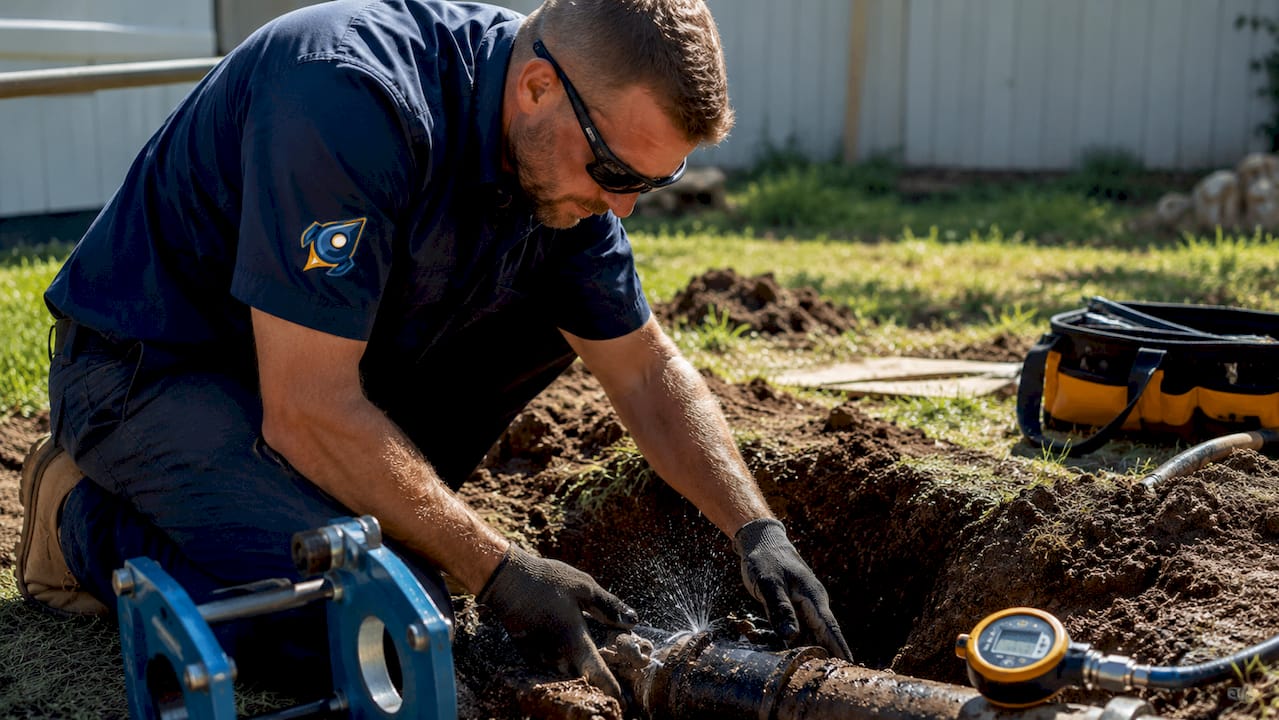
A burst water main is defined as a pressurised supply pipe that has failed, releasing water into the surrounding soil or structure. Repairing burst water mains involves four critical steps: isolating the water supply, draining residual pressure, making the site electrically safe, and calling a licensed plumber to assess and fix the damage. Under AS/NZS 3500, the Australian standard for plumbing and drainage, all permanent repairs must be carried out by a licensed professional. The repair method chosen depends on the pipe’s location, material, age, and the extent of the damage. Getting this right the first time protects your property, your insurance claim, and your peace of mind.
How burst water mains are repaired: the first steps
The moment a water main bursts, the clock starts. Water escaping under mains pressure can flood a subfloor, saturate a wall cavity, or undermine a concrete slab within minutes. The 4-step emergency sequence recommended by Australian plumbing protocols is your first line of defence.
- Shut off the main water isolation valve. This valve is typically located at the front of the property near the water metre, at the boundary, or under a concrete lid in the garden. Turning it off stops the flow immediately.
- Isolate electricity near the affected area. Water and live circuits are a dangerous combination. Switch off the relevant circuit breakers at the switchboard if water is near power points, appliances, or the hot water system.
- Drain residual water from the lowest fixtures. Open taps at the lowest point in the house to relieve remaining pressure in the pipes. This reduces the volume of water still escaping from the burst.
- Contain the spread and document the damage. Use buckets, towels, and plastic sheeting to limit water movement. Take photos and video of all affected areas before any clean-up begins. Your insurer will need this evidence.
Pro Tip: Label your main isolation valve with a weatherproof tag so every member of your household or facility team can find it in under 30 seconds. In an emergency, that knowledge is worth more than any tool kit.
Once these steps are complete, call a licensed plumber. Temporary fixes using tape, clamps, or epoxy are not code-compliant and typically fail under standard Australian home water pressure. They are stop-gap measures only, not repairs.
Which repair methods do professionals use?
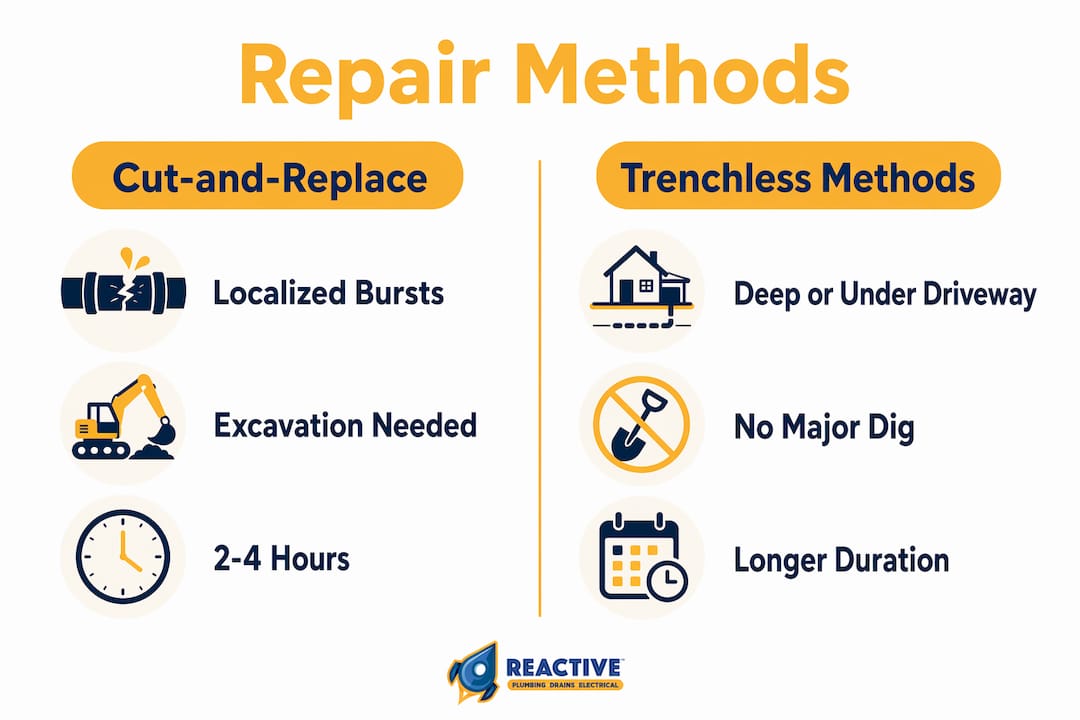
Licensed plumbers approach a burst water main the way a doctor approaches a diagnosis. They assess the pipe’s location, material, age, and the nature of the failure before selecting a repair method. The three main techniques used in Australia are cut-and-replace, pipe bursting, and CIPP relining.
Cut-and-replace
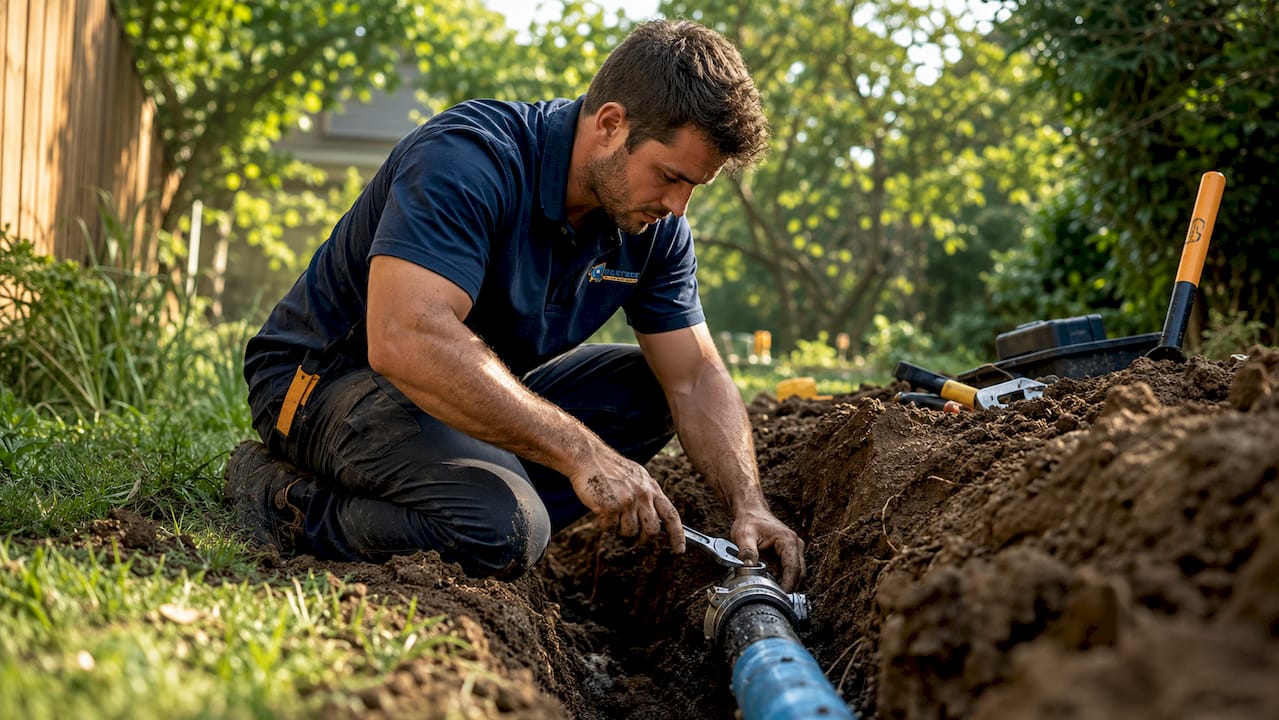
Cut-and-replace is the standard method for accessible, localised bursts. The plumber excavates to expose the damaged section, cuts it out, and installs a new length of pipe using approved fittings. This method suits surface-level or shallow pipes where the damage is confined to a short run. It is straightforward, fast, and cost-effective when access is easy.
Pipe bursting and CIPP relining
Pipe bursting and CIPP relining are trenchless methods used when the pipe is buried deep, runs under a driveway, or has deteriorated along a significant length. Pipe bursting fractures the old pipe outward while simultaneously pulling a new pipe through the same path. CIPP (Cured-In-Place Pipe) relining inserts a resin-saturated liner into the existing pipe, which is then inflated and cured to form a new pipe within the old one. No major excavation is required for either method. Trenchless techniques cause 70–90% less surface disruption than traditional dig-up repairs, which means your driveway, garden, and concrete paths stay largely intact.
Choosing the right method
| Repair method | Best suited for | Excavation required | Typical timeframe |
|---|---|---|---|
| Cut-and-replace | Accessible, localised burst | Yes, minor | 2–4 hours |
| Pipe bursting | Long runs, deep or buried pipes | Minimal | Half to full day |
| CIPP relining | Degraded or corroded pipe interiors | None | Half to full day |
| Full renewal | Aged galvanised iron systems | Yes, full run | 1–2 days |
After any repair, a licensed plumber will pressure test the repaired section before restoring full water supply. This confirms the repair holds under normal operating pressure and prevents re-leaks from sections that appeared sealed during depressurisation.
What are the risks of DIY or improper repairs?
The biggest misconception about burst pipe repair is that it is a manageable DIY task. It is not. Temporary fixes like tape or clamps may hold for hours or days, but they mask secondary damage that continues to develop behind walls and under floors.
The real risks of non-professional repairs include:
- Hidden water damage. Moisture trapped in wall cavities and subfloors causes mould growth and timber decay within 24–48 hours.
- Rejected insurance claims. Insurers require a licensed plumber’s Certificate of Compliance. Without it, your claim can be denied outright.
- Legal liability. Under the Plumbing and Drainage Act 2018, unlicensed plumbing work is illegal. You bear personal liability for any consequential damage.
- Structural risk. Water saturating a slab edge or undermining footings creates long-term structural problems that cost far more to fix than the original burst.
Pro Tip: Ask your plumber for a Certificate of Compliance the same day as the repair. Keep it with your property documents. You will need it for insurance, and it is required during conveyancing if you sell.
Licensed repairs under AS/NZS 3500 protect you legally and financially. The cost of a professional repair is almost always less than the cost of a rejected insurance claim plus remediation work.
How do you manage repairs in older properties?
Older properties present a specific challenge. Homes built between the 1940s and 1970s commonly have galvanised iron water mains. These pipes corrode from the inside out, narrowing the bore over decades and eventually rupturing under normal pressure. If you are seeing rust-coloured water, reduced flow at the tap, or recurring leaks in the same section of pipe, your galvanised main is telling you it is near the end of its life.
For aged galvanised iron pipes, patching is rarely the right answer. A full water main renewal prevents ongoing emergencies and is more cost-effective over time than repeated section repairs. The replacement material is typically Type B copper or cross-linked polyethylene (PEX), both of which are approved under AS/NZS 3500 and carry long service lives.
| Pipe material | Typical lifespan | Common failure mode | Recommended action |
|---|---|---|---|
| Galvanised iron | 40–70 years | Internal corrosion, rupture | Full renewal |
| Type B copper | 50+ years | Pinhole leaks, joint failure | Section repair or reline |
| PEX | 50+ years | UV degradation if exposed | Section repair |
| uPVC | 50+ years | Joint failure, cracking | Section repair or reline |
Minimising surface damage during a full renewal is possible with careful planning. A good plumber will map the pipe run before digging, use trenchless methods where the route allows, and reinstate garden beds and paths as part of the job. For properties with hidden pipe problems in older homes, a CCTV inspection before committing to a repair method is money well spent.
What should you do after the repair is complete?
The repair itself is only part of the recovery. What you do in the hours and days after determines whether you avoid secondary damage like mould, structural movement, or a repeat failure.
- Dry the affected area thoroughly. Professional water damage restoration uses heavy-duty pumps and infrared cameras to detect moisture hidden in walls and floors. If the burst was significant, thorough drying and ventilation are not optional.
- Test and label your isolation valve. Confirm it operates freely and mark it clearly. If you manage a facility, add it to your emergency response plan and brief your team.
- Schedule a follow-up inspection. A CCTV inspection of the repaired section and adjacent pipes confirms no secondary damage was missed. This is especially worthwhile in properties with ageing infrastructure.
- Review your emergency preparedness. Keep a basic kit near the metre: an adjustable spanner, a torch, and the contact number for a 24/7 emergency plumber.
- Notify your insurer promptly. Submit your photos, the plumber’s invoice, and the Certificate of Compliance together. Delays in notification can complicate claims.
For facility managers, this is also the right time to review your maintenance schedule. Booking regular plumbing inspections through a reliable plumbing scheduling platform reduces the chance of being caught off-guard by the next failure.
Key takeaways
Burst water main repairs require immediate isolation, licensed professional intervention, and the right repair method matched to pipe condition and location.
| Point | Details |
|---|---|
| Isolate first | Shut off the main valve and electricity before anything else to limit damage. |
| Licensed repairs only | AS/NZS 3500 compliance and a Certificate of Compliance protect your insurance claim. |
| Match method to pipe | Cut-and-replace suits localised bursts; trenchless methods suit buried or degraded pipes. |
| Older pipes need renewal | Galvanised iron mains corrode internally and often require full replacement, not patching. |
| Post-repair drying matters | Thorough drying and ventilation after a burst prevent mould and structural damage. |
What I have learned from years of burst main repairs
I have attended hundreds of burst water main jobs across Sydney, Brisbane, and the Gold Coast. The pattern is almost always the same. A property owner tries to manage it themselves for a few hours, the temporary fix holds just long enough to feel like a solution, and then we get the call after the damage has doubled.
The thing most people do not realise is that the burst itself is rarely the most expensive part. The mould in the wall cavity, the saturated subfloor, the rejected insurance claim because the first repair was done without a licence: those are what cost people real money. I have seen a $400 pipe repair turn into a $15,000 remediation job because someone used a clamp and waited a week.
Trenchless relining has genuinely changed what is possible for older properties. Ten years ago, a full galvanised main renewal meant tearing up a garden and a driveway. Now, in many cases, we can reline the existing pipe from two access points and leave the garden untouched. Property owners are often surprised by how little disruption is involved.
My honest advice to facility managers is this: do not wait for a burst to find out where your isolation valve is or whether your pipes are approaching end of life. A CCTV inspection costs a fraction of an emergency repair. Book one every five years for properties built before 1980. The information it gives you is worth far more than the cost.
— Brent
Reactive Plumbing & Electrical: professional pipe repair when it counts
When a water main bursts, you need a licensed team on-site fast, with the right equipment and the paperwork to back it up. Reactive Plumbing & Electrical provides 24/7 emergency response across Sydney, Newcastle, Wollongong, Brisbane, Ipswich, and the Gold Coast.
We specialise in both traditional cut-and-replace repairs and trenchless pipe relining, the no-dig method that protects your garden, driveway, and budget. Every repair meets AS/NZS 3500 standards and comes with a Certificate of Compliance. Whether you are dealing with a burst galvanised main in a 1960s home or a failed supply line under a commercial car park, our licensed plumbers carry the tools and the expertise to fix it properly the first time. Contact Reactive Plumbing & Electrical today for a fast, compliant repair.
FAQ
What is the first thing to do when a water main bursts?
Shut off the main water isolation valve immediately, then switch off electricity near the affected area. These two steps stop the damage from escalating before your plumber arrives.
Can I repair a burst water main myself?
Permanent repairs to water mains must be carried out by a licensed plumber under AS/NZS 3500. DIY fixes using clamps or tape are not code-compliant and can void your insurance claim.
How long does a water main repair take?
A localised cut-and-replace repair typically takes 2–4 hours. Trenchless methods like pipe bursting or CIPP relining for longer or buried sections usually take half a day to a full day.
What is CIPP relining and when is it used?
CIPP (Cured-In-Place Pipe) relining inserts a resin liner into the existing pipe, which cures to form a new pipe inside the old one. It is used when the pipe is buried, corroded along a long run, or located under a driveway or garden.
Will my insurer cover a burst water main repair?
Most home insurance policies cover sudden burst pipe damage, but only when repairs are completed by a licensed plumber with a Certificate of Compliance. Uncertified work is a common reason for claim rejection.