Hot water heater burst: what to do right now
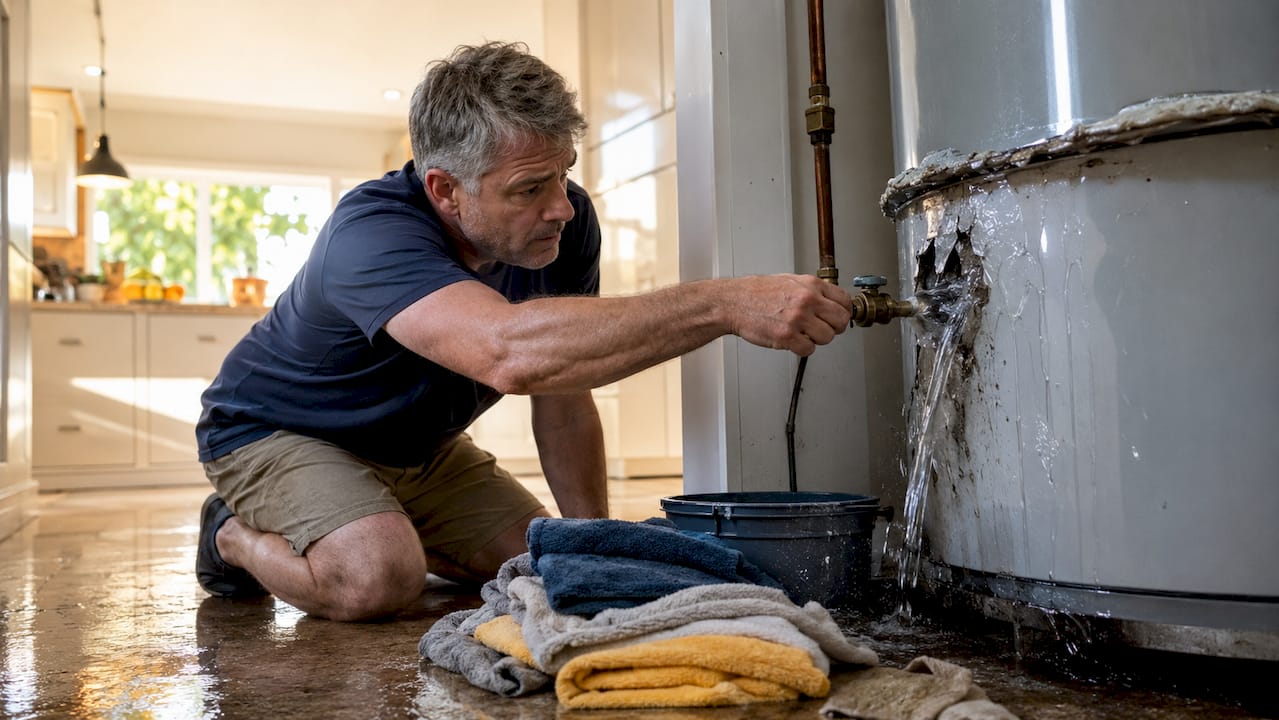
A hot water heater burst is a tank rupture or severe failure that releases large volumes of water rapidly, creating an immediate flood risk and serious safety hazard in your home. The industry term is “storage water heater failure,” but most homeowners know it simply as a burst or blown hot water system. A typical residential tank holds 150–300 litres, and without quick action, hundreds of litres can flood your home within an hour. Knowing exactly what to do in the first few minutes makes the difference between a manageable repair and a catastrophic, costly restoration.
What causes a hot water heater to burst?
Excess internal pressure is the leading cause of a hot water tank burst. When the temperature and pressure relief valve (T&P valve) fails or is never tested, pressure inside the tank builds until the steel shell gives way. The T&P valve is the primary safety device preventing this from happening, which is why annual testing is non-negotiable.
Sediment buildup is the second major culprit. Minerals from hard water settle at the base of the tank over time, creating a layer that traps heat and causes the steel to overheat and weaken. Popping or banging noises from your hot water system are the sound of water bubbling through that hardened sediment layer. Most homeowners ignore these noises for months before a sudden failure occurs.
Corrosion is the third factor. As tanks age, the internal glass lining cracks and the steel shell begins to rust from the inside out. Discoloured or rusty water from your hot water tap is a direct sign this process is underway. Other warning signs of a failing system include:
- Visible rust or corrosion on the tank exterior
- Water pooling around the base of the unit
- Inconsistent water temperature or no hot water at all
- A T&P valve that drips or leaks continuously
- A system that is 10–15 years old or beyond its expected lifespan
Pro Tip: Check the serial number plate on your hot water system. Most manufacturers encode the manufacture year in the first few characters. If your unit is over 10 years old and showing any of the signs above, treat it as a risk, not a minor inconvenience.
What to do immediately when your hot water system bursts
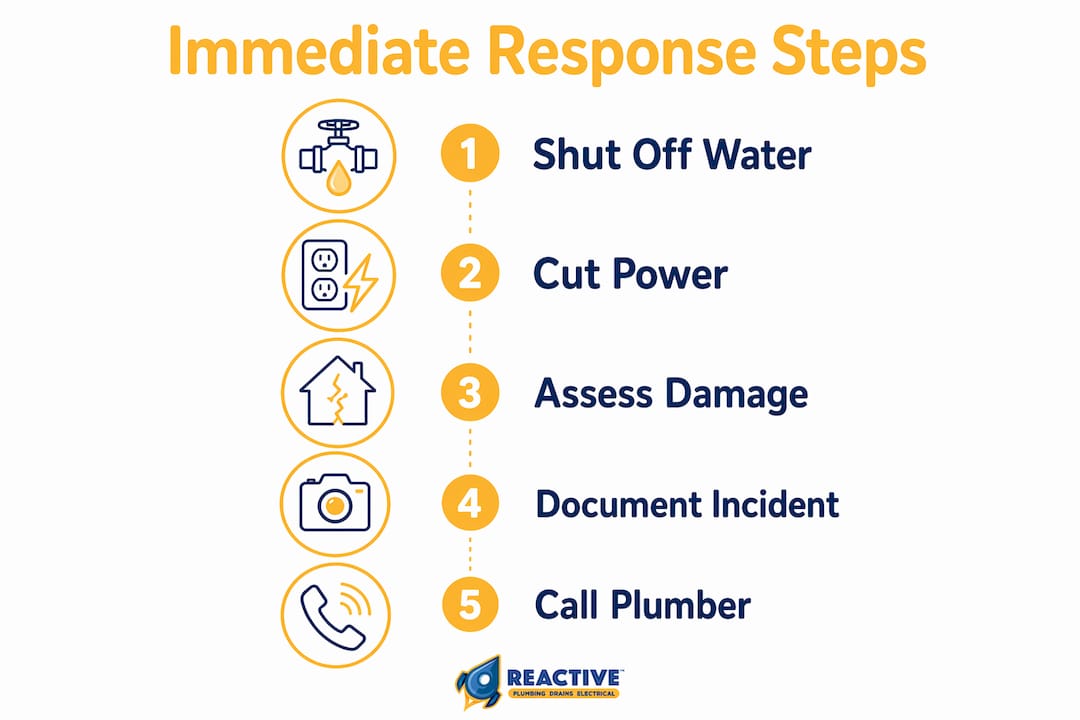
Speed matters. Every minute of delay means more water soaking into your floors, cabinetry, and walls. Follow these steps in order:
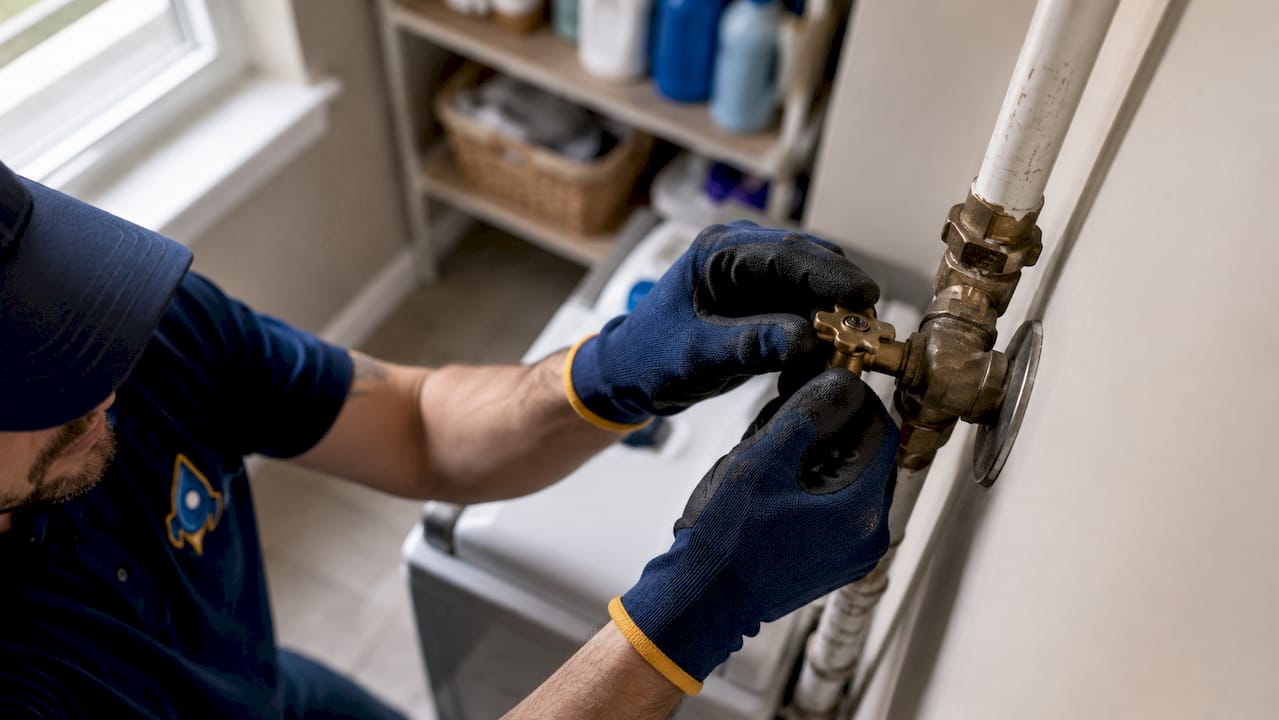
- Turn off the cold water supply valve. This valve sits on the pipe feeding cold water into the top of the tank. Turning it off stops the tank from continuing to fill and flood. If you cannot locate it, turn off the main water supply to the house.
- Cut the power or gas supply. For electric systems, switch off the circuit breaker for the hot water unit at your switchboard. For gas systems, turn the gas valve to the off position. Never leave an electric element energised in a tank that is leaking.
- Open a hot water tap nearby. This relieves pressure in the system and, critically, prevents a vacuum forming inside the tank as it drains. A vacuum slows drainage significantly and risks clogging the drain valve with sediment.
- Connect a hose to the drain valve and drain the tank. Direct the hose to a floor drain, outside, or into buckets. Open the T&P valve slightly to assist drainage if water flow is slow.
- Contain the water spread. Use towels, mops, and buckets to stop water reaching adjoining rooms. Lift rugs and move furniture off wet flooring immediately.
- Call a licensed emergency plumber. A busted hot water heater qualifies as a plumbing emergency. Do not attempt to repair the tank yourself.
Pro Tip: Take photos and video of the burst tank, the surrounding damage, and the water spread before you clean anything up. Your insurer will require this evidence to process a claim.
Water damage escalates fast. A burst tank releasing water into a confined laundry or bathroom can saturate particleboard cabinetry and timber flooring within minutes. Getting the water supply off quickly is the single most effective action you can take.
What are the long-term impacts after a hot water tank burst?
The visible water is only part of the problem. Once a tank bursts, moisture travels into wall cavities, under flooring, and into subfloor spaces where it stays hidden. Mould growth can begin within 24 hours of water exposure in humid conditions. That timeline is unforgiving, particularly in Queensland and coastal New South Wales where humidity accelerates the process.
Structural damage is a real risk. Particleboard and MDF cabinetry swell and delaminate quickly. Timber floorboards cup and warp. Concrete slabs can trap moisture underneath vinyl or tile, creating long-term damp problems. Professional water extraction equipment, including industrial air movers and dehumidifiers, is the only reliable way to dry out a structure properly.
Key restoration priorities after a burst include:
- Professional water extraction using commercial-grade equipment, not just mops and fans
- Moisture mapping with thermal imaging to find hidden damp areas behind walls and under floors
- Mould assessment if drying is delayed beyond 24 hours, particularly in enclosed spaces
- Photographic evidence of all damage, retained for your insurance claim
- Retaining the burst tank until your insurance assessor inspects it, as insurers require the physical unit to confirm cause and coverage
Repairing a burst tank is not a realistic option. The internal glass lining and steel shell cannot be repaired once structural failure has occurred. Full replacement is always the outcome.
How to prevent hot water heater bursts: maintenance and replacement
Prevention is far cheaper than restoration. A few simple maintenance habits extend the life of your hot water system and dramatically reduce the risk of a sudden failure.
The T&P valve deserves your attention every year. Lift the lever briefly to confirm it releases pressure and reseats properly. If it drips after testing or feels stiff, replace it. You can find your T&P valve location on the side of the tank, typically near the top, with a discharge pipe running down toward the floor.
Flushing sediment from the tank annually is equally important. Connect a hose to the drain valve, open it for a few minutes, and check whether the water runs clear. Cloudy or gritty water confirms sediment buildup that needs addressing.
| Maintenance task | Frequency | DIY or professional? |
|---|---|---|
| T&P valve test | Annually | DIY (with care) |
| Sediment flush | Annually | DIY |
| Anode rod inspection | Every 3–5 years | Professional |
| Full system service | Every 2–3 years | Professional |
| Tank replacement | At 10–15 years | Professional |
Choosing the right tank size also reduces stress on the system. An undersized tank that runs hot constantly wears out faster. A licensed plumber can assess your household’s demand and recommend the correct capacity.
Watch for early warning signs like discoloured water, unusual noises, or a T&P valve that weeps. Addressing these early costs a fraction of what emergency replacement and water damage restoration will set you back.
What are landlord and tenant responsibilities for a burst water heater in a rental?
A water heater burst in an apartment or rental property creates an urgent legal obligation for the landlord. Emergency repairs must be completed within 24–48 hours to maintain the property’s habitability. Hot water is classified as an essential service in every Australian state and territory.
As a tenant, your responsibilities are clear:
- Notify your landlord or property manager in writing immediately, and follow up by phone
- Document the damage with photos and video before any clean-up begins
- Take reasonable steps to limit further damage, such as turning off the water supply if safe to do so
- Keep records of all communication with your landlord regarding the repair timeline
Landlords who fail to act within the required timeframe can face compensation claims through the relevant state tribunal, such as NCAT in New South Wales or QCAT in Queensland. Tenants may also be entitled to arrange urgent repairs themselves and recover the cost from the landlord, up to the limit set by their state’s tenancy legislation.
For guidance on urgent repair timelines and your rights as a homeowner or tenant, understanding what qualifies as a plumbing emergency is the first step toward getting the right outcome quickly.
Key takeaways
A hot water heater burst requires immediate shutdown of the water supply and power source, followed by professional replacement, as the tank cannot be repaired once structural failure occurs.
| Point | Details |
|---|---|
| Shut off water and power first | Turn off the cold water supply valve and the circuit breaker or gas valve before anything else. |
| Drain carefully to avoid vacuum | Open a hot water tap before draining the tank to prevent vacuum formation and sediment blockage. |
| Mould risk starts within 24 hours | Professional drying equipment is needed quickly, especially in humid climates like Queensland and coastal NSW. |
| Replacement is always required | A burst tank’s internal lining and steel shell cannot be repaired; full replacement is the only option. |
| Annual maintenance prevents failure | Test the T&P valve and flush sediment yearly; replace the system at 10–15 years of age. |
What I’ve learned from years of hot water emergencies
The calls we receive after a hot water system fails almost always follow the same pattern. The homeowner noticed something weeks earlier, a drip near the base, a popping noise, water that wasn’t quite as hot as usual, and decided to wait and see. By the time the tank lets go completely, the damage bill is three to five times what it would have been with a timely replacement.
The misconception I see most often is that a small leak from the T&P valve is normal. It isn’t. A weeping relief valve is the system telling you pressure is building beyond safe limits. That is not a maintenance quirk to ignore; it is a warning that the tank is under stress.
The other thing homeowners underestimate is how fast water moves through a structure. A burst in a first-floor laundry can reach the ceiling of the room below within minutes. I’ve seen brand-new timber floors destroyed because someone assumed the water would stay contained. It never does.
My honest advice: if your hot water system is over 10 years old and showing any signs of trouble, replace it before it fails. The cost of a planned replacement is a fraction of what you’ll spend on emergency call-outs, water damage restoration, and mould remediation after a burst.
— Brent
Reactive Plumbing & Electrical: here when your hot water system fails
When a hot water system fails, you need a licensed plumber on site fast, not a booking for next week. Reactive Plumbing & Electrical provides 24/7 emergency hot water services across Sydney, Newcastle, Wollongong, Brisbane, Ipswich, and the Gold Coast. Our licensed team carries replacement units on the van, so most jobs are resolved in a single visit.
Whether you need an urgent burst water heater repair, a full system replacement, or a routine service to prevent future failures, we’re ready to help. We also offer flexible financing options so an unexpected hot water emergency doesn’t have to derail your budget. For urgent plumbing emergency support, contact Reactive Plumbing & Electrical any time, day or night.
FAQ
What are the first signs of hot water heater failure?
Popping or banging noises, rusty water, a weeping T&P valve, and water pooling at the base of the tank are the most common early warning signs. Addressing these promptly prevents a full burst.
Can a burst hot water heater be repaired?
No. Once a tank ruptures, the internal glass lining and steel shell are permanently damaged and cannot be repaired. Full replacement is always required.
How long does a hot water system last in Australia?
Most storage hot water systems last 10–15 years. Risk of failure from corrosion and sediment buildup increases significantly beyond this period.
What should I do if my hot water heater bursts in a rental?
Notify your landlord in writing immediately and document all damage with photos. Landlords are legally required to restore hot water as an essential service, typically within 24–48 hours of being notified.
How do I stop more water damage while waiting for a plumber?
Turn off the cold water supply valve to the tank, cut power or gas to the unit, open a nearby hot water tap to assist drainage, and use towels and buckets to contain the spread while you wait for your emergency plumber to arrive.