Common commercial kitchen plumbing issues: 2026 guide
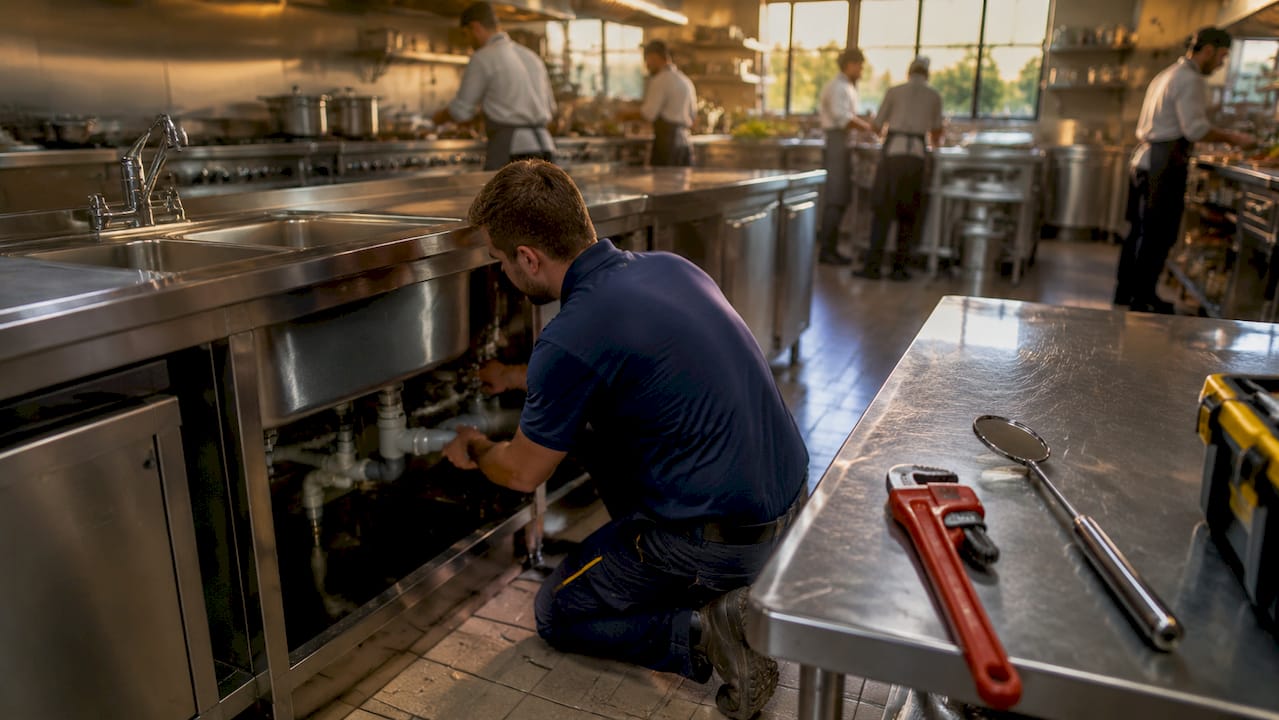
Commercial kitchen plumbing issues are defined as recurring faults in drainage, water supply, and waste management systems that disrupt food service operations and trigger regulatory penalties. Grease trap blockages, leaking pipes, clogged drains, and backflow failures are the most frequent commercial kitchen plumbing problems faced by Australian restaurant owners and kitchen managers. Non-compliance with AS/NZS 3500 or trade waste agreements can attract fines of up to $44,000 per offence. That is not a theoretical risk. Inspectors conduct unannounced audits, and a single violation can shut your kitchen down mid-service.
1. What are the most common commercial kitchen plumbing issues?
Grease trap blockages, drain clogs, leaking pipes, backflow contamination, and trap seal failures are the top commercial kitchen plumbing problems in Australian food service venues. Each one carries a direct cost: lost trading hours, failed health inspections, or expensive emergency callouts. Understanding what causes each problem is the first step toward preventing it.
Grease trap blockages
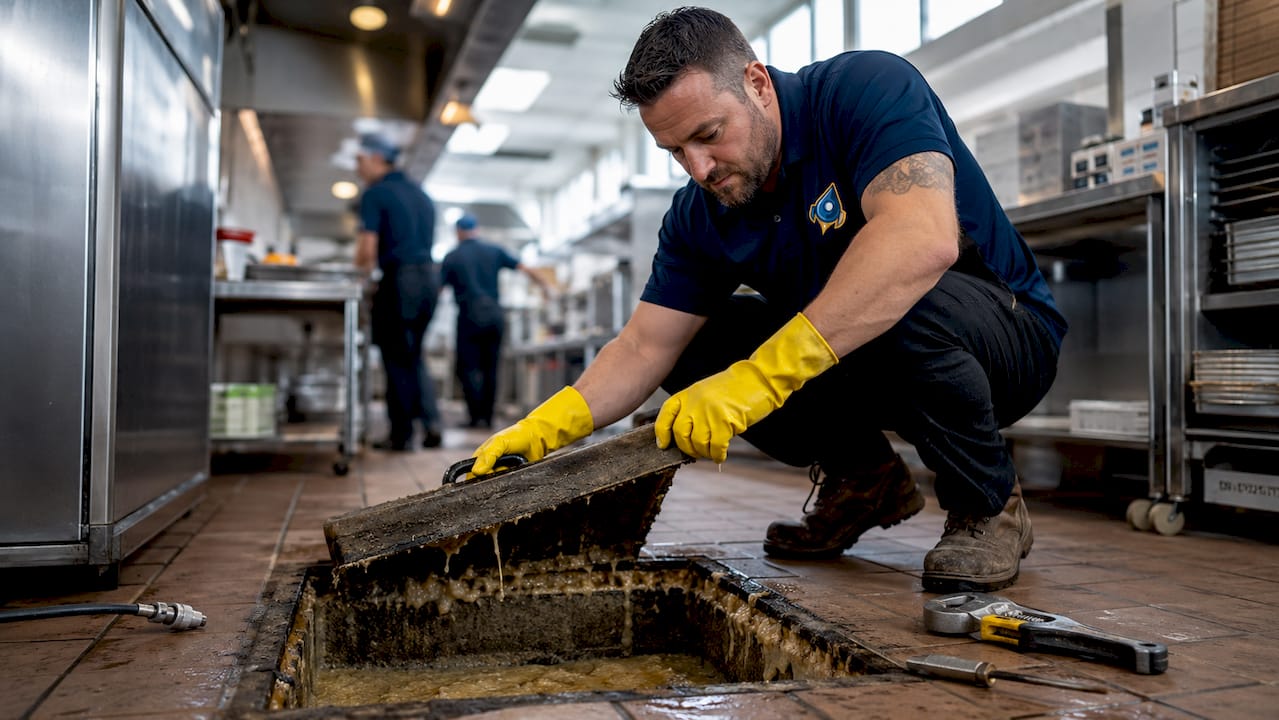
Incorrect grease trap sizing is the single most common cause of blockages and regulatory non-compliance in commercial kitchens. A 200-litre trap installed in a 60-seat kitchen will block repeatedly, regardless of how often you clean it. Grease traps must be sized using AS 1547 methodology, which accounts for meal numbers, kitchen type, and peak flow rates.
Leaking pipes and worn seals
Leaking pipes in commercial kitchens typically start at gaskets, hose connections, and threaded joints under sinks and behind dishwashers. A slow drip behind a wall can go unnoticed for weeks, saturating insulation and encouraging mould growth. Fixing leaking kitchen pipes early costs a fraction of what water damage remediation does later.
Drain clogs from food and grease buildup
Food scraps, cooking fats, and detergent residue combine inside kitchen drain lines to form dense blockages. These clogs develop gradually, showing up first as slow-draining sinks before escalating to full backups. Scheduling professional drain clearing before a complete blockage occurs keeps your kitchen trading.
Backflow and cross-contamination risks
Backflow occurs when water pressure drops and contaminated water is drawn back into the potable supply. In a commercial kitchen, this creates a direct food safety risk. Backflow prevention devices must match the hazard rating of each plumbing connection, and improper device selection is the most common compliance failure under AS/NZS 3500.1.
Trap seal evaporation and pest entry
Floor drains that see infrequent use lose their water seal through evaporation. Once the seal is gone, sewer gases and pests enter the kitchen through the open drain. Passive floor drain protection devices prevent this problem without requiring daily maintenance or water top-ups.
Pressure fluctuations affecting kitchen equipment
Low or inconsistent water pressure disrupts dishwashers, combi ovens, and espresso machines. These appliances rely on stable supply pressure to function correctly and meet hygiene standards. Pressure issues often trace back to partially closed isolating valves, failing pressure-limiting valves, or undersized supply lines.
Inadequate pipe venting causing trap seal loss
Poor venting creates negative pressure inside drain lines, which siphons water out of trap seals. The result is the same as evaporation: sewer gases enter the kitchen. AS/NZS 3500.2 sets minimum venting requirements for commercial drainage systems, and kitchens that have been extended or modified without a licensed plumber often fall short.
Trade waste compliance failures
Trade waste is regulated as a legal contract between your business and the water authority. Missing documentation, expired agreements, or undeclared equipment changes all constitute breaches. Inspectors commonly request maintenance logs during unannounced audits, and gaps in those records are treated as evidence of non-compliance.
Pro Tip: Keep a physical maintenance logbook in the kitchen, not just a digital file. Inspectors can review a paper log on the spot during an unannounced visit.
2. How can you prevent grease trap blockages and stay compliant?
Grease trap management is the highest-risk area of plumbing maintenance for restaurants in Australia. Getting it wrong costs money, trading time, and your food service licence.
The core rules are straightforward:
- Clean before 30% capacity. Grease traps must be cleaned before the combined depth of fats, oils, grease, and sludge reaches 30% of the trap’s total volume. Waiting until the trap is full guarantees a blockage and a fine.
- Use a licensed liquid waste contractor. Grease trap waste is classified as trade waste. Only licensed contractors can legally remove and dispose of it. Keep their receipts as part of your compliance documentation.
- Avoid hot water discharge into the trap. High water temperatures and chemical cleaners emulsify grease inside the trap, allowing fats to pass downstream and worsen blockages further along the drain line. Route high-temperature dishwasher discharge through a cooling device before it enters the trap.
- Log every service visit. Your trade waste agreement requires a documented maintenance history. Fines for non-compliance reach up to $44,000 per offence in some Australian jurisdictions. That figure applies per incident, not per year.
- Schedule pump-outs based on kitchen volume. A high-volume kitchen may need monthly pump-outs. A small café may manage with quarterly service. Base the frequency on actual grease accumulation, not a fixed calendar.
- Inspect inlet and outlet baffles. Damaged baffles allow grease to bypass the separation chamber entirely. Check them during every service visit.
Grease traps rely on a minimum one-hour retention time for fats, oils, and grease to separate from water. Any factor that reduces that retention time, including undersizing, high flow rates, or chemical interference, renders the trap ineffective.
3. What maintenance practices fix leaking pipes and drainage clogs?
Preventative CCTV drain inspections cost less than emergency drain clearing or the lost revenue from a kitchen closure. Most drain emergencies in commercial kitchens are identifiable weeks in advance with routine inspections. The camera goes into the drain line, shows exactly where buildup or damage exists, and lets a plumber fix it on a planned visit rather than a crisis callout.
Early warning signs to watch for include:
- Slow-draining sinks or floor drains, particularly after peak service periods
- Gurgling or bubbling sounds from drains when water is running elsewhere
- Sewer odours inside the kitchen, especially near floor drains or under sinks
- Visible moisture, staining, or corrosion around pipe joints and under equipment
Pipe inspections and trap seal integrity checks prevent biofilms and improve drain reliability more effectively than frequent mechanical cleaning alone. Augering and jet blasting clear the immediate blockage, but they do not address the underlying cause. A CCTV inspection after clearing tells you whether the pipe is structurally sound or heading toward a repeat failure.
Avoid DIY fixes on commercial kitchen plumbing. Replacing a washer on a tap is one thing. Attempting to clear a grease-blocked drain with chemical products or a hire-shop auger risks damaging pipe walls, voiding your trade waste agreement, and creating a bigger problem than the one you started with.
Pro Tip: Book a commercial plumbing maintenance visit at the start of each quarter. Catching issues during a planned inspection is always cheaper than calling for emergency plumbing for kitchens at 11 PM on a Friday.
4. What are the 2026 regulatory requirements for commercial kitchen plumbing in Australia?
Australian plumbing regulations tightened significantly in 2026, and restaurant owners need to know what changed.
| Requirement | Standard / Regulation | Key Detail |
|---|---|---|
| Lead Free WaterMark on copper alloy fittings | NCC 2025 Volume Three | Mandatory for all new or modified work from 1 May 2026 in Victoria |
| Annual backflow prevention device testing | NCC 2025 Volume Three | All devices must be tested and results documented each year |
| Backflow device hazard rating matching | AS/NZS 3500.1 | Device must match the specific hazard level of each connection |
| Pipe sizing, venting, and drainage design | AS/NZS 3500.2 | Sets minimum standards for commercial drainage and venting |
| Trade waste agreement documentation | State water authority requirements | Logbooks and contractor receipts required for audit |
Since 1 May 2026, all new or modified plumbing work in Victoria must comply with NCC 2025 Volume Three. This includes the Lead Free WaterMark requirement on any copper alloy plumbing product that contacts drinking water. Annual backflow testing is now mandatory, not optional. If your kitchen has not had its backflow prevention devices tested this year, that is a compliance gap.
Passing a commercial plumbing inspection requires current documentation across all these areas. Inspectors do not accept verbal assurances. They want dated records, contractor invoices, and test certificates.
5. Which solutions and technologies help manage kitchen plumbing problems cost-effectively?
Modern plumbing technology gives restaurant owners options that did not exist a decade ago. The right tools reduce disruption, lower long-term costs, and keep your kitchen compliant.
- Trenchless pipe relining. When a drain line is cracked, root-affected, or corroded, traditional repair means digging up floors or walls. Trenchless pipe relining inserts a resin-saturated liner into the existing pipe and cures it in place, creating a new pipe within the old one. There is no excavation, no extended closure, and no rebuilding of kitchen surfaces after the work is done.
- Passive floor drain protection. Devices that sit inside the drain body and allow water to flow in while blocking gases and pests from coming out. These require no power, no daily maintenance, and no water top-ups. They are a direct solution to trap seal evaporation in seldom-used drains.
- Modern grease trap designs. Newer grease interceptors use baffled chambers and extended retention zones to improve separation efficiency. They are easier to inspect, easier to clean, and less prone to the emulsification problems that affect older single-chamber designs.
- Documented maintenance programmes. A written schedule, signed off after each visit, is both a compliance tool and a management tool. It tells you what was done, what was found, and what needs attention next time. Inspectors treat a complete maintenance log as evidence of a well-managed kitchen.
- CCTV drain inspections. Running a camera through your drain lines once or twice a year gives you a clear picture of pipe condition before problems become emergencies. The kitchen cleaning connection between drain hygiene and overall food safety is direct. Clean drains support clean kitchens.
- Licensed plumbing partnerships. Having a licensed plumber who knows your kitchen’s layout, equipment, and history means faster diagnosis and faster repairs when something goes wrong. Emergency plumbing for kitchens is always more expensive than planned maintenance. A standing relationship with a trusted plumber reduces both cost and stress.
Key takeaways
Grease trap blockages, leaking pipes, and drainage clogs are the leading commercial kitchen plumbing problems in Australia, and all three are preventable with routine maintenance and current regulatory compliance.
| Point | Details |
|---|---|
| Grease trap sizing is critical | Undersized traps block repeatedly; use AS 1547 methodology to size correctly for your kitchen. |
| Clean traps before 30% capacity | Waiting longer risks blockages, fines of up to $44,000, and trade waste agreement breaches. |
| CCTV inspections prevent emergencies | Routine camera inspections identify drain faults before they become costly emergency callouts. |
| NCC 2025 compliance is now active | From 1 May 2026, Lead Free WaterMark fittings and annual backflow testing are mandatory in Victoria. |
| Documentation protects your business | Maintenance logs and contractor receipts are your first line of defence during an unannounced audit. |
What I have learned from years of commercial kitchen plumbing
The most common mistake I see restaurant owners make is treating the grease trap as a set-and-forget installation. They get a trap sized for their opening-day menu, then add a second deep fryer two years later and never revisit the sizing. The trap cannot keep up, blockages start, and the owner assumes the cleaning contractor is doing a poor job. The real problem is that the trap was undersized the moment the kitchen changed.
The second mistake is waiting for a smell or a slow drain before calling a plumber. By the time you can smell sewer gas in a kitchen, the trap seal has already failed. By the time a drain is running slow, there is already a significant buildup inside the line. Both of those situations are much cheaper to fix at the inspection stage than at the emergency stage.
Regulations are tightening, not loosening. The NCC 2025 changes that came into effect in May 2026 are a signal of where Australian plumbing standards are heading. Restaurant owners who build compliance into their maintenance routine now will spend less time and money dealing with inspectors later. Treat your plumbing the same way you treat your kitchen equipment: schedule it, document it, and do not wait for it to fail before you pay attention to it.
— Brent
Reactive Plumbing & Electrical: commercial kitchen plumbing support
Restaurant owners across Sydney, Brisbane, Newcastle, and the Gold Coast trust Reactive Plumbing & Electrical for licensed commercial kitchen plumbing work. We handle everything from grease trap assessments and drain clearing to backflow device testing and compliance documentation.
When a kitchen drain line is damaged, our pipe relining service repairs it without excavating floors or shutting down your kitchen for days. We also offer scheduled maintenance plans built around your trading hours, so inspections and repairs happen when they cause the least disruption. For urgent situations, our emergency drain clearing team is available 24/7. Contact Reactive Plumbing & Electrical to book a commercial kitchen plumbing assessment.
FAQ
What causes most commercial kitchen drain blockages?
Grease and food particle buildup inside drain lines causes the majority of commercial kitchen blockages. An undersized or poorly maintained grease trap accelerates the problem by allowing fats to pass downstream.
How often should a commercial kitchen grease trap be cleaned?
Grease traps must be cleaned before the combined sludge and grease layer reaches 30% of the trap’s total volume. For high-volume kitchens, this typically means monthly pump-outs by a licensed liquid waste contractor.
What is backflow and why does it matter in a commercial kitchen?
Backflow is the reversal of water flow that draws contaminated water back into the potable supply. In a commercial kitchen, this creates a direct food safety risk and a breach of AS/NZS 3500.1 if prevention devices are absent or incorrectly rated.
Are there new plumbing rules affecting restaurants in 2026?
From 1 May 2026, all new or modified plumbing work in Victoria must comply with NCC 2025 Volume Three, including Lead Free WaterMark requirements on copper alloy fittings and mandatory annual backflow prevention device testing.
Can I use chemical drain cleaners in a commercial kitchen?
Chemical drain cleaners are not recommended in commercial kitchens. They can emulsify grease inside the trap, allowing fats to bypass separation and worsen downstream blockages, and they may breach your trade waste agreement conditions.