What is a drain trap: a homeowner’s guide
A drain trap is a plumbing fitting that holds a small amount of water to create a seal, blocking dangerous sewer gases from entering your home. Known formally as a trap seal, this water barrier is the only physical barrier between your living spaces and the sewer network. Drain traps are mandatory for all sanitary fixtures under AS/NZS 3500.2:2025 and the Plumbing Code of Australia. Without one, sewer gases containing pathogens and flammable compounds can seep directly into your kitchen, bathroom, or laundry. Understanding how drain traps work, which types are compliant, and how to maintain them protects both your health and your property’s value.
How does a drain trap work to prevent sewer gas intrusion?
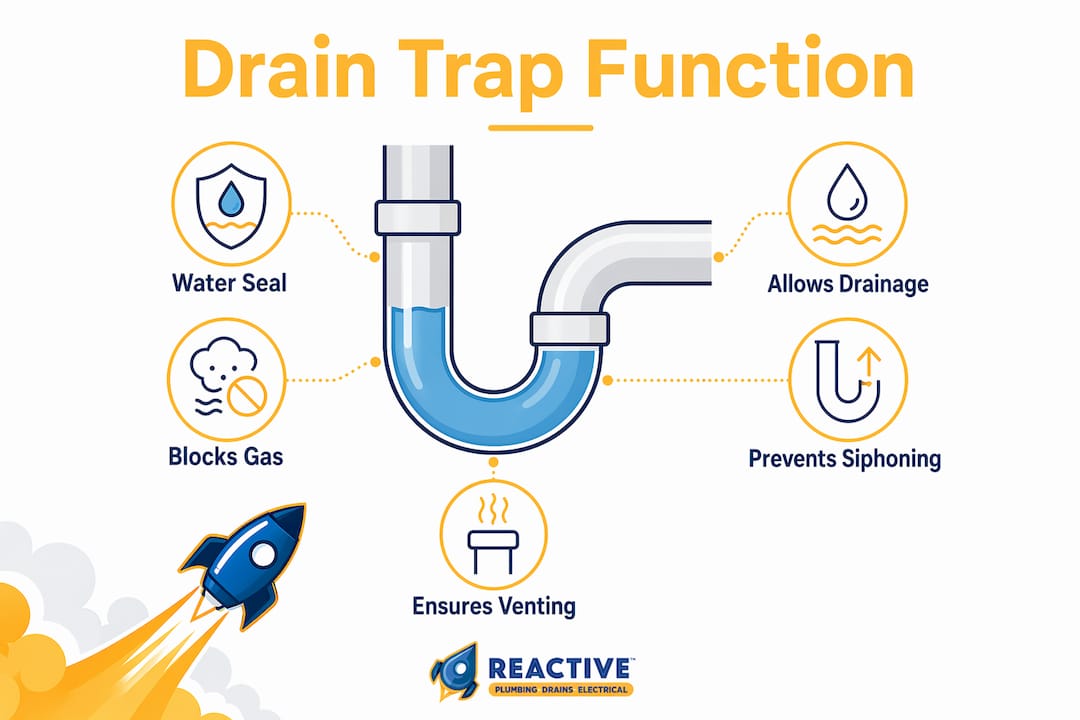
The drain trap function relies entirely on a simple principle: water is heavier than gas. A curved section of pipe sits beneath every sink, floor drain, and laundry tub. That curve retains a small pool of water after each use, and that pool physically blocks gases from travelling up through the drain.
The water seal sits between the fixture outlet and the sewer line. Every time you run the tap or flush water down a drain, fresh water replaces the old seal. The trap seal is a critical safety barrier, not merely an odour blocker. Sewer gases can carry harmful pathogens and are potentially flammable, making the seal a genuine biohazard defence.
The role of venting in protecting the seal
Venting is what most homeowners miss. Without a vent pipe near the trap, water draining quickly through the pipe creates suction. That suction can pull the water seal out of the trap entirely, a process called siphoning. Australian plumbing standards require vents near traps specifically to prevent this from happening. A properly vented system keeps air pressure balanced so the seal stays intact after every use.
Common trap shapes: P-traps and bottle traps
The two shapes you will encounter most often in Australian homes are:
- P-trap: A curved pipe that resembles the letter P on its side. Water sits in the bottom of the curve. P-traps are the standard compliant fitting for sinks, basins, and laundry tubs across Australia.
- Bottle trap: A cylindrical fitting that sits directly below a basin. The water seal forms inside the bottle-shaped body. Bottle traps are popular in bathrooms where aesthetics matter, but they require more frequent cleaning as debris collects in the base.
AS/NZS 3500 specifies minimum trap seal depths to guarantee the barrier remains effective. A seal that is too shallow evaporates quickly in warm weather or loses integrity under suction.
Pro Tip: If a drain in a rarely used bathroom or laundry smells like sewage, run the tap for 30 seconds. This refills the trap seal and resolves the odour in most cases.
What are the common types of drain traps used in Australian homes?
Several trap types appear in Australian residential plumbing, and not all of them are compliant with current standards. Knowing the difference saves you from costly rectification work.
| Trap type | Typical location | Compliance status | Material options |
|---|---|---|---|
| P-trap | Sinks, basins, laundry tubs | Fully compliant | PVC, ABS, chrome, brass |
| Bottle trap | Bathroom basins | Compliant | Chrome, brass, PVC |
| Boundary trap | Near sewer connection point | Required in designated areas | PVC, concrete |
| S-trap | Older homes, floor-exit drains | Non-compliant, replace now | PVC, metal |
| Flexible corrugated trap | DIY installations | Non-compliant | Plastic |
S-traps are banned under the Australian plumbing code. Their shape causes the water seal to siphon out every time water drains, leaving the pipe open to sewer gases. If your home was built before the 1990s, there is a reasonable chance an S-trap is still fitted under one of your sinks. A licensed plumber can replace it with a compliant P-trap in a single visit.
Corrugated flexible traps are equally problematic. Their ridged interior catches hair, grease, and debris far more readily than smooth-bore rigid pipe. They also fail to meet AS/NZS 3500 standards. Rigid PVC or ABS traps are the correct choice for any new or replacement installation.
Boundary traps: a special case
A boundary trap is installed at or near the point where your property’s drain connects to the public sewer. Boundary traps protect both the property and the community sewer from harmful gases travelling in either direction. They are required in certain sewer configurations and must be constructed to Water Corporation design standards. Not every property needs one, but your licensed plumber can confirm whether yours does.
Material lifespan: what to expect
Material choice affects how long your trap lasts before it needs attention. PVC and ABS traps last decades when correctly installed. Metal traps, including chrome and brass, generally last 5–15 years before corrosion becomes a concern. Chrome traps look attractive under exposed basins, but they require more frequent inspection in areas with hard water or high humidity.
Pro Tip: When renovating a bathroom or laundry, replace any metal traps with PVC or ABS at the same time. The material cost is minimal, and you will not need to revisit the job for decades.
How to maintain drain traps to prevent plumbing issues and health hazards?
Drain trap maintenance is straightforward for homeowners and takes very little time. The goal is to keep the seal intact, the pipe clear, and the fittings in good condition.
Routine maintenance steps
- Run infrequently used drains monthly. Any drain that sits unused for several weeks can lose its water seal through evaporation. Run the tap for 30 seconds to restore it. This applies to guest bathrooms, laundry tubs, and floor drains in garages or utility rooms.
- Clean the trap body every three to six months. For P-traps under sinks, place a bucket beneath the trap, unscrew the slip-joint nuts by hand, remove the trap, and rinse it under running water. Refit and check for leaks.
- Check for slow drainage. A drain that empties slowly often signals a partial blockage in or near the trap. Clearing it early prevents full blockages and the pressure build-up that can damage seals. You can find safe drain clearing tips that are suitable for homeowners to handle themselves.
- Inspect visible fittings for corrosion or moisture. Look under sinks every few months. White mineral deposits, rust staining, or damp patches around the trap joints indicate a slow leak that needs attention.
- Schedule a professional inspection annually. A licensed plumber can check trap seal depth, vent function, and fitting integrity in areas you cannot easily see, such as floor drains and wall-entry traps.
Signs your trap is failing
A failing trap gives clear warning signs if you know what to look for. Persistent sewer smells after running water to refill the seal point to a ventilation fault or a cracked trap body. Persistent smells usually indicate issues requiring professional inspection, such as broken seals or ventilation faults. Visible corrosion on metal traps, especially around the joints, means the fitting is close to the end of its service life. Gurgling sounds from a drain after water flows elsewhere in the house suggest a venting problem that is pulling the seal out of the trap.
Pro Tip: Never use caustic drain cleaners regularly. They corrode metal traps and degrade PVC joints over time. A simple home plumbing maintenance checklist and periodic manual cleaning are far safer and more effective.
What are the regulatory requirements for drain traps in Australia?
Australian plumbing law is clear on drain traps. Compliance is not optional, and the consequences of non-compliance extend beyond a failed inspection.
The key standards and obligations are:
- AS/NZS 3500.2:2025 sets the technical requirements for sanitary drainage systems, including trap seal depth, venting, and approved materials. Every trap in your home must meet these specifications.
- The Plumbing Code of Australia provides deemed-to-satisfy provisions that, when followed, guarantee compliance. Licensed professionals emphasise that these provisions exist to prevent unsafe installations and should discourage DIY work beyond minor cleaning.
- Licensed plumber sign-off is mandatory. Any drain or waste pipe modification, including trap installation or replacement, must be performed or certified by a licensed plumber under Australian regulations. Unlicensed work can void your home insurance and create liability if a gas-related incident occurs.
- S-traps and flexible corrugated traps must be replaced. If an inspection reveals either fitting in your property, rectification is required to bring the system into compliance. This is not a discretionary upgrade.
Understanding plumbing code violations helps you recognise when your property may already be at risk. Non-compliant traps are one of the most common issues found during pre-purchase plumbing inspections, and they can affect settlement negotiations or insurance claims.
The practical takeaway is this: keep the trap seal full, keep the fittings clean, and call a licensed plumber for anything beyond a manual clean. The cost of a professional inspection is far lower than the cost of rectifying a gas-related health incident or a failed building inspection.
Key takeaways
A drain trap is the single most important passive safety device in your home’s plumbing system, and maintaining its water seal is a legal requirement under AS/NZS 3500.2:2025.
| Point | Details |
|---|---|
| Trap seal is mandatory | AS/NZS 3500.2:2025 requires a water seal on every sanitary fixture to block sewer gases. |
| P-traps are the standard | P-traps in rigid PVC or ABS are the compliant choice for sinks, basins, and laundry tubs. |
| S-traps must be replaced | S-traps are banned under Australian plumbing code and must be replaced with compliant P-traps. |
| Plastic outlasts metal | PVC and ABS traps last decades; metal traps need replacement within 5–15 years due to corrosion. |
| Licensed plumbers only | Trap installation and replacement require a licensed plumber under Australian law. |
Drain traps: what I’ve learned from years in the field
The thing that surprises me most is how often homeowners mistake a drain trap problem for something far more serious. A client in Newcastle once called us convinced she had a major sewer line collapse because of a persistent smell in her laundry. The actual cause was a rarely used floor drain whose trap had evaporated dry over summer. Running water for 30 seconds fixed it completely.
That said, I have also seen the opposite mistake. Homeowners who assume every sewer smell is a simple fix and ignore it for months, only to discover a cracked trap body or a failed vent pipe that had been slowly exposing the household to sewer gases. The smell is always worth investigating. It is never worth ignoring.
My honest advice: do not touch the trap fittings beyond a manual clean unless you are a licensed plumber. The risks of DIY plumbing work on drain systems are real. A poorly refitted trap joint leaks slowly inside a cabinet for months before anyone notices, and by then you are dealing with mould, timber damage, and a much larger repair bill. The water seal is simple in concept, but the system around it, the venting, the pipe grades, the approved materials, requires professional knowledge to get right.
If your home is more than 20 years old, book a plumbing inspection and ask specifically about trap types and vent condition. You may find an S-trap that has been quietly failing for years.
— Brent
Professional drain trap services from Reactive Plumbing & Electrical
Drain trap problems rarely announce themselves loudly. By the time you notice a persistent smell or a slow drain, the issue has usually been developing for a while. Reactive Plumbing & Electrical’s licensed plumbers inspect, replace, and certify drain traps across Sydney, Newcastle, Wollongong, Brisbane, Ipswich, and the Gold Coast.
We carry compliant PVC and ABS fittings on every vehicle, so most trap replacements are completed in a single visit. For properties with older or damaged drain lines behind the traps, we offer pipe relining over traditional replacement as a cost-effective alternative that avoids excavation. Whether you need a routine inspection or an urgent repair, our team is available 24/7 for plumbing emergencies. Contact Reactive Plumbing & Electrical to book a licensed inspection and get your traps checked properly.
FAQ
What is a drain trap and why does every drain need one?
A drain trap is a curved pipe fitting that holds a water seal to block sewer gases from entering a building. AS/NZS 3500.2:2025 requires one on every sanitary fixture in Australian homes.
How often should I clean my drain trap?
Clean the trap body every three to six months and run infrequently used drains monthly to prevent the water seal from evaporating.
Are S-traps legal in Australia?
S-traps are non-compliant under the Australian plumbing code because they lose their water seal through siphoning. They must be replaced with compliant P-traps by a licensed plumber.
Why does my drain smell even after I run water?
If the smell persists after running water to refill the seal, the cause is likely a ventilation fault, a cracked trap body, or a broken seal. A licensed plumber should inspect the system.
Can I replace a drain trap myself?
Trap replacement is classified as plumbing work under Australian law and must be performed or certified by a licensed plumber. Unlicensed work can void your home insurance and breach the Plumbing Code of Australia.