Drain cleaning methods
A blocked drain has a way of making itself everyone’s problem. Whether it’s a bathroom sink that takes forever to empty or a kitchen drain sending unpleasant smells back up through the plughole, most Australian homeowners face drainage issues at some point. The good news is that the right drain cleaning methods for homes can fix most blockages without a plumber visit. The challenge is knowing which method to try first, which ones can quietly damage your pipes, and when DIY has gone as far as it can go.
Table of Contents
- Key takeaways
- How to evaluate drain cleaning methods for homes
- Top physical and DIY drain cleaning methods
- Chemical and enzyme-based drain cleaners
- Professional drain cleaning methods and when to call a plumber
- Choosing the right method for your situation
- What I have learned from years of seeing homeowners tackle blocked drains
- Let Reactive Plumbing & Electrical handle the tough jobs
- FAQ
Key takeaways
| Point | Details |
|---|---|
| Start with physical methods | Hot water, a plunger, and manual removal resolve most household clogs before chemicals are needed. |
| Use chemicals carefully | Never mix chemical cleaners and always follow contact times to avoid pipe damage and toxic fumes. |
| Enzyme cleaners suit septic systems | Biological cleaners preserve helpful bacteria and are a safer long-term option for septic households. |
| Hydro jetting beats snaking for buildup | Professional hydro jetting cleans pipe walls, not just the clog, reducing how often blockages return. |
| Professional cleaning every one to two years | Older homes and properties near trees benefit most from scheduled professional drain inspection and cleaning. |
How to evaluate drain cleaning methods for homes
Not every method suits every blockage. Choosing the wrong one wastes time, and in some cases, leaves your pipes worse off than before. Before reaching for any product or tool, it pays to assess the situation across four areas.
Safety is the first consideration. Some chemical cleaners produce heat and fumes that can irritate skin, eyes, and lungs. Mixing certain cleaners, even accidentally, creates genuinely dangerous gases. Proper method and safety precautions reduce the risk of injury and damage significantly.
Effectiveness depends on what is actually causing the blockage. Grease responds well to hot water and dish soap. Hair tangles need physical removal. Mineral scale may require professional tools entirely. Throwing baking soda at a tree root is not going to end well.
Ease and cost matter too. DIY methods use tools most households already have. Professional services cost more upfront, but a single well-timed professional clean can prevent emergency callouts that cost far more.
Environmental impact is worth considering, especially if your home uses a septic system. Harsh chemical cleaners disrupt the biological balance inside a septic tank in ways that can cause serious problems down the track.
- Think about the severity first: is it slow draining or completely blocked?
- Consider the fixture: kitchen sink clogs differ from bathroom or laundry blockages
- Note whether multiple fixtures are affected, which points to a mainline issue
- Match the method to the clog type before spending money or risking pipe damage
Pro Tip: Before starting any drain cleaning attempt, remove and clean the drain cover. A surprising number of slow drains are caused by debris sitting right at the top of the drain opening, not deep inside the pipe at all.
Top physical and DIY drain cleaning methods
Most slow drain clogs clear with a stepwise approach that starts simple and only escalates if needed. Here is the order we recommend, with clear guidance on what to do at each stage.
1. Hot water and dish soap
This is the right starting point for kitchen drains dealing with grease. Squirt a generous amount of dish soap down the drain, then follow with a full kettle of hot water. The soap breaks down the grease, and the hot water flushes it through. Allow about five minutes, then repeat if needed. This method will not shift a solid hair clog, but for grease buildup it is often all you need.
2. Plunger
A plunger is still one of the most effective drain cleaning tools for homeowners. The key is using the right type. A cup plunger suits flat surfaces like sinks and tubs. A flange plunger is designed for toilets. Seal the overflow hole before plunging a sink, otherwise you are just moving air rather than building the pressure needed to shift the clog. Ten to fifteen firm, steady plunges should do it. If the water drains, flush with hot water to clear any remaining debris.
Pro Tip: Coat the rim of your plunger with petroleum jelly before use. It creates a better seal on smooth basin surfaces, meaning more of your effort goes into shifting the clog rather than escaping around the edges.
3. Drain zip or hair removal tool
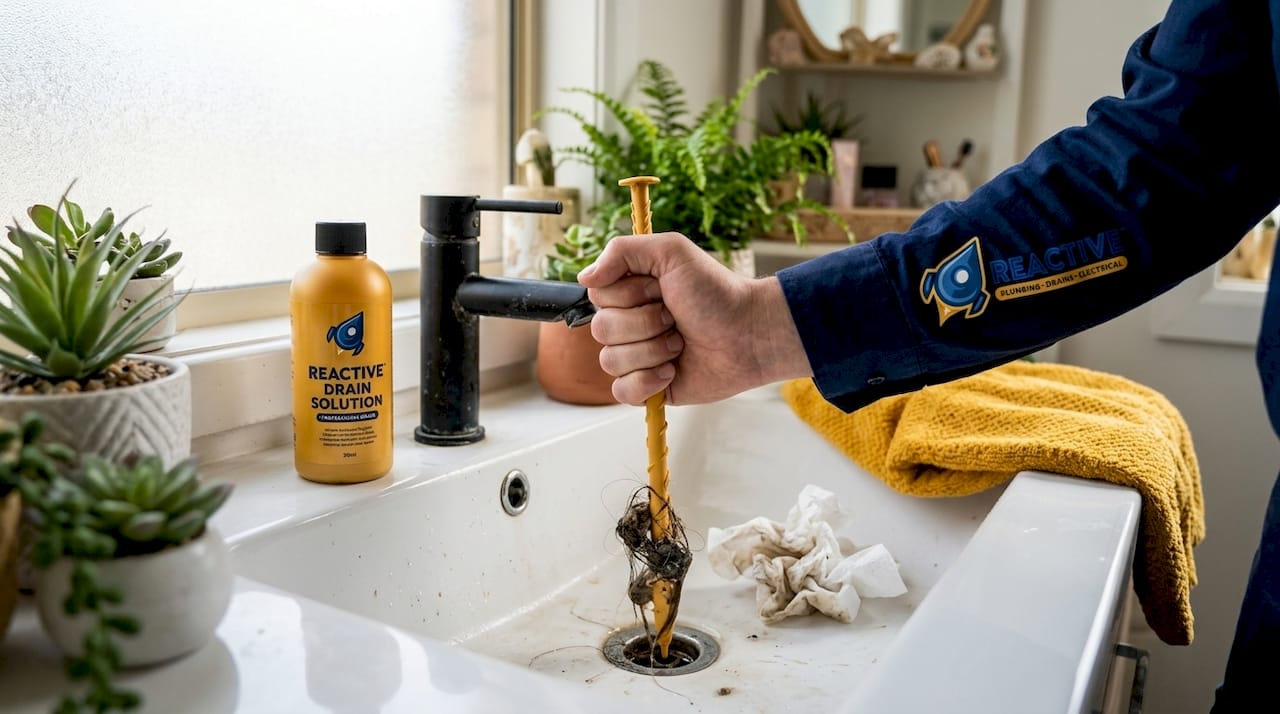
A drain zip (also called a drain snake or drain clog remover) is a thin, flexible plastic strip with barbed edges. You feed it into the drain and pull it back out, and it grabs hair and soap scum that has built up near the drain opening. This is the most effective DIY drain cleaning solution for bathroom basins and shower drains. It takes about five minutes and the results are usually obvious. Have paper towel ready because what comes out is never pretty.
4. Baking soda and vinegar
This method works well for light blockages and deodourising drains that have developed a smell. Pour half a cup of baking soda down the drain, followed by half a cup of white vinegar. The fizzing reaction helps shift light debris and neutralises odour-causing bacteria. Baking soda and vinegar work best for minor slow drains, with an ideal dwell time of ten to fifteen minutes before flushing with hot water. This is not a fix for serious blockages, but as a monthly maintenance step it is genuinely useful.
5. Drain snake (manual or electric)
When the zip tool and plunger have not shifted the clog, a drain snake goes deeper. You feed the flexible cable into the drain and rotate it to break up or grab whatever is causing the blockage. Manual versions are affordable and work well for most household depths. Electric versions handle deeper or tougher clogs. This is one of the most reliable home drain cleaning tools for stoppages that sit further down the pipe.
Chemical and enzyme-based drain cleaners
Chemical drain cleaners sit on most supermarket shelves and look like an easy fix. They can be effective, but they carry real risks that are worth understanding before you use them.
There are three main types:
- Caustic cleaners use lye or caustic soda to generate heat and dissolve organic matter like hair and grease. They work fast but are highly alkaline and can damage older pipes with repeated use.
- Oxidising cleaners use bleach or peroxide-based compounds to break down clogs through a chemical reaction. They are somewhat safer on pipes than caustic products but still require care.
- Enzyme-based cleaners use biological cultures to digest organic waste slowly over several hours. They are the gentlest option and the best choice for households on septic systems.
Chemical drain cleaners must never be mixed and must be used strictly per label instructions. Mixing bleach with vinegar or ammonia produces chlorine gas, which is dangerous in an enclosed bathroom. Leaving a chemical cleaner in contact with your pipes longer than the label states does not improve results. It increases the risk of pipe damage.
“Many plumbers recommend avoiding harsh chemical cleaners initially. Mechanical tools and gentler physical methods should come first, with chemicals reserved as a later step only when physical methods have failed.” (Southern Living)
Enzyme cleaners are recommended for homes on septic systems specifically because they preserve the anaerobic bacteria that make a septic tank function. Strong chemical cleaners like common drain products disrupt this biological balance and can lead to costly septic failures. If you are on tank, stick to enzymes.
Professional drain cleaning methods and when to call a plumber
DIY methods handle the majority of single-fixture blockages, but there is a clear point where they stop being the right tool for the job.
If multiple fixtures are blocked at once, that is a mainline or vent problem. No plunger or drain snake is going to fix that from the fixture end. A professional plumber has the inspection tools and the access needed to diagnose and clear the real source.
The two most common professional techniques are drain snaking and hydro jetting. Here is how they compare:
| Method | Best for | Pipe wall cleaning | Cost range |
|---|---|---|---|
| Professional drain snaking | Breaking or removing physical clogs | No | Lower |
| Hydro jetting | Recurring buildup, grease, scale | Yes | Higher |
| CCTV camera inspection | Diagnosing root cause of recurring issues | N/A | Varies |
Snaking breaks or removes clogs, while hydro jetting uses high-pressure water to clean the full internal surface of the pipe. If your drains keep blocking in the same spot every few months, a snake will keep treating the symptom. Hydro jetting addresses the actual buildup coating the pipe walls.
Homes benefit from professional drain cleaning every one to two years, with older homes and those near large trees at the higher end of that frequency. Tree roots actively seek out pipe joins and can cause serious damage if left unchecked. A routine inspection also catches slow-developing issues like cracked pipes or scale buildup before they become emergencies.
If you want a full picture of what to monitor between professional visits, a home plumbing maintenance checklist can help you stay ahead of problems before they grow into expensive repairs.
Choosing the right method for your situation
With several options available, the question becomes which one to reach for first. This summary makes that decision straightforward.
| Method | Effectiveness | Safety | Cost | Environmental impact |
|---|---|---|---|---|
| Hot water and dish soap | Low to moderate | High | Minimal | Negligible |
| Plunger | Moderate | High | Low (reusable) | None |
| Drain zip or snake | High for hair clogs | High | Low | None |
| Baking soda and vinegar | Low (light clogs) | High | Minimal | Very low |
| Chemical cleaners | Moderate to high | Medium | Low to moderate | Moderate to high |
| Enzyme cleaners | Moderate (slow acting) | High | Moderate | Low |
| Professional hydro jetting | Very high | High (professional) | Higher | Low (water only) |
The pattern here is clear. Physical methods cost less, carry less risk to your pipes, and are better for the environment. Overuse of chemical cleaners leads to pipe damage, especially with repeated applications or when products are mixed. Reserve chemicals for situations where physical methods have genuinely failed, and always consider enzyme products as the safer chemical option.
For ongoing prevention, check out our tips for blocked kitchen drains to understand which habits cause the most common household blockages and how to stop them from forming in the first place.
What I have learned from years of seeing homeowners tackle blocked drains
In my experience, the biggest mistake homeowners make is reaching for a chemical product within minutes of noticing a slow drain. I understand why. The bottle is under the sink, the instructions sound confident, and it feels like taking decisive action. But I have seen that approach cause real damage to older pipes. I have also seen it make a professional job harder because the residual chemical in the drain becomes a safety hazard when we need to get hands-on.
What actually works is the sequence. Start with the simplest method, see if it resolves the problem, and only escalate if it does not. Most bathroom slow drains clear with a drain zip in five minutes. Most kitchen blockages respond to dish soap and hot water. The cases that genuinely need chemical intervention are far fewer than product marketing would have you believe.
The other thing I would stress is paying attention to patterns. A drain that blocks every two months is telling you something important. It is not bad luck. It is either a buildup problem in that section of pipe, a poorly designed drain line, or in some cases the beginning of a structural issue. One professional inspection early on costs far less than the repeated DIY effort and eventual emergency callout that follows from ignoring a recurring pattern.
Healthy drains are mostly about habits. Keep food scraps out of the kitchen sink. Use a drain screen in the shower. Flush your drains with hot water weekly. These are small steps, but they genuinely reduce how often you face a real blockage.
Let Reactive Plumbing & Electrical handle the tough jobs
When DIY methods have gone as far as they can, we are ready to step in. Reactive Plumbing & Electrical offers the full range of professional drain clearing services across Sydney, Newcastle, Wollongong, Brisbane, Ipswich, and the Gold Coast.
From manual snaking through to high-pressure hydro jetting and CCTV camera inspections, our licensed plumbers identify the real cause of your blockage and clear it properly. We also offer routine drain maintenance to stop recurring clogs before they start. Whether you need drain clearing in Sydney or a local plumber in Brisbane, our team is available 24/7 for emergencies and scheduled maintenance. Contact Reactive Plumbing & Electrical today to book an inspection or get fast help with a blocked drain.
FAQ
What is the safest drain cleaning method to try first?
Start with hot water and dish soap, then a plunger, then a drain zip for hair removal. These physical methods carry no risk to your pipes and resolve most household blockages without chemicals.
Can baking soda and vinegar clear a fully blocked drain?
No. Baking soda and vinegar work best for light slow drains and deodourising, with a dwell time of ten to fifteen minutes. A completely blocked drain requires physical removal or professional help.
How often should I have my drains professionally cleaned?
Most homes benefit from professional drain cleaning every one to two years. Older homes and properties near large trees should lean toward the shorter interval.
Is hydro jetting better than snaking?
For recurring blockages caused by buildup on pipe walls, yes. Hydro jetting cleans pipe walls thoroughly, while snaking only removes or breaks the clog itself without addressing surrounding buildup.
When should I stop DIY and call a plumber?
Call a plumber when multiple fixtures are blocked at the same time, when the same drain keeps blocking repeatedly, or when physical methods and one round of appropriate cleaner have not resolved the issue.
Recommended