Building maintenance plumbing is defined as a structured, preventive system of scheduled inspections, testing, and repairs that keeps a building’s water supply, drainage, backflow prevention, and hot water infrastructure operating safely and within regulatory compliance. For property managers and building owners, understanding how this system works is not optional. A single undetected leak can waste nearly 10,000 gallons yearly, and that figure applies to a single household. Scale that across a commercial or multi-occupancy building and the financial and structural consequences multiply fast. The good news is that most plumbing failures start as detectable wear, corrosion, or blockages long before they become emergencies. A well-designed maintenance programme catches them first.
How building maintenance plumbing works across key subsystems
Every building’s plumbing is made up of distinct subsystems, and understanding how each one functions tells you exactly what needs to be maintained and why. Plumbing systems work through three core mechanisms: pressure delivery for potable water, gravity and correct slope for drainage, and venting to maintain flow and prevent contamination. Each mechanism has its own failure modes, which is why maintenance tasks differ across subsystems.
Here is how the main subsystems function and what they require:
- Potable water supply. Mains pressure pushes clean water through supply pipes to every tap, shower, and appliance in the building. Pressure that is too high causes pipe stress and fitting failures; pressure that is too low signals a blockage or leak. Regular pressure gauge readings are the simplest way to monitor this subsystem.
- Drainage. Wastewater exits the building by gravity, flowing through pipes set at a precise slope toward the sewer. If that slope is incorrect or pipes accumulate grease and debris, blockages form. Drain maintenance and periodic sewer line inspections are the primary tools here.
- Venting. Vent pipes run from the drainage system up through the roof, allowing air into the system so water flows freely and sewer gases cannot enter the building. A blocked vent causes slow drains and unpleasant odours, two symptoms that are often misdiagnosed as blockages.
- Backflow prevention. Backflow prevention devices stop contaminated water from flowing back into the potable supply. They are legally required in most Australian jurisdictions and must be tested by a certified tester at least annually.
- Hot water systems. Storage and continuous-flow hot water systems require flushing, anode rod checks, and temperature verification to prevent sediment build-up, corrosion, and Legionella risk.
Understanding these five subsystems is the foundation of any effective preventive plumbing maintenance programme. Each one has different inspection intervals and different consequences when neglected.
What does a preventive plumbing maintenance programme include?
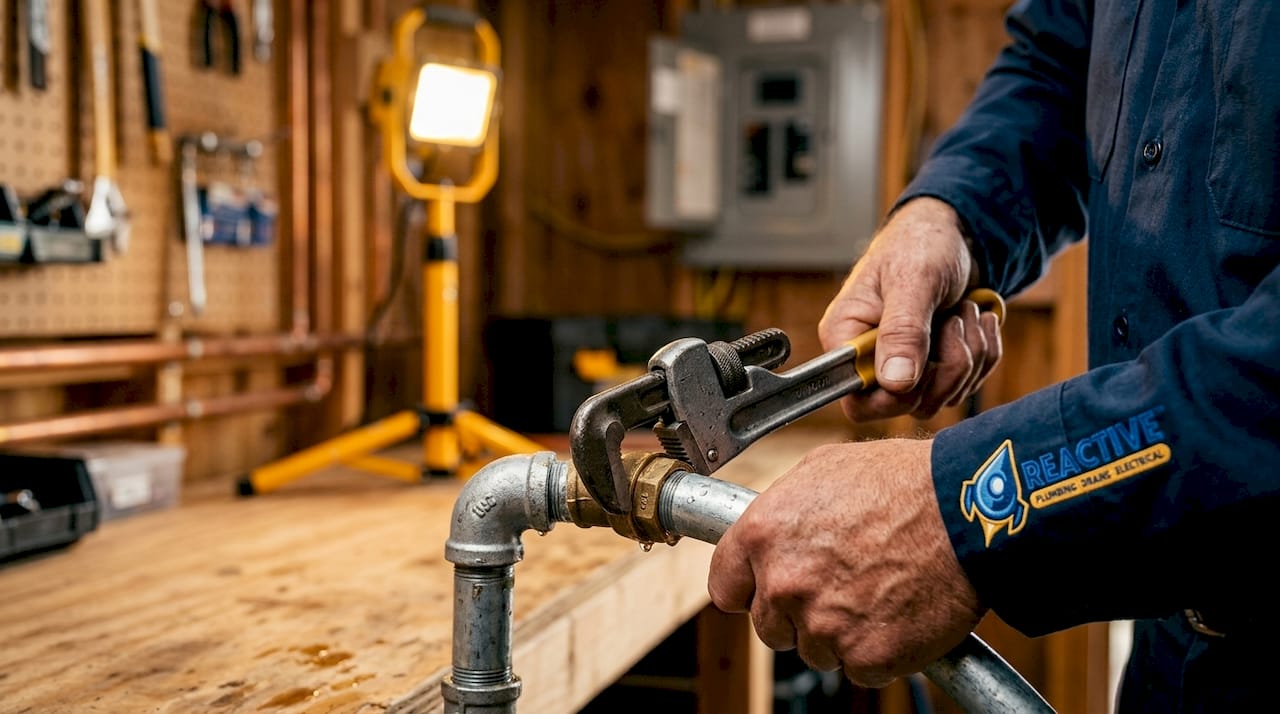
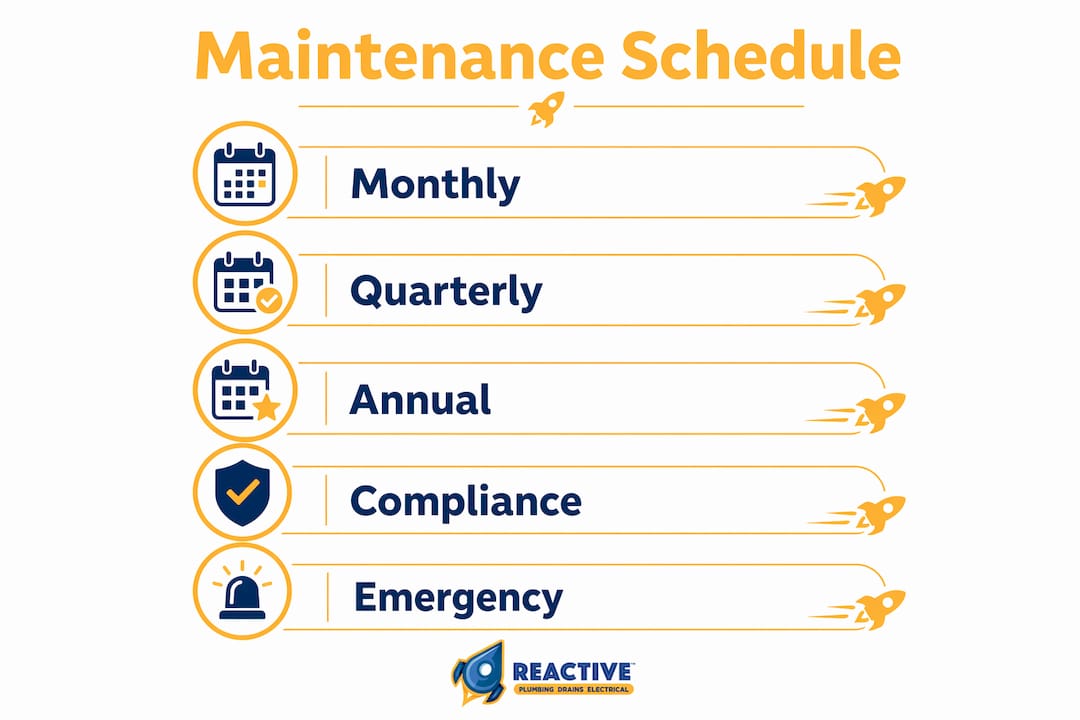
A preventive maintenance schedule covers supply piping, water heaters, backflow devices, drains, and fixtures at different inspection frequencies. The structure is straightforward: monthly tasks address what you can see and test quickly, quarterly tasks go a level deeper, and annual tasks require certified professionals and diagnostic equipment.
A typical schedule works as follows:
- Monthly. Conduct visual inspections of all accessible pipes for leaks, corrosion, and moisture staining. Test shutoff valves to confirm they open and close freely. Check all taps and toilets for drips or running water. Flush floor drains to maintain trap water levels and prevent sewer gas entry.
- Quarterly. Test water quality at key points in the system. Visually inspect backflow prevention assemblies for physical damage or tampering. Check pipe insulation and water hammer arrestors for wear. Review any maintenance logs for recurring issues that suggest a deeper problem.
- Annually. Commission a certified backflow tester to conduct formal testing of all backflow prevention devices, as annual testing is mandatory after installation and at least once per calendar year. Flush commercial water heaters to remove sediment. Verify water pressure with a calibrated gauge. Arrange a CCTV inspection of sewer lines every three years, with an annual visual review of accessible drainage components.
| Frequency | Key tasks | Who performs it |
|---|---|---|
| Monthly | Visual pipe checks, shutoff valve tests, fixture checks, floor drain flushing | Building maintenance staff |
| Quarterly | Water quality testing, backflow visual review, insulation check | Maintenance staff or contractor |
| Annual | Certified backflow testing, water heater flush, pressure verification, drainage inspection | Licensed plumber or certified tester |
Pro Tip: Schedule your annual backflow test well before the compliance deadline. Annual backflow testing managed as a risk control activity, rather than a last-minute obligation, gives you time to arrange repairs if a device fails the test without breaching your compliance window.
Combining these routine, low-disruption monthly checks with less frequent annual comprehensive inspections creates a detection net that prevents costly emergency repairs. The monthly tasks catch visible problems early; the annual assessments find what surface inspections cannot.
How are large and multi-occupancy buildings managed differently?
Managing plumbing maintenance in a multi-storey apartment block or large commercial building is a different challenge from a single dwelling. Multi-occupancy buildings rely on plant rooms and serviceable risers that allow level-by-level isolation to avoid widespread disruption during maintenance. Without that design feature, a single repair on the third floor may require shutting water off to the entire building.
The key considerations that set large building maintenance apart include:
- Plant rooms as maintenance hubs. Plant rooms house the main water meters, pressure-reducing valves, hot water systems, and backflow prevention devices. Access to these rooms must be unobstructed, and all equipment must be clearly labelled to allow efficient inspection and repair.
- Riser isolation. Risers are the vertical pipe runs that supply each floor. When risers are fitted with isolation valves at each level, a plumber can shut off water to a single floor while the rest of the building continues operating normally. This is a design decision that has major consequences for maintenance costs and tenant disruption.
- Asset management and scheduling. A large building may have dozens of backflow prevention devices, multiple hot water systems, and hundreds of metres of pipework. CMMS-based scheduling per asset type sets different inspection frequencies, acceptance criteria, and corrective workflows for each component, which is far more reliable than a single generic checklist.
- Compliance and documentation. High-use buildings face greater scrutiny from water authorities and building inspectors. Maintaining a complete inventory of backflow devices, including type, hazard classification, installation date, and test history, is not just good practice. It is a legal requirement in most Australian states.
Pro Tip: If you are taking over management of an existing building, commission a full plumbing compliance audit before your first maintenance cycle. Inherited systems often have undocumented devices, expired test certificates, or code violations that become your liability the moment you sign the management agreement.
The design of a building’s plumbing directly determines how much maintenance costs and how disruptive it is. Property managers who understand this can advocate for better design decisions during renovations and make smarter decisions when selecting buildings to manage.
What practical techniques help prevent leaks, blockages, and costly repairs?
Preventive plumbing maintenance is as much about consistent habits as it is about technical knowledge. Daily and monthly operational checks form the backbone of any effective programme, and they do not require specialist skills. The goal is to catch small problems before they become expensive ones.
These are the practical techniques that make the biggest difference:
- Water meter testing for leaks. Turn off all taps and water-using appliances in the building, then check the water meter. If the meter is still moving, there is an active leak somewhere in the system. This test costs nothing and takes five minutes.
- Listening for pressure changes. A sudden drop in water pressure at a tap, or banging sounds in the pipes when taps are turned off quickly, signals a problem. Banging pipes, known as water hammer, stress pipe joints over time and can cause failures at fittings.
- Drain maintenance. Fit strainers to all basin and floor drains to catch hair, food scraps, and debris before they enter the drainage system. In commercial kitchens, grease traps must be cleaned on a regular schedule because grease is the leading cause of drain blockages in food service buildings.
- Trap maintenance. Floor drains and infrequently used fixtures can lose the water in their traps through evaporation. An empty trap allows sewer gases into the building. Flushing these drains monthly keeps the trap water level intact.
- Scheduled professional inspections. A licensed plumber should inspect the full system at least annually, using pressure gauges, CCTV cameras for drainage, and thermal imaging where concealed leaks are suspected. Document every inspection, every repair, and every test result. This documentation protects you legally and helps identify recurring problems.
Using a maintenance checklist tailored to your building type keeps these tasks consistent and ensures nothing is overlooked between professional visits. The most effective property managers treat plumbing maintenance like a financial audit: scheduled, documented, and followed up without exception.
Key takeaways
Effective building maintenance plumbing requires a layered programme of monthly visual checks, quarterly system reviews, and annual certified inspections covering every subsystem from supply pipes to backflow prevention devices.
| Point | Details |
|---|---|
| Preventive programme structure | Monthly, quarterly, and annual tasks each target different failure types across all plumbing subsystems. |
| Backflow compliance is mandatory | Certified annual testing of backflow prevention devices is a legal requirement in Australian jurisdictions. |
| Multi-occupancy complexity | Plant rooms and level-by-level riser isolation are critical design features that determine maintenance cost and disruption. |
| Leak detection is low-cost | A water meter test with all taps off takes five minutes and can identify active leaks before damage occurs. |
| Documentation protects you | Complete records of inspections, test results, and repairs are a legal safeguard and a management tool. |
What I have learned from years of building plumbing maintenance
When I look at the buildings where plumbing maintenance goes wrong, the pattern is almost always the same. The property manager is reactive, not preventive. They fix what breaks and call it maintenance. The problem with that approach is that by the time something breaks visibly, the damage has usually been building for months.
The most common mistake I see is treating the annual backflow test as the entire compliance programme. Backflow testing is mandatory, yes, but it is one task in a system that needs attention every single month. A building that passes its annual backflow test but has never had its floor drains flushed or its shutoff valves exercised is not a maintained building. It is a building waiting for its next emergency.
The other thing I would tell any property manager is to invest in documentation from day one. A CMMS or even a well-organised spreadsheet that tracks every inspection, every repair, and every test result is worth more than any single maintenance task. It tells you where your recurring problems are, it proves compliance to water authorities, and it protects you when a tenant makes a claim. Plumbing maintenance is not glamorous work, but done consistently and documented properly, it is one of the most effective ways to protect the value of a building.
— Brent
Keep your building’s plumbing compliant and running smoothly
At Reactive Plumbing & Electrical, we work with property managers and building owners across Sydney, Newcastle, Wollongong, Brisbane, Ipswich, and the Gold Coast to deliver scheduled plumbing maintenance, backflow testing, and full compliance audits. Whether you need a one-off inspection or an ongoing commercial maintenance programme, our licensed plumbers are equipped to handle buildings of any size. We also help clients identify and resolve plumbing code violations before they become costly compliance failures. Contact Reactive Plumbing & Electrical today to book a building plumbing audit or discuss a maintenance schedule that fits your property.
FAQ
What is building maintenance plumbing?
Building maintenance plumbing is a preventive system of scheduled inspections, testing, and repairs covering a building’s water supply, drainage, backflow prevention, and hot water systems. The goal is to detect and fix issues early before they escalate into costly failures or compliance breaches.
How often should a commercial building’s plumbing be inspected?
A commercial building requires monthly visual checks, quarterly system reviews, and at least one annual inspection by a licensed plumber. Backflow prevention devices must be tested by a certified tester at least once per calendar year, with additional testing required after installation or repairs.
What is backflow prevention and why does it matter?
A backflow prevention device stops contaminated water from flowing back into the potable water supply. Testing is mandatory annually in Australian jurisdictions, and failure to comply can result in legal penalties and risk to building occupants.
How do I detect a plumbing leak in a large building?
Turn off all taps and water-using appliances, then observe the water meter. Any movement on the meter indicates an active leak. For concealed leaks, a licensed plumber can use thermal imaging or acoustic detection equipment to locate the source without opening walls.
What causes most plumbing failures in commercial buildings?
Most plumbing failures begin as detectable wear, corrosion, blockages, or small leaks that go unnoticed without routine inspections. Consistent monthly and annual maintenance programmes are the most reliable way to catch these issues before they cause significant damage.