A plumbing emergency can strike without warning, and the damage it causes moves fast. A burst pipe, overflowing toilet, or failed hot water system can leave you dealing with thousands of dollars in repairs and weeks of disruption. Having a solid plumbing emergency preparedness checklist in place before something goes wrong is one of the most practical things you can do as a property owner in Australia. This guide walks you through everything you need to know, from assessing your risks to assembling the right tools and knowing exactly what to do when water starts going where it shouldn’t.
Table of Contents
- Key takeaways
- 1. Your plumbing emergency preparedness checklist starts with a risk assessment
- 2. Essential items for your plumbing emergency kit
- 3. Shutoff, containment, and safety: the right order of action
- 4. Comparing your emergency tools and actions
- 5. Recognising early warning signs before a crisis hits
- 6. Customising your plumbing disaster plan for your home or business
- My honest take on plumbing preparedness
- How Reactive Plumbing & Electrical supports your emergency readiness
- FAQ
Key takeaways
| Point | Details |
|---|---|
| Know your shutoff valve | Locate, clear access to, and practise operating your main water shutoff valve before an emergency happens. |
| Assemble an emergency kit | Stock a dedicated plumbing kit with a plunger, wrench, tape, gloves, and absorbent towels for quick damage control. |
| Act in the right order | Shut off water first, turn off electricity if needed, then contain and document damage before calling a plumber. |
| Tailor your plan to your property | Homes and businesses have different vulnerabilities, so customise your plumbing disaster plan accordingly. |
| Pair your checklist with maintenance | Routine inspections catch early warning signs and reduce the chance of a full-blown plumbing crisis. |
1. Your plumbing emergency preparedness checklist starts with a risk assessment
Before you stock a kit or write a contact list, you need to understand what you are actually preparing for. Not every property carries the same risk, and a plumbing disaster plan that ignores your specific situation is not much use when things go wrong.
Start by thinking about the age and complexity of your plumbing system. Older homes, particularly those built before the 1980s, often have ageing galvanised steel pipes that are prone to corrosion and sudden failure. Properties with multiple bathrooms, outdoor irrigation, or granny flats attached have more failure points to monitor.
Seasonal and environmental factors matter too, especially in Australia. In Queensland and New South Wales, sudden intense rainfall can overwhelm stormwater drains and backflow into properties. In cooler parts of the country, exposed pipes can suffer stress during cold snaps. Think about what your local climate typically throws at you.
Key vulnerability points to assess on your property include:
- Location and accessibility of the main water shutoff valve
- Age and visible condition of exposed pipes under sinks and around toilets
- History of slow drains, water pressure changes, or recurring leaks
- Proximity of electrical panels or power points to plumbing fixtures
- Condition of hot water system, including its age and last service date
Routine maintenance checks significantly reduce emergency plumbing calls by keeping shutoff valves and leak points operational and visible throughout the year.
Pro Tip: Walk through your property right now and locate every shutoff valve, including the main, individual toilet cistern valves, and under-sink isolators. Take photos and save them in a folder on your phone labelled “plumbing.”
2. Essential items for your plumbing emergency kit
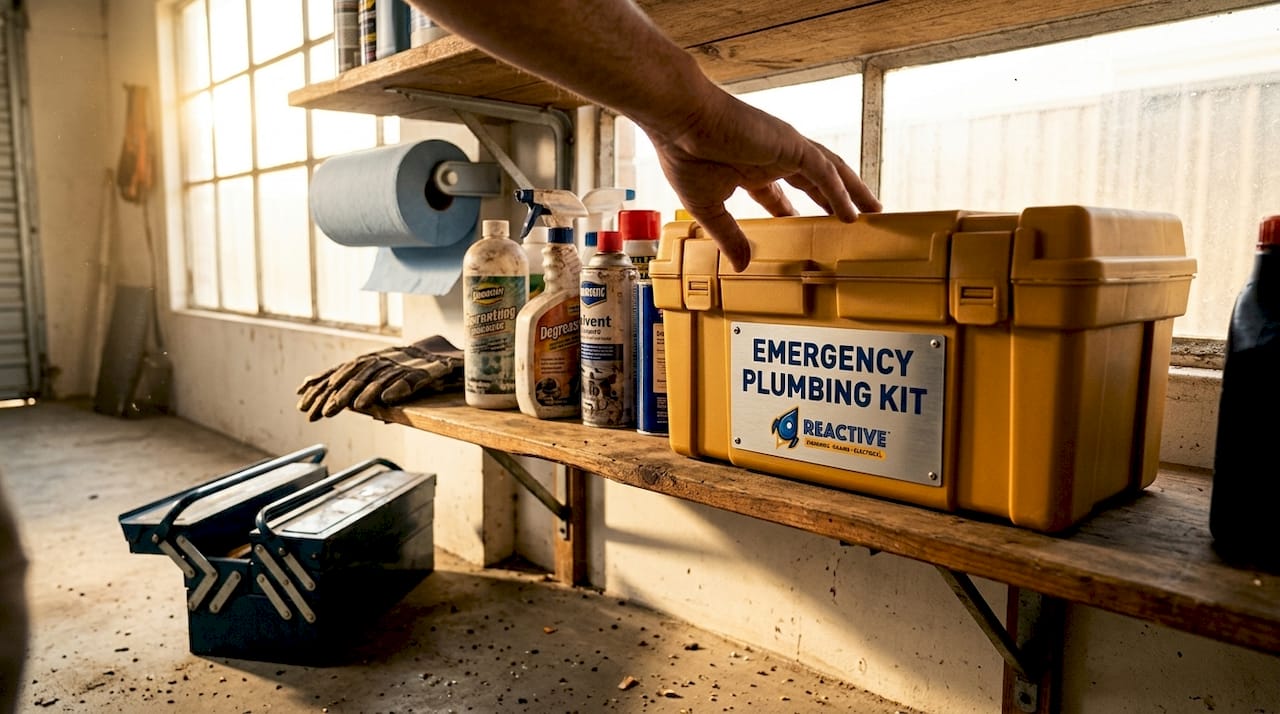
Think of your emergency plumbing kit as a first aid kit for your pipes. Its job is not to fix the problem permanently. Its job is to control damage and buy time until a licensed plumber arrives.
A well-stocked kit should include the following:
- Heavy-duty plunger for clearing blocked toilets and drains before they overflow
- Adjustable wrench and slip-joint pliers for tightening fittings and turning off isolation valves
- Plumber’s tape (PTFE tape) for temporary sealing of leaking threaded joints
- Duct tape and plumber’s putty for short-term containment of minor pipe leaks
- Spare washers of various sizes, which fix the majority of dripping tap problems in minutes
- Torch with spare batteries, because shutoff valves are often in dark cupboards, crawl spaces, or under the house
- Rubber gloves to protect against contaminated water, particularly in sewage or drain overflow situations
- Absorbent towels, a mop, and a bucket for managing water spread while you wait for help
Store the kit in a single, clearly labelled container kept in a consistent location. The worst time to hunt for a wrench is when water is spreading across your kitchen floor. Pre-assembling a tailored kit dramatically improves response times and reduces damage severity.
Pro Tip: Attach a laminated card to the inside lid of your kit listing the location of each shutoff valve in your property and your emergency plumber’s contact number. When adrenaline is high, written reminders save precious minutes.
3. Shutoff, containment, and safety: the right order of action
When a plumbing emergency actually happens, panic is your biggest enemy. Having a clear sequence of steps in your head, or better yet written down somewhere accessible, keeps you moving in the right direction instead of freezing.
Here is the order we recommend:
- Locate and shut off the main water supply. The main shutoff valve should be accessible within 30 seconds. If there is clutter blocking it, clear it today, not during a flood.
- Turn off electricity if water is near power points or the switchboard. Water and electricity together create a genuine safety risk. Go straight to the switchboard and cut power to affected areas.
- Contain the water spread. Use towels to block doorways, place buckets under drips, and remove valuables, rugs, and electronics from wet areas immediately.
- Document everything before you start cleaning. Take photos and short videos of all visible water damage. This supports smoother insurance claims and gives your plumber critical context before they arrive.
- Call a licensed emergency plumber. Do not attempt to open walls, access pipes behind tiles, or reconnect any water supply yourself. The containment phase is your job. The repair phase is theirs.
“The difference between a $500 repair and a $10,000 restoration often comes down to how quickly the water supply was shut off and how soon a professional was contacted.”
Pro Tip: Practise turning off your main shutoff valve at least once a year. Ball valves are far easier to operate quickly under pressure than older gate valves. If yours is a gate valve, consider asking your plumber about upgrading it.
4. Comparing your emergency tools and actions
Not all items in your plumbing kit carry equal weight in a crisis. This comparison helps you prioritise what to invest in and what to lean on first.
| Item or action | Ease of use | Approximate cost | Best for |
|---|---|---|---|
| Ball valve shutoff | Very easy (quarter turn) | $80 to $150 installed | Stopping water supply fast |
| Gate valve shutoff | Moderate (multiple turns) | Already installed in older homes | Older properties, upgrade recommended |
| Heavy-duty plunger | Easy | $20 to $40 | Blocked toilets and slow drains |
| Plumber’s tape (PTFE) | Easy | Under $5 | Temporary thread leak sealing |
| Plumber’s putty | Moderate | Under $10 | Sink and drain fitting leaks |
| Absorbent towels and mop | Easy | $20 to $50 | Water containment and cleanup |
| DIY containment (all above) | Moderate overall | Under $100 total | Buying time before professional arrives |
| Emergency plumber callout | No skill required | $150 to $400+ | Full diagnosis and lasting repair |
The key insight from this table is that DIY containment tools are cheap and effective at slowing damage but not a substitute for professional repair. A proactive approach combining regular valve testing and inspections with a stocked kit gives you the best outcomes at the lowest long-term cost.
5. Recognising early warning signs before a crisis hits
Home plumbing readiness is not just about what you do during an emergency. It is equally about what you notice in the weeks and months before one. Catching a problem early is almost always cheaper and less disruptive than responding to a full failure.
Routine plumbing maintenance catches early warning signs including slow drains, pressure changes, and minor leaks before they escalate into urgent repair calls.
Watch for these signals:
- Persistent slow draining in sinks, showers, or floor wastes
- Gurgling sounds from drains or toilets after water runs elsewhere
- Discolouration or rust in tap water
- Unexplained increases in your water bill without a change in usage
- Damp patches on walls, ceilings, or cabinetry near plumbing fixtures
- Reduced water pressure at taps or the showerhead
If you spot any of these, do not wait for a full breakdown. A blocked kitchen drain, for instance, can escalate quickly from a minor inconvenience to a sewage overflow if left unaddressed. Acting early is the most practical piece of emergency plumbing advice we can offer.
6. Customising your plumbing disaster plan for your home or business
Home plumbing readiness and business plumbing crisis management share the same foundation but have different practical requirements. A single-owner household and a multi-tenancy commercial property need tailored approaches.
For homeowners:
- Place your emergency kit in the same spot always, ideally near the laundry or under the kitchen sink
- Pin or photograph valve locations so any family member can act, not just the person who knows the house best
- Schedule a plumbing inspection once a year as part of a broader home maintenance routine
- Keep your emergency plumber’s number saved in multiple phones and written on the fridge
For business owners and facility managers:
- Assign a staff member as the designated plumbing emergency contact with clear authority to act
- Train relevant staff on shutoff valve locations and basic containment steps, not just managers
- Integrate emergency checks with monthly facility walkthroughs so valve operability is confirmed regularly
- Keep a written emergency contact list that includes your licensed plumber, your insurer, and your building manager
Both residential and commercial properties benefit from pairing their emergency checklist with a scheduled maintenance programme. Facilities that run monthly leak and valve checks alongside a documented emergency plan see far fewer crisis escalations. Being aware of common plumbing code violations also helps you identify compliance risks during routine inspections before they become costly emergency call-outs.
My honest take on plumbing preparedness
I have attended enough plumbing emergencies over the years to tell you one thing with complete confidence: the households that cope best are never the ones who knew the most. They are the ones who had practised.
Knowing where your shutoff valve is located sounds like enough. But when you are standing in a centimetre of water at 2 in the morning, fumbling in a dark cupboard full of cleaning products, that knowledge alone does not help you. Physically operating the valve in advance is what saves you, not just knowing it exists.
I have also seen countless homeowners delay assembling a basic kit because it felt unnecessary. “I’ll do it after I fix the tap.” “I’ll sort that out on the weekend.” Then a pipe fails on a Tuesday afternoon and they are mopping with bath towels and an old saucepan.
The other mistake I see regularly is treating a plumbing emergency plan as a standalone document rather than part of everyday maintenance. The properties that suffer the least damage are the ones where the owner checks valve operation and drain flow a few times a year. They are not doing anything dramatic. They are just paying attention consistently.
If you take one thing from this article, make it this: spend 20 minutes this week locating every valve on your property, clearing access to the main shutoff, and putting together a basic kit. That single afternoon of effort is worth more than any amount of planning you do in hindsight.
— Brent
How Reactive Plumbing & Electrical supports your emergency readiness
When a plumbing emergency hits, the last thing you want is to be searching for a reliable plumber. At Reactive Plumbing & Electrical, we offer 24/7 emergency plumbing response across Brisbane, Sydney, Newcastle, Wollongong, Ipswich, and the Gold Coast. Our licensed team is equipped to respond fast, assess damage accurately, and get your property back to normal without unnecessary delay.
Beyond emergency callouts, we offer routine inspections and maintenance services designed to complement your home plumbing maintenance plan and reduce the likelihood of a crisis occurring in the first place. Get in touch with us today to schedule an inspection or to save our number before you ever need it.
FAQ
What should be on a plumbing emergency preparedness checklist?
A solid checklist covers your main shutoff valve location, a stocked emergency kit with a plunger, wrench, tape, gloves, and towels, a documented sequence of actions, and saved contact details for a licensed emergency plumber.
How quickly should I be able to shut off my water supply?
Your main shutoff valve should be accessible within 30 seconds, with no clutter blocking it. Practise operating it at least once a year so you can act without hesitation during a real emergency.
What is the most important first step during a plumbing emergency?
Shut off the water supply at the main valve immediately. Every second the water keeps running adds to the potential damage, so speed at this step matters more than anything else.
How do I prepare my business for a plumbing emergency?
Assign a designated staff contact for emergencies, train relevant staff on shutoff locations and containment steps, and integrate regular valve checks into your monthly facility maintenance routine.
Can routine maintenance really prevent plumbing emergencies?
Yes. Catching slow drains, pressure drops, and minor leaks early through scheduled inspections prevents the majority of serious failures, saving both money and significant disruption.