How to respond to a no hot water emergency
Responding to a no hot water emergency means quickly assessing your system, safely performing basic checks, and knowing when to call a licensed plumber. In Australia, hot water failures are classified as urgent plumbing events, and Australian plumbing standards require that all repairs involving gas, electrical elements, thermostats, and pressure valves be carried out by a licensed tradesperson. Acting fast reduces the risk of water damage, safety hazards, and costly repairs. This guide walks you through every step, from the first check you can safely do yourself to engaging a qualified professional.
How to respond to a no hot water emergency: your first steps
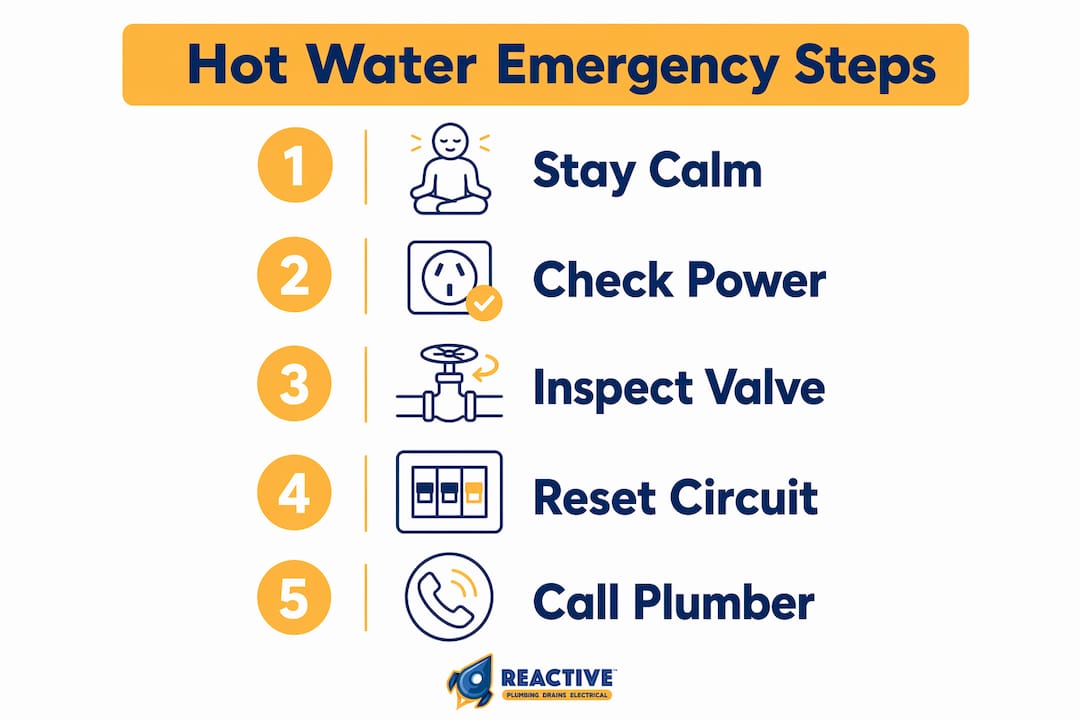
The first thing to do is stay calm and work through a short checklist before picking up the phone. Many cold water failures trace back to simple causes you can identify in under five minutes.
Start with the power or gas supply. For electric hot water systems, check your switchboard for a tripped circuit breaker or a blown fuse. For gas systems, confirm the gas supply is on at the metre and that other gas appliances in the home are working. If your gas cooktop lights normally, the supply is fine and the fault is isolated to the hot water unit itself.
Next, check the unit directly. Electric systems often have a fault indicator light or a digital display showing an error code. Gas systems have a pilot light. If the pilot light is out, your unit’s manual will show you how to relight it safely. Many modern systems use electronic ignition, so a power interruption can knock them out even when gas supply is fine.
- Check the circuit breaker or fuse for the hot water system at your switchboard.
- Confirm gas supply is active at the metre and at other appliances.
- Look for error codes or fault lights on the unit’s display panel.
- Check that the isolation valve on the cold water inlet to the unit is fully open.
- Inspect the temperature and pressure relief valve for signs of dripping or discharge.
Pro Tip: Take a photo of any error code displayed on your unit before resetting it. That code tells a plumber exactly what failed, saving diagnostic time and money.
If the system has tripped, you can attempt a single reset by switching the circuit breaker off, waiting 30 seconds, and switching it back on. One reset is reasonable. Repeated resets risk fire or further damage if an electrical short or burnt-out element is present. Stop after one attempt and call a professional.
What are the signs of a serious hot water system failure?
Some faults go beyond a tripped switch or an unlit pilot light. Knowing the difference between a minor hiccup and a genuine system failure saves you time and protects your home.
No hot water after 30–60 minutes of basic troubleshooting is a clear signal that professional intervention is needed. That window accounts for the system’s recovery time after a reset or a gas supply interruption. If the water is still cold after that period, the fault is internal.
Watch for these warning signs:
- Banging, hissing, or rumbling sounds from the unit. Persistent noises like these indicate sediment buildup or a faulty valve, both of which require urgent professional attention.
- Leaks, puddles, or pooling water around the base of the unit. Even a slow drip signals a failing tank, a cracked fitting, or a pressure relief valve that is discharging under excess pressure.
- A pilot light that won’t stay lit after two relighting attempts. This points to a faulty thermocouple or a gas supply issue that a licensed gasfitter must diagnose.
- A circuit breaker that trips again immediately after being reset. This pattern indicates an internal electrical short or a failed heating element.
- Persistent error codes that reappear after a reset. These codes are the system telling you it cannot self-correct.
A dripping temperature and pressure relief valve is one of the most underestimated warning signs. Many homeowners assume it is a minor leak, but a dripping relief valve often signals long-term internal damage or dangerously high pressure. Left unaddressed, it can escalate to a full system failure. For a broader look at when replacement is the right call, the signs you need a new system are worth reviewing before a plumber arrives.
What should you do while waiting for a licensed plumber?
Once you have identified a fault beyond your safe reach, the priority shifts to limiting damage and keeping your household safe until the plumber arrives.
Follow these steps in order:
- Turn off the cold water inlet to the unit. The isolation valve sits on the pipe feeding cold water into the system. Turning it off limits water damage from leaks without cutting water to the rest of the house.
- Cut power or gas to the unit. Switch off the circuit breaker for an electric system or close the gas isolation valve for a gas system. This removes the energy source from a potentially faulty appliance.
- Do not attempt DIY repairs on internal components. DIY repairs on gas or electrical hot water components are dangerous, illegal in Australia, and will void your insurance and warranty.
- Contain any visible leak. Place towels or a bucket under the unit to catch dripping water. This protects flooring and cabinetry while you wait.
- Use alternative hot water sources. A kettle, a neighbour’s shower, or a gym membership can bridge the gap for a few hours without stress.
Pro Tip: If your unit is in a garage or utility cupboard, keep the area clear of stored items. A leaking system in a cluttered space causes far more damage and makes the plumber’s job harder.
Some non-critical issues can be temporarily managed at home to avoid a costly after-hours call-out. If the fault is a tripped breaker with no signs of leaking or burning, waiting until business hours for a scheduled repair is a reasonable choice. For anything involving gas, water pooling, or repeated electrical trips, treat it as an emergency plumbing situation and call immediately.
How do you engage a licensed plumber for emergency hot water repairs?
Choosing the right tradesperson matters as much as calling quickly. Australian plumbing law sets clear standards for who can legally work on hot water systems.
Licensed tradespeople must perform all repairs involving gas components, heating elements, thermostats, valves, and pressure modifications. Homeowners cannot legally carry out these repairs themselves. This is not a technicality. Unlicensed work voids home insurance, invalidates manufacturer warranties, and creates genuine safety risks.
When you call a plumber, have this information ready:
- The type of system you have (electric storage, gas storage, gas continuous flow, heat pump, or solar).
- The brand and model number, usually on a label on the unit.
- The fault symptoms you have observed, including any error codes.
- Whether you have already turned off the water or power supply.
- Your address and the best access point to the unit.
Emergency call-out fees in Australia typically range from $150 to $400 in 2026, excluding hourly rates and parts. That range reflects after-hours and weekend premiums. For a clearer picture of what drives those costs, the emergency plumbing cost factors guide breaks down what you are actually paying for.
Always verify credentials before work begins. Homeowners should request a plumber’s licence number and ask for a Form 9 compliance certificate upon completion. Under Australian plumbing codes, Form 9 certificates are required for most plumbing works beyond minor maintenance. They confirm the work meets legal standards and protect your warranty and insurance.
| What to check | Why it matters |
|---|---|
| Plumber’s licence number | Confirms legal authority to work on hot water systems |
| Written quote before work starts | Prevents unexpected costs after the job |
| Form 9 compliance certificate | Required for insurance and warranty validity |
| Warranty on parts and labour | Protects you if the fault recurs within the warranty period |
| After-hours call-out fee disclosed upfront | Avoids bill shock on emergency repairs |
Key takeaways
Responding effectively to a hot water emergency requires safe initial checks, clear recognition of serious fault signs, and prompt engagement of a licensed plumber for any gas, electrical, or internal repairs.
| Point | Details |
|---|---|
| One reset only | Attempt a single circuit breaker reset; repeated resets risk fire or further damage. |
| 30–60 minute rule | No hot water after this window confirms a fault requiring professional diagnosis. |
| Turn off the inlet first | Close the cold water isolation valve to limit damage before the plumber arrives. |
| DIY is illegal on internals | Gas, electrical, and valve repairs must be done by a licensed tradesperson in Australia. |
| Request Form 9 on completion | This compliance certificate protects your insurance and warranty after any repair. |
What I have learned from years of hot water emergencies
Why homeowners wait too long
The most common mistake I see is homeowners resetting their system three or four times before calling us. They assume the problem will clear itself. What actually happens is that each reset on a faulty element or a shorted circuit pushes the system closer to a more expensive failure. One reset is diagnostic. Four resets is damage.
The second mistake is underestimating a dripping relief valve. I have walked into homes where the valve has been dripping for weeks and the owner thought it was just “a bit of condensation.” By that point, the tank lining is often compromised and replacement is the only option. A quick check of the hot water heater warning signs early on would have saved those homeowners thousands.
My honest advice is this: the safe checks in this article take five minutes. If they do not resolve the issue, stop. The cost of a licensed repair is almost always lower than the cost of repairing damage caused by a delayed response or an unlicensed attempt. Hot water systems involve gas lines, high-pressure vessels, and live electrical components. That combination deserves respect, not a YouTube tutorial.
The homeowners who come out best are the ones who act quickly, stay safe, and call a professional with clear information about what they observed. That combination gets the job done faster and usually at a lower total cost.
— Brent
Reactive Plumbing & Electrical: here when your hot water fails
When your hot water goes out, you need a licensed team that can respond fast, diagnose accurately, and fix it right the first time. Reactive Plumbing & Electrical provides 24/7 emergency hot water repairs across Sydney, Newcastle, Wollongong, Brisbane, Ipswich, and the Gold Coast.
Our licensed plumbers carry the parts and tools to handle electric, gas, and continuous flow systems on the same visit. We provide upfront pricing before any work begins, and we issue Form 9 compliance certificates on every notifiable job. If you want to understand your system better before an emergency strikes, our residential plumbing guide covers how hot water systems work and what to watch for. Call Reactive Plumbing & Electrical any time, day or night, and we will get your hot water running again.
FAQ
How long should I wait before calling a plumber for no hot water?
Wait no longer than 30–60 minutes after completing basic checks. If hot water has not returned within that window, a professional diagnosis is needed.
Can I repair my hot water system myself in Australia?
No. Australian regulations prohibit unlicensed repairs on gas components, heating elements, thermostats, and pressure valves. DIY work on these parts voids insurance and warranties.
What does an emergency hot water call-out cost in Australia?
Emergency call-out fees typically range from $150 to $400 in 2026, not including hourly rates or parts. After-hours and weekend jobs attract higher fees.
What is a Form 9 compliance certificate?
A Form 9 is a certificate issued by a licensed plumber confirming that completed work meets Australian plumbing code requirements. It is required for most repairs beyond minor maintenance and protects your insurance and warranty.
Should I turn off my hot water system if it is leaking?
Yes. Turn off the cold water inlet isolation valve first to stop water flow to the unit, then cut power or gas to the system. This limits damage safely while you wait for a licensed plumber.